
Cybersecurity Complexity Is Rising Faster Than Readiness
We’re seeing a clear shift in the cybersecurity landscape—and it’s not slowing down. According to a new study commissioned by Fortinet and conducted by Forrester Consulting, organizations across the Philippines and the broader Asia-Pacific region are struggling to keep pace with increasingly complex, AI-driven cyber threats.
From our perspective, this isn’t just about more attacks—it’s about smarter, faster, and more scalable threats powered by artificial intelligence. At the same time, many organizations are still dealing with fragmented systems, overwhelming alert volumes, and inefficient workflows. That mismatch is where the real risk lies.
The study highlights how cybersecurity complexity is no longer just an operational issue—it’s becoming a core driver of cyber risk. And without the right foundation, even increased investment in AI won’t deliver the expected results.
AI Threats and Alert Overload Are Stretching Security Teams
One of the biggest takeaways here is how security teams are being pushed to their limits. Over half of organizations (57%) say AI-driven threats are now a top concern, while 54% point to fragmented tools and architectures as major challenges.
In real-world terms, this means security teams are drowning in alerts. Around 50% of organizations admit that alert volume makes it difficult to separate real threats from noise. Even more concerning, 48% still rely heavily on manual workflows, which slows down response times and increases the risk of breaches.
Cybersecurity maturity is also uneven. While 68% of organizations consider themselves at an intermediate level, only 16% have reached advanced maturity. That gap explains why many are struggling to respond effectively to modern threats.
Platform-Based Security Is Emerging as the Solution
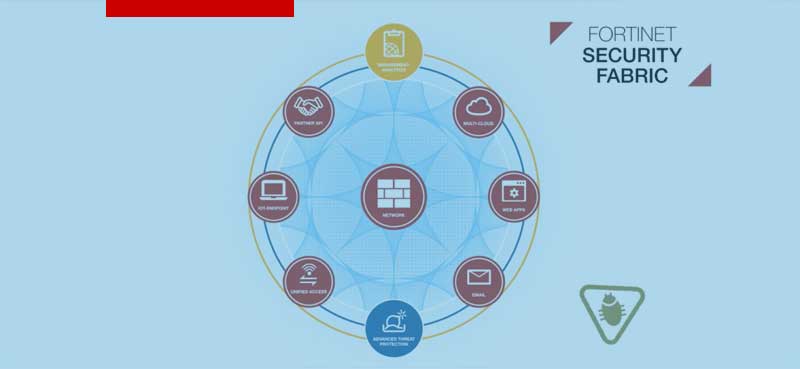
To address these challenges, organizations are starting to shift toward unified, platform-based security architectures. Right now, only 20% operate on a unified platform—but that number is expected to jump to 59% within the next 12 to 24 months.
From what we’ve seen, this move makes sense. Managing multiple disconnected tools creates inefficiencies, blind spots, and unnecessary complexity. By consolidating systems into a single platform, organizations can improve visibility, streamline operations, and respond faster to threats.
The study also shows that organizations are prioritizing better threat detection (40%) and incident response (39%). At the same time, they’re focusing on SOC automation, improved visibility, and platform consolidation to scale their operations more effectively.
However, it’s not a smooth transition. Over half (51%) cite migration costs and disruption as major barriers, while 46% are still unsure whether these platforms can deliver across all domains.
Organizations Expect Measurable Gains from Consolidation
Despite these concerns, confidence in platform-based security remains high. Around 90% of organizations expect improvements in operational metrics once consolidation is achieved.
More than 60% anticipate at least a 10% improvement in key areas like detection speed, response time, and analyst productivity. From our standpoint, that’s a strong indicator that organizations see consolidation not just as a necessity—but as a competitive advantage.
This shift also signals a broader transformation in cybersecurity strategy, where efficiency and integration are becoming just as important as protection.
AI Investment Is Growing—but Integration Remains a Bottleneck
AI is clearly a priority moving forward. The study reveals that 91% of organizations plan to increase their AI budgets, with more than half expecting double-digit growth.
And the expectations are high. Over 60% believe AI will improve detection accuracy, accelerate response times, and strengthen their overall security posture. Many also see AI as a way to reduce complexity, enforce consistent policies, and minimize manual processes.
But here’s the reality: readiness is lagging behind ambition.
Fragmented environments, limited automation, and the lack of unified data are slowing down AI adoption. Without proper integration, AI risks adding another layer of complexity instead of solving it.
From our experience, AI in cybersecurity only works when it’s built on a solid, integrated foundation. Otherwise, organizations won’t fully realize its potential.
Integration Is the Missing Link in Modern Cybersecurity
The study makes one thing clear—AI alone isn’t the answer. For organizations to truly benefit, they need unified visibility and connected data across their entire environment.
Without integration, AI-driven systems can’t operate at scale or deliver meaningful impact. In fact, poorly integrated systems may even amplify complexity rather than reduce it.
That’s why the move toward platform-based security isn’t just a trend—it’s becoming a requirement. Organizations that invest in integration today will be in a much stronger position to handle tomorrow’s threats.
Final Thoughts
From what we’re seeing, the cybersecurity conversation is evolving. It’s no longer just about stopping threats—it’s about managing complexity, improving efficiency, and building a foundation that can support AI at scale.
Fortinet’s findings highlight a critical gap between ambition and readiness. While organizations are eager to adopt AI and modernize their defenses, many still lack the infrastructure to make it work effectively.
The takeaway is simple: integration first, AI second. Without that order, even the most advanced technologies won’t deliver the results organizations expect.