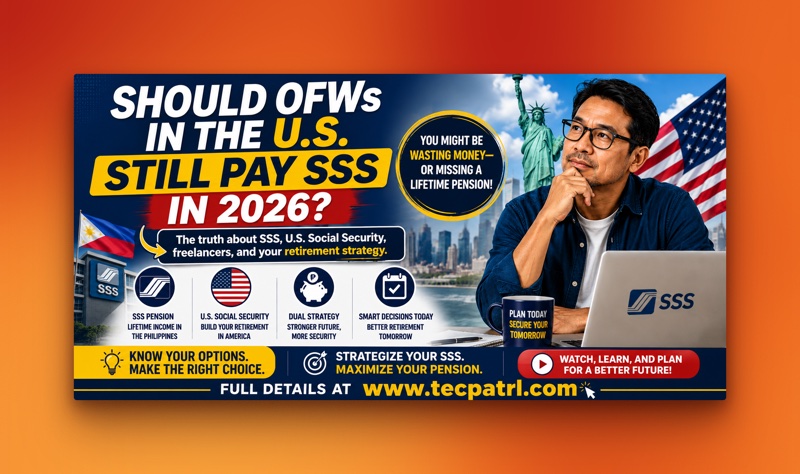
If you are a Filipino working or freelancing in America, there’s a good chance you’ve asked yourself this question:
“Is continuing my SSS contribution still worth it?”
And honestly, it’s a fair question.
Many OFWs in the United States already contribute to the Social Security Administration. Others are now freelancers, self-employed professionals, or remote workers earning independently.
So where does the Social Security System (SSS) fit into the picture?
Are you wasting money by paying into two systems?
Or are you missing a lifetime pension opportunity?
Before we go deeper, let me ground this in a real-world scenario.
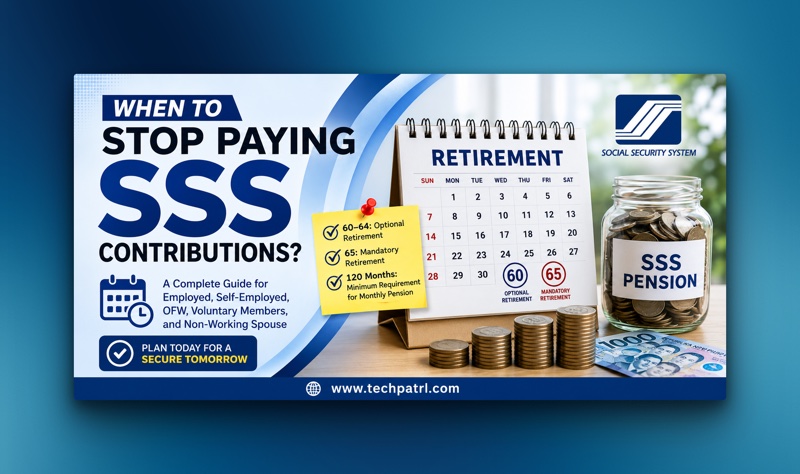
Also, before you proceed, we recommend reading: When to Stop Paying SSS Contributions in the Philippines (2026 Guide for All Member Types)
A Real Case: From Corporate Employee to 51-Year-Old Freelancer
Let’s make this relatable.
I’m 51 years old.
I spent years in corporate employment in the Philippines and built up more than 120 SSS contributions during that time. Around 2012, I left corporate life and transitioned into freelancing.
Since then, my income has been:
- independent
- flexible
- but also less structured when it comes to retirement
And like many freelancers and OFWs, I eventually reached the same question:
“Should I still continue paying SSS… or just stop?”
On paper, I already qualify for a pension because I’ve hit the 120-month requirement.
But here’s where it gets interesting.
That doesn’t automatically mean stopping is the best decision.
Related: SSS Voluntary Contribution Guide 2025: How to Keep Your Benefits Active
The Big Update: SSS Is Mandatory—But Enforcement Changed
Under Republic Act No. 11199, SSS coverage remains legally mandatory for all OFWs.
You are required to:
- contribute regularly
- shoulder both employer and employee shares
- follow the contribution schedule
As of 2026, contributions are set at 15% of your Monthly Salary Credit (MSC).
But Reality Changed: You Can Leave Without Paying
The Supreme Court of the Philippines ruled that:
You are no longer required to pay SSS contributions in advance to secure your Overseas Employment Certificate (OEC).
This changed behavior significantly.
Before:
- You couldn’t leave without paying
Now:
- You can work abroad even if you haven’t contributed
Which leads to the real situation today:
SSS is mandatory by law—but optional in practice for many OFWs
Back to My Situation: Should I Still Pay?
At 51 years old with 120+ contributions, I have three options:
Option 1: Stop Paying Now
- I already qualify for a pension
- I can claim it at age 60
This is the “safe” option.
Option 2: Continue Paying Strategically
- Increase my contribution level
- Improve my Average Monthly Salary Credit (AMSC)
- Potentially increase my pension
This is the “optimization” option.
Option 3: Ignore It Completely
- Stop tracking SSS
- Focus only on other investments
This is the most common—but often the most shortsighted—option.
Why This Decision Matters More for Freelancers
When I was in corporate:
- SSS contributions were automatic
- Retirement was structured
As a freelancer:
- everything is self-managed
- there’s no employer safety net
- discipline becomes the challenge
This is where SSS still plays a role.
It acts as:
- a forced retirement system
- a fallback income source
- a Philippine-based pension
The U.S. Factor: Should I Rely on U.S. Social Security Instead?
If you’re in the U.S., you’re likely contributing to the Social Security Administration.
So the natural question becomes:
“Why not just rely on U.S. retirement?”
Here’s the smarter perspective:
You don’t have to choose.
You can build:
- U.S. Social Security
- SSS pension
- personal investments
This creates multiple income streams.
Another Layer: Totalization Agreement
The U.S.–Philippines Totalization Agreement allows:
- combining contribution periods
- helping you qualify for benefits in both systems
This is especially useful if:
- you don’t meet minimum requirements in one system
- you split your career between countries
When Continuing SSS Still Makes Sense (Even at 51)
In my case—and for many like me—continuing may still be worth it if:
- I want to increase my pension value
- I plan to retire in the Philippines
- I want an additional income stream
- I prefer stability over pure investment risk
Even a modest increase in pension can compound over decades of retirement.
When It Might Not Be Worth It
Let’s be realistic.
Continuing SSS may not make sense if:
- you already have strong U.S. retirement assets
- you won’t retire in the Philippines
- you don’t want to manage contributions anymore
- your focus is on higher-return investments
The Biggest Lesson From This
Hitting 120 contributions is not the finish line.
It’s just the point where you gain options.
And most OFWs and freelancers don’t realize this.
They either:
- stop too early
- or continue blindly without strategy
Connecting This to “When to Stop Paying SSS”
From our previous Tech Patrol guide:
- You can stop at 60–64 if qualified
- You must stop at 65
- Below 60, contributions still impact your pension
For someone like me at 51:
The decision is not “Can I stop?”
It’s “Should I optimize before I stop?”
Final Verdict
SSS is still relevant for OFWs in the U.S. in 2026—but only if you use it intentionally.
In my case as a 51-year-old freelancer with 120+ contributions:
- I don’t need to continue
- But I might benefit from doing so strategically
And that’s the real takeaway.
You might be wasting money…
Or you might be leaving a bigger pension on the table.