
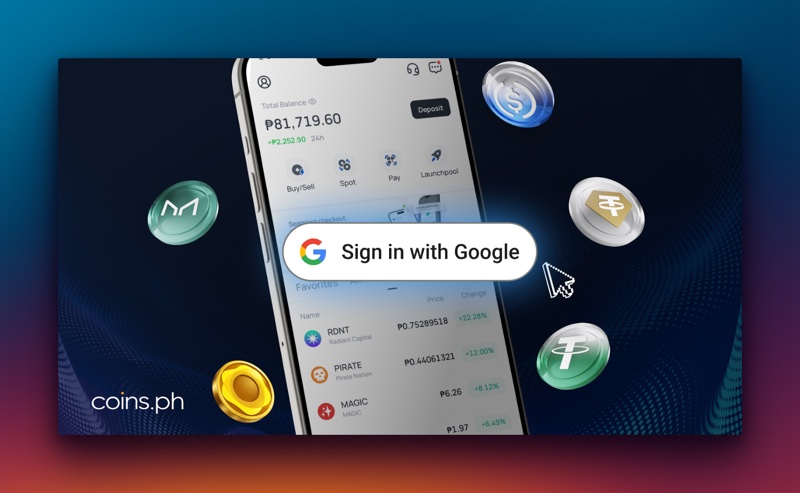
Coins.ph is taking a major step toward simplifying digital finance access in the Philippines by rolling out Google Sign-In support for its platform. As the country’s largest digital asset exchange and one of the fastest-growing mobile wallets, the company is introducing a streamlined login system designed to remove common user friction.
With this update, millions of Coins.ph users can now log in to their accounts through both mobile app and web using their Google accounts. The move signals a significant push toward improving accessibility, security, and user convenience, addressing one of the biggest barriers in digital financial adoption—complicated authentication processes.
A Major Step Toward Seamless Digital Finance Access
Digital financial services continue to expand rapidly in the Philippines, but account accessibility remains a common pain point for many users. Forgotten passwords, repeated authentication steps, and security concerns often discourage users from fully adopting digital wallets and crypto platforms. By introducing Google Sign-In, Coins.ph aims to eliminate these common challenges.
We see this update as part of a broader trend where fintech companies are integrating trusted third-party authentication providers to simplify onboarding and daily account access. Leveraging Google’s authentication ecosystem allows Coins.ph to reduce user friction while maintaining strict security standards.
For users, this means logging in becomes significantly faster. Instead of manually entering usernames and passwords, authentication can now be completed in seconds using an existing Google account. This convenience is particularly valuable for users who frequently switch between devices.
Additionally, the integration improves cross-platform usability. Users can seamlessly move between the Coins.ph mobile app and web platform without repeatedly entering credentials, providing a more consistent digital finance experience.
Google Identity Services Powers Enhanced Security
Coins.ph implemented Google Sign-In using Google Identity Services (GIS), which relies on OAuth 2.0 authentication protocols. This industry-standard technology ensures secure identity verification without requiring Coins.ph to store or manage sensitive login credentials directly.
Through this passwordless authentication approach, user identities are verified using cryptographically signed tokens issued by Google. This dramatically reduces the risks associated with traditional password-based logins, which are often vulnerable to phishing attacks and credential theft.
Security remains a top concern among Filipino digital finance users, especially as online scams continue to rise. By adopting Google’s advanced authentication infrastructure, Coins.ph adds multiple layers of protection, including access to Google’s threat monitoring systems and built-in Two-Factor Authentication support.
From a cybersecurity perspective, this integration reduces the attack surface commonly exploited by hackers. Removing password storage from the platform helps prevent data breaches and credential stuffing attempts, strengthening overall account protection.
Reducing Password Fatigue and Improving User Experience
One of the most practical benefits of the update is the elimination of password fatigue. Many users struggle to remember multiple login credentials across various platforms, often leading to frequent password resets or unsafe password reuse.
By allowing users to rely on their Google credentials, Coins.ph simplifies account management. Users can now maintain access through a single trusted identity provider, reducing frustration while improving security compliance.
We also see this as a strong move toward digital inclusivity. Simplifying login processes encourages more users, especially beginners, to explore cryptocurrency services and mobile wallet features without being intimidated by complex security requirements.
The streamlined login process also supports faster transactions and account access during time-sensitive financial activities. Whether users are sending payments, trading digital assets, or checking balances, quicker authentication enhances overall usability.
Coins.ph Strengthens Its Mission to Simplify Financial Technology
According to Coins.ph CEO Wei Zhou, the Google Sign-In rollout aligns with the company’s long-standing goal of making financial technology accessible to everyday Filipinos. Removing login barriers supports wider adoption of digital payments and cryptocurrency services across the country.
We believe this update reflects Coins.ph’s commitment to evolving alongside user needs. As digital finance platforms become more sophisticated, simplifying entry points becomes crucial in maintaining user engagement and trust.
The integration also signals Coins.ph’s move toward interoperable identity ecosystems, where users can seamlessly navigate multiple services using unified authentication credentials. This trend is becoming increasingly important as fintech platforms expand their offerings.
Looking ahead, features like Google Sign-In may become standard across digital wallet and crypto platforms. Coins.ph adopting this technology early strengthens its competitive position in the rapidly growing Philippine fintech landscape.
What This Means for Coins.ph Users
For existing Coins.ph users, the update offers immediate convenience and stronger security safeguards. Logging in becomes faster, safer, and less dependent on manual password management.
New users also benefit from simplified onboarding, reducing the technical barriers often associated with cryptocurrency platforms. With easier access, Coins.ph is likely to attract a broader user base, particularly among first-time digital finance adopters.
We expect the feature to improve overall customer satisfaction while reducing support requests related to password recovery. Streamlined authentication helps both users and the platform operate more efficiently.
As digital finance adoption continues to rise in the Philippines, innovations like Google Sign-In highlight how fintech companies are prioritizing both usability and security to remain competitive.


