

You’re two months pregnant. The doctor visits pile up. The ultrasound costs add up. Then you start thinking about delivery. That number keeps growing. A normal birth at a private hospital runs ₱50,000 or more. A C-section doubles that. Your family does the math, and the stress hits differently.
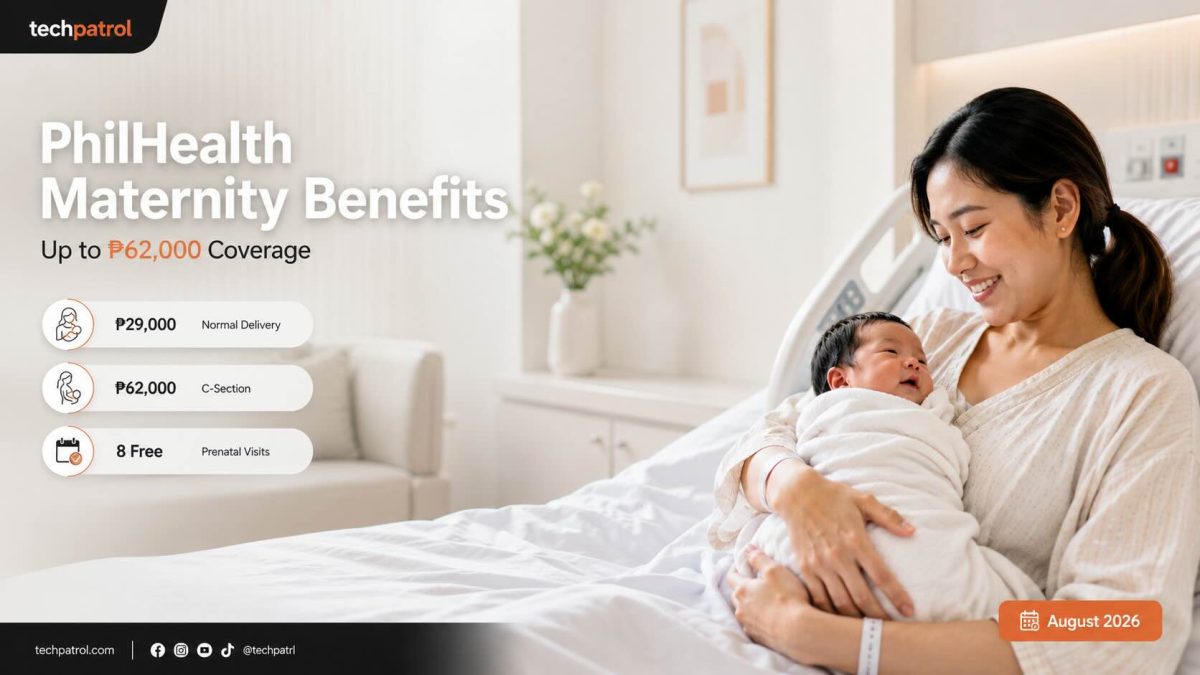
On April 30, 2026, PhilHealth maternity benefits nearly tripled. A normal delivery is now covered up to ₱29,000. A complicated C-section goes up to ₱62,000. For many Filipino families, this wipes out most or all of the bill.
The catch: you have to claim it correctly. Most mothers don’t know what to do, when to do it, or which hospitals accept the benefits. This guide walks you through the entire process, from eligibility checks to final reimbursement, so you can use that ₱62,000 when your baby arrives.
- Are You Eligible? Check First
- Choose an Accredited Hospital (This Matters)
- Enroll for 8 Prenatal Visits (You Get Them Free)
- What Happens During Delivery: Direct Billing (The Easy Part)
- Three Postnatal Checkups for Mother and Baby (Free Follow-ups)
- Newborn Care (Separate Benefit, Also New)
- If You’re Giving Birth in a Non-Accredited Facility (Reimbursement Process)
- Common Hiccups and How to Solve Them
- Documents You’ll Need at the Hospital
- Money-Saving Strategy: What Else PhilHealth Doesn’t Cover
- Tax and Rebate Opportunities (Often Missed)
- FAQ: Fast Answers for Common Questions
- Tech Patrol Insight: Why This Matters (Beyond the Numbers)
- Final Thoughts
- Sources
Are You Eligible? Check First
Before you do anything else, confirm you’re covered. PhilHealth eligibility sounds simple but has real traps.
Active members get automatic access. You contribute to PhilHealth through your employer (for employees) or self-enrollment (for self-employed, OFWs, and informal workers). If you’ve been paying, you’re likely eligible.
Contribution timing rules differ by employment status. This is critical.
If you’re formally employed, you need at least 3 months of contributions within the 6 months immediately before your delivery. Most employed mothers exceed this without thinking.
If you’re self-employed, OFW, or informal economy, the requirement is stricter: 9 months of contributions within the 12 months before your delivery. Miss that deadline, and you won’t qualify for the full maternity package. You’ll only get emergency-only coverage instead.
Your employer already handles contributions if you’re formally employed. Check your payslip for PhilHealth deduction confirmation.
Sponsored members get an exception. If you don’t have nine months of payments but a family member or employer sponsors you, PhilHealth activates your benefits immediately. You can apply for sponsored membership now, even if you’re mid-pregnancy.
How to check eligibility:
- Visit the PhilHealth website (www.philhealth.gov.ph) or call their hotline (1-800-PHILHEALTH / 1-800-7445-43258)
- Have your PhilHealth ID number ready
- Ask for your membership status and contribution history
- Confirm you meet the 9-month window (if self-employed or OFW)
A hospital can also check your eligibility when you arrive for delivery. Many do this automatically. But don’t wait. Check now so you’re not stressed during labor.
Related: Minimum Wage vs. Cost of Living in the Philippines: The Real Salary Gap by Region
Choose an Accredited Hospital (This Matters)
PhilHealth doesn’t cover every facility. Home births, unaccredited clinics, and private doctors practicing independently won’t get reimbursed. You need a PhilHealth-accredited hospital, birthing home, lying-in clinic, or Rural Health Unit (RHU).
What’s accredited varies by location. Metro Manila hospitals include major chains like Philippine General Hospital (PGH), Makati Medical Center, St. Luke’s, and many private facilities. Provincial areas may have fewer options. Check the PhilHealth website’s hospital directory or call ahead.
Coverage rates depend on hospital level. This is important.
Normal vaginal delivery rates:
- Level 1–3 hospitals (large private and public): ₱29,000
- Infirmaries and primary care facilities: ₱14,000
C-section rates:
- Level 1–3 hospitals: ₱58,000 (standard) or ₱62,000 (complicated cases)
- Exact rate depends on the hospital’s accreditation level and case complexity
Pro tip: Call the hospital’s maternity ward ahead of time. Tell them you’re PhilHealth-covered and ask what their accreditation level is. This tells you exactly what PhilHealth will pay. Hospitals appreciate the heads-up and can also answer questions about hospital policies, payment coordination, and whether they deduct benefits directly from your bill.
Enroll for 8 Prenatal Visits (You Get Them Free)
Prenatal care is now part of the package. PhilHealth covers eight prenatal consultations instead of four, plus lab work and vaccines.
Why this matters: Previously, mothers paid separately for each prenatal visit. Now you don’t. Eight visits means roughly one appointment per month for your entire pregnancy, all covered.
What’s included:
- Doctor consultations
- Laboratory tests (blood type, urinalysis, glucose testing, etc.)
- Vaccines (tetanus, COVID-19 if relevant to your timeline)
How to access it:
- Tell your doctor or clinic that you’re PhilHealth-covered
- They’ll verify your membership and benefits through the PhilHealth portal
- The clinic files the claim directly with PhilHealth
- You pay nothing out of pocket
Most accredited hospitals and clinics handle this automatically. Bring your PhilHealth ID to each visit. If you’re seeing a private doctor outside a hospital, confirm they’re PhilHealth-accredited for maternity claims first. Not all private practitioners are.
What Happens During Delivery: Direct Billing (The Easy Part)
When labor starts and you arrive at an accredited hospital, PhilHealth kicks in automatically if you’re eligible.
The hospital deducts PhilHealth benefits directly from your bill. You don’t file claims. You don’t wait for reimbursement. The hospital handles it.
Here’s the flow:
- Admission: Tell the hospital admissions desk you’re PhilHealth-covered. They’ll pull up your membership status in their system.
- Verification: The hospital confirms your eligibility with PhilHealth through their portal. This takes minutes.
- Delivery: You give birth. The hospital tallies the bill for room, delivery fees, anesthesia, medications, lab work, doctor’s fee, everything.
- Deduction: PhilHealth’s benefit amount is automatically deducted from your total hospital bill.
- You pay the difference: Only the amount exceeding PhilHealth’s benefit is your responsibility.
Example:
- Total delivery bill: ₱75,000
- PhilHealth normal delivery benefit: ₱29,000
- You owe: ₱46,000
Another example (C-section):
- Total delivery bill: ₱120,000
- PhilHealth C-section benefit: ₱62,000
- You owe: ₱58,000
What if complications arise? If your C-section is classified as “complicated” (placental issues, hemorrhage, other emergencies requiring extended care), PhilHealth covers up to ₱62,000 instead of ₱58,000. The hospital decides the classification based on your medical record. This usually covers the extra costs without delay.
PhilHealth’s No Balance Billing (NBB) policy: If you’re a ward patient (standard room), indigent, or sponsored member, PhilHealth and the hospital may cover the entire delivery cost with zero out-of-pocket expense. Ask your hospital whether you qualify.
Three Postnatal Checkups for Mother and Baby (Free Follow-ups)
After delivery, PhilHealth covers three follow-up visits for both you and your newborn.
Why it’s useful: Recovery from birth takes weeks. Your newborn needs screening for jaundice, hearing issues, and other conditions. These visits cost money at most hospitals. PhilHealth now covers them.
What’s covered:
- Postnatal mother check (blood pressure, infection screening, mental health check-in)
- Newborn screening (jaundice check, hearing test, basic pediatric exam)
- Vaccinations and treatments if needed
When they happen: Typically at 24 hours, 3 days, and 1 week after discharge (timing varies).
How to book: Ask the hospital to schedule these visits before you leave. They already coordinate with PhilHealth. Bring your PhilHealth ID to each visit.
Newborn Care (Separate Benefit, Also New)
Your baby gets a separate newborn care package worth ₱4,425. This covers:
- Newborn Screening Program (₱500): Tests for congenital conditions (thyroid, hemoglobin disorders, etc.)
- Newborn Care Package (₱4,425): Initial pediatric exam, vaccines (BCG, hepatitis B), basic supplies
This is automatic. The hospital includes it in the delivery billing. You don’t file separately.
If You’re Giving Birth in a Non-Accredited Facility (Reimbursement Process)
PhilHealth enforces strict facility-based delivery. Home births are generally non-reimbursable. Unaccredited clinics may be reimbursable in limited circumstances, but the process is slow and approval isn’t guaranteed.
Home births are not reimbursable with rare exceptions (emergency transport to hospital during labor qualifies; planned home birth does not).
For unaccredited clinics, reimbursement is possible but difficult:
- Get an itemized receipt and discharge summary from the facility
- Gather all medical records proving facility-based delivery
- Visit your nearest PhilHealth office with your ID, receipt, and documents
- File a reimbursement claim (they’ll review and may deny if the facility wasn’t PhilHealth-accredited)
- Wait for processing (2-4 weeks or longer; approval not guaranteed)
- If approved, receive reimbursement via check or bank transfer
This is messier, slower, and riskier than direct billing. Hospitals often refuse to file claims for non-accredited facilities. Arrange to deliver at an accredited facility for seamless, guaranteed coverage.
Common Hiccups and How to Solve Them
“My PhilHealth account shows I’m not eligible.”
Reason: Varies by employment status.
- If you’re self-employed or OFW: You don’t have 9 months of contributions within the past 12 months.
- If you’re formally employed: You don’t have 3 months of contributions within the past 6 months (rare, but possible if you switched jobs recently).
Solution: Apply for sponsored membership. A family member, employer, or local government unit can sponsor you immediately, even mid-pregnancy. Call PhilHealth (1-800-PHILHEALTH) or visit a PhilHealth office with your ID.
“The hospital says PhilHealth won’t cover me because I delivered before April 30, 2026.”
Reason: The new rates took effect April 30, 2026. If you delivered before that date, the old rates apply (₱9,750 for normal, ₱37,050 for C-section).
Solution: There is no workaround. Benefits are based on delivery date, not discharge date. Only future pregnancies get the new rates.
“The hospital is charging me more than I expected even with PhilHealth.”
Reason: PhilHealth covers the delivery package only. Additional costs (optional room upgrades, private nursing, non-essential procedures) aren’t covered.
Solution: Ask the hospital to itemize PhilHealth-covered charges vs. add-on charges before delivery. Negotiate or decline the extras.
“I paid upfront and want to claim reimbursement.”
Reason: You delivered at a non-accredited facility or the hospital couldn’t verify your PhilHealth coverage immediately.
Solution: File a reimbursement claim with the original receipt, medical records, and your PhilHealth ID at a PhilHealth office.
“My baby was premature or in the NICU. Is that covered differently?”
Reason: Complications like prematurity or newborn hospitalization trigger separate benefit packages.
Solution: Ask the hospital which benefit package applies (maternity, newborn care, or hospitalization). The hospital usually navigates this. But ask directly to understand what PhilHealth covers vs. what you owe.
Documents You’ll Need at the Hospital
Bring these on delivery day:
- PhilHealth ID (physical card or digital ID via the PhilHealth app)
- Valid ID (government-issued: passport, driver’s license, voter’s ID)
- Insurance card (if you have an HMO or supplemental insurance; PhilHealth pays first)
- Medical records (prenatal check-up summaries, any high-risk pregnancy notes)
- Contact information (emergency contact number, insurance contact details if you have HMO)
Most hospitals only ask for a PhilHealth ID and a valid ID. The rest is backup.
Money-Saving Strategy: What Else PhilHealth Doesn’t Cover
Knowing the limits helps you budget for what you do have to pay.
Not covered:
- Private room upgrades (standard ward is covered)
- Excess blood transfusions beyond emergency need
- Extended pediatric care beyond the newborn care package (if your baby needs NICU longer than standard)
- Post-delivery complications requiring separate hospitalization
- Elective or cosmetic procedures
Check with your hospital about what counts as “standard” coverage in their facility. Policies vary.
Tax and Rebate Opportunities (Often Missed)
Maternity-related out-of-pocket expenses can qualify for tax deductions or rebates in some cases. Check with your employer’s HR or an accountant, especially if you’re self-employed.
OFWs should also check with their host country whether you can claim medical deductions on your annual tax return.
FAQ: Fast Answers for Common Questions
Q: Do I need a separate maternity insurance on top of PhilHealth?
A: No, but an HMO or supplemental insurance is optional. PhilHealth pays first up to its limit. HMO covers the remainder.
Q: How many months of PhilHealth contributions do I need before delivery?
A: It depends on your employment status.
- Formally employed: 3 months of contributions within the 6 months before delivery
- Self-employed, OFW, informal economy: 9 months of contributions within the 12 months before delivery
If you’re unsure, call PhilHealth or ask your hospital during prenatal check-ups.
Q: What if my partner/employer is PhilHealth-covered but I’m not?
A: Only you (the mother) need to be covered to claim maternity benefits. Your partner’s coverage doesn’t transfer. But you can enroll as a dependent under their PhilHealth membership if you’re not already.
Q: Can I use PhilHealth maternity benefits at private hospitals?
A: Yes, if the private hospital is PhilHealth-accredited. Many are. But not all. Confirm before booking.
Q: What if my delivery takes longer (emergency C-section, labor induction, extended stay)?
A: PhilHealth’s maternity package covers the entire hospitalization for that delivery event, including labor, delivery, and recovery room stay. Extended or ICU stays beyond standard postpartum are covered under PhilHealth’s separate hospitalization rates, not the maternity package.
Q: Does PhilHealth cover my partner’s hospital stay or only mine?
A: PhilHealth covers you (mother) and your newborn. Your partner’s costs aren’t included.
Q: What if I can’t afford the out-of-pocket amount after PhilHealth deduction?
A: Talk to the hospital’s patient advocate or billing office before delivery. Many hospitals offer payment plans for the remaining balance. Some hospitals also have welfare assistance programs for low-income mothers.
Q: Can I transfer my PhilHealth coverage to a different hospital mid-delivery?
A: No. Your coverage is tied to your membership status, not the hospital. You can choose any accredited hospital, but switching during labor is risky and impractical.
Q: Is PhilHealth maternity coverage automatic or do I need to apply?
A: If you’re an active member, benefits are automatic. If you’re not currently active or covered, you’ll need to enroll or apply for sponsored membership now.
Tech Patrol Insight: Why This Matters (Beyond the Numbers)
The PhilHealth maternity benefit hike is about more than bigger numbers. It’s about money that goes toward keeping mothers and babies safe.
For decades, Filipino families chose between a safer private hospital birth and going broke afterward. Some stretched resources so thin that prenatal care came last. The ₱62,000 cap attempts to solve that tradeoff.
The benefit only works if you claim it right. Hospitals that don’t coordinate with PhilHealth, mothers who don’t verify eligibility early, families who don’t bring the right documents, they still pay the full bill. The money sits unused.
That’s why this guide exists. You earned these benefits through your PhilHealth contributions. The system works best when you know how to use it.
Final Thoughts
Your delivery should focus on one thing: bringing your baby safely into the world. The paperwork, the billing, the coordination with PhilHealth. That’s on the system, not on you.
One conversation 2-3 months before your due date can make a difference. Call the hospital. Confirm eligibility. Bring the right documents. Tell them you’re PhilHealth-covered. That’s it. The rest handles itself.
₱62,000 covers most of a birth. The rest is your responsibility, yes. It’s manageable. Every peso PhilHealth pays is a peso toward your recovery, your baby’s health, and your family’s stability.
You don’t adjust to the system. The system should adjust to you.
Sources
- Philippine Health Insurance Corp. (PhilHealth). “Expanded Maternity Benefits – Effective April 30, 2026.” www.philhealth.gov.ph
- Inquirer.net. “PhilHealth ₱62K maternity benefits; Complete rate guide here.” May 1, 2026. (https://cebudailynews.inquirer.net/722764/)
- Clinic Finder PH. “PhilHealth Maternity Benefits 2026: Normal ₱29K, C-Section ₱58K–₱62K.” June 2026. (https://www.clinicfinderph.com/blog/philhealth-maternity-benefits-guide)
