- The Headline Everyone Missed (Until They Checked Their Wallets)
- The Perfect Storm: Why This Is Happening Right Now
- The Memory and Storage Crisis
- Apple’s Tolerance Threshold Finally Broke
- The Global Context
- The Complete Product Breakdown: Everything That Got More Expensive
- 1. APPLE TV 4K — The Painful Streaming Box
- 2. IPAD LINEUP — Five Different Models, Five Different Pain Points
- 3. MAC MINI — The Desktop Mystery
- 4. MACBOOK NEO — The Budget Laptop That Isn’t Really Budget Anymore
- 5. MACBOOK AIR M5 — The “Affordable” Professional Laptop
- 6. MACBOOK PRO M5 — The Professional Workstation Gets Absurdly Expensive
- The Numbers Game: Total Affected Products and Price Impact
- What Didn’t Get More Expensive (The Miracles)
- The Real Story: When Did Prices Actually Go Up?
- Market Context: How This Affects You in the Philippines
- 1. What This Means for Students
- 2. What This Means for Professionals
- 3. What This Means for Casual Users
- 4. What This Means for Gray Market Importers
- 5. What This Means for Authorized Resellers
- The Ripple Effect: What’s Coming Next?
- Expectation 1: More Price Hikes Later in 2026
- Expectation 2: Competitors Following Apple’s Lead
- Expectation 3: Gray Market Boom
- Expectation 4: Supply Chain Adaptation (2027)
- The Complete Comparison: Old vs. New Pricing
- iPad Family
- Mac Family
- Other Devices
- Should You Buy Now? A Decision Framework
- BUY NOW if:
- WAIT if:
- SKIP ENTIRELY if:
- Why This Matters: The Bigger Picture
- The Issue with Premium Positioning
- The Ecosystem Lock-In Problem
- The Timeline: When Prices Changed
- Real Talk: What This Means for Your Wallet
- Tech Patrol’s Take: Is Apple Still Worth It?
- What You Should Do Right Now
- The Bottom Line: Apple Just Made Everything Expensive
- Related Reading from TechPatrol
The Headline Everyone Missed (Until They Checked Their Wallets)
On June 25, 2026, Apple quietly updated prices across its entire Mac and iPad lineup in the Philippines. We’re not talking about a 2-3% adjustment here. We’re talking about price increases ranging from ₱5,000 to ₱30,000 on single products. For context, ₱30,000 is roughly the monthly salary of a junior professional in Metro Manila. That’s how much Apple just added to a MacBook Pro.
And nobody saw it coming—except, you know, Tim Cook who warned us about it a week prior.
This is Apple’s first major price hike since the DRAM crisis began ramping up globally, and it affects nearly the entire product lineup except for iPhones, Apple Watches, and AirPods (for now).
Let’s break down exactly what got more expensive, by how much, and whether you should care.
The Perfect Storm: Why This Is Happening Right Now
The Memory and Storage Crisis
Here’s the problem: DRAM (Dynamic Random Access Memory) and NAND flash storage have become expensive.
Like, stupidly expensive.
The culprit? The AI boom. Companies like OpenAI, Google, Meta, Microsoft, and smaller AI startups have been building massive data center infrastructure to run large language models, train neural networks, and support AI services. These data centers consume memory and storage chips at an unprecedented scale.
According to industry reports, AI infrastructure buildout has consumed a disproportionate amount of global memory and storage chip production capacity. Meanwhile, consumer electronics manufacturers—including Apple—are competing for whatever’s left.
Apple’s Tolerance Threshold Finally Broke
For months, Apple absorbed these rising component costs. The company’s legendary profit margins (often 40%+ on hardware) gave it the cushion to shield customers from price increases. Tim Cook’s philosophy was: “We’re taking the hit so you don’t have to.”
But that strategy has limits.
In a recent interview, Cook admitted: “We’re doing our best to mitigate the huge increases that are being passed to us, and we’ve been trying to shield our customers from the increases, but the situation has become unsustainable.”
Translation: Apple’s accountants did the math, looked at component costs, looked at profit projections, and decided: “Nope. Everyone else is paying for this now.”
The Global Context
This isn’t a Philippines-only problem. Apple has raised prices everywhere:
- Europe: MacBook Pros jumped €300-400 (roughly ₱17,000-23,000)
- United States: MacBook Air went from $1,099 to $1,299 (₱62,500 price increase at current exchange rates)
- Australia, Canada, UK: All seeing similar percentage increases
- Philippines: We’re getting our own localized pain
The company released a statement saying: “The consumer electronics industry is facing an unprecedented challenge. The rapid expansion of AI data centers has created an extraordinary surge in demand for memory and storage.”
In other words: “This isn’t us being greedy. This is the market being absolutely insane.”
The Complete Product Breakdown: Everything That Got More Expensive
Let me walk you through every single affected product, category by category.
1. APPLE TV 4K — The Painful Streaming Box
This one hurt the most, percentage-wise.
| Model | Old Price | New Price | Increase | % Change |
|---|---|---|---|---|
| Apple TV 4K (128GB) | ₱9,490 | ₱14,490 | +₱5,000 | +52.7% |
Analysis:
Apple TV 4K just got a 53% price hike on a device that costs less than ₱15K. This is arguably the most aggressive increase Apple made because the absolute price is still relatively low, but the percentage jump is enormous.
A few years ago, ₱9,490 for a high-quality streaming box seemed reasonable. You got 4K HDR, Dolby Vision, spatial audio, and Apple TV+ integration. Now you’re paying ₱14,490 for the same specs.
For Philippine consumers, this is significant because:
- Many Filipinos use Apple TV as their primary streaming device (Netflix, Disney+, Apple TV+)
- It’s a product with high impulse-buy potential at the old price point
- The new price makes competing solutions (Roku, Google TV) look way more attractive
- At ₱14,490, you’re creeping into iPad territory for budget-conscious buyers
Verdict: This is the price hike that might actually hurt Apple’s market share the most.
2. IPAD LINEUP — Five Different Models, Five Different Pain Points
This is where the variety gets interesting. Apple makes iPads for every budget, and nearly all of them got more expensive.
iPad (11-inch, A16 Chip) — The Budget iPad
| Variant | Old Price | New Price | Increase |
|---|---|---|---|
| iPad 11″ (64GB) | ₱24,990 | ₱32,990 | +₱8,000 |
| iPad 11″ (256GB) | ₱32,990 | ₱40,990 | +₱8,000 |
What It Is: The entry-level iPad. Designed for students, casual users, and people who want iPad experience without paying flagship prices.
What Changed: The base iPad just jumped from ₱24,990 to ₱32,990. That’s a ₱8,000 increase—enough to buy a quality budget Android tablet. The 256GB model went from ₱32,990 to ₱40,990, crossing into territory where some people might just buy the iPad Air instead.
Why This Matters: The iPad has always been Apple’s “gateway drug” into the ecosystem. ₱24,990 felt like a reasonable entry price for iPad experience. ₱32,990 starts to feel less like an impulse buy and more like a deliberate purchase decision.
Who’s Affected: Students, casual consumers, families trying to get kids into the Apple ecosystem. A lot of people who could justify ₱25K now have to justify ₱33K.
iPad mini 7 (8.3-inch, A17 Pro Chip) — The Portable Powerhouse
| Variant | Old Price | New Price | Increase |
|---|---|---|---|
| iPad mini 7 (128GB) | ₱34,990 | ₱42,990 | +₱8,000 |
| iPad mini 7 (256GB) | ₱42,990 | ₱50,990 | +₱8,000 |
| iPad mini 7 (512GB) | ₱56,990 | ₱64,990 | +₱8,000 |
What It Is: The “why would you buy anything else” iPad. Compact size, powerful A17 Pro chip, excellent for content creation, gaming, and professionals who want something lighter than the Air or Pro.
What Changed: Every single variant got exactly ₱8,000 added to its price. Apple’s being consistent here—not sneaking in extra increases on higher storage tiers. The ₱42,990 iPad mini just became ₱50,990 if you want 256GB.
Why This Matters: iPad mini is beloved by a specific group—artists, developers, content creators, people who want iPad-level performance in a compact form. These are users with higher budgets who’ll probably bite the bullet and pay. But at ₱50,990 for the 256GB model, you’re now very close to iPad Air territory.
The Awkward Position: iPad mini at ₱42,990 base is now uncomfortably close to iPad Air at ₱54,990. The gap is shrinking. Value-conscious buyers might just go bigger.
iPad Air (10.9-inch, M4 Chip) — The “Goldilocks” iPad
| Variant | Old Price | New Price | Increase |
|---|---|---|---|
| iPad Air 10.9″ (128GB) | ₱42,990 | ₱54,990 | +₱12,000 |
| iPad Air 10.9″ (256GB) | ₱50,990 | ₱62,990 | +₱12,000 |
| iPad Air 10.9″ (512GB) | ₱58,990 | ₱70,990 | +₱12,000 |
| iPad Air 11″ (M4) | ₱54,990 | ₱66,990 | +₱12,000 |
| iPad Air 11″ (256GB) | ₱62,990 | ₱74,990 | +₱12,000 |
What It Is: The professional’s iPad. M4 chip (same as MacBook Air, different performance profile), beautiful screen, Apple Pencil Pro support, great for actual work.
What Changed: iPad Air got hit with a ₱12,000 increase across all configurations. Not as dramatic as some products, but in percentage terms (about 28%), it’s significant. The base 10.9″ iPad Air jumping from ₱42,990 to ₱54,990 is particularly notable.
Why This Matters: iPad Air is positioned as the “serious iPad” for people who actually work on tablets. ₱54,990 starts to feel expensive for many Filipino professionals. At that price, some might just get a MacBook Air instead.
Market Positioning Crisis: The new iPad Air price (₱54,990) is now dangerously close to entry-level MacBook Air pricing. For someone deciding between a powerful tablet and a real laptop, the gap just narrowed.
iPad Pro (11-inch and 13-inch, M5 Chip) — The Premium Tablet
| Model | Old Price | New Price | Increase |
|---|---|---|---|
| iPad Pro 11″ M5 (256GB) | ₱72,990 | ₱89,990 | +₱17,000 |
| iPad Pro 11″ M5 (512GB) | ₱80,990 | ₱97,990 | +₱17,000 |
| iPad Pro 11″ M5 (1TB) | ₱96,990 | ₱113,990 | +₱17,000 |
| iPad Pro 13″ M5 (256GB) | ₱86,990 | ₱109,990 | +₱23,000 |
| iPad Pro 13″ M5 (512GB) | ₱94,990 | ₱117,990 | +₱23,000 |
| iPad Pro 13″ M5 (1TB) | ₱110,990 | ₱133,990 | +₱23,000 |
What It Is: Apple’s flagship tablet. Overkill for most people. Perfect for video editors, 3D artists, architects, and people who’ve made a conscious decision to never use a traditional laptop again.
What Changed: iPad Pro users got absolutely demolished. The 11″ model jumped ₱17,000 (23% increase). The 13″ model jumped ₱23,000 (26% increase). The 13″ with 1TB storage is now ₱133,990—that’s getting into serious money.
Why This Matters: iPad Pro users are professionals with real budgets, so they’ll probably eat the cost. But the ₱109,990 base price for a 13″ iPad Pro is staggering. That’s almost exactly what a MacBook Pro costs.
The Insane Part: You can now buy a MacBook Pro (the actual laptop) for less than a 13″ iPad Pro. Let that sink in.
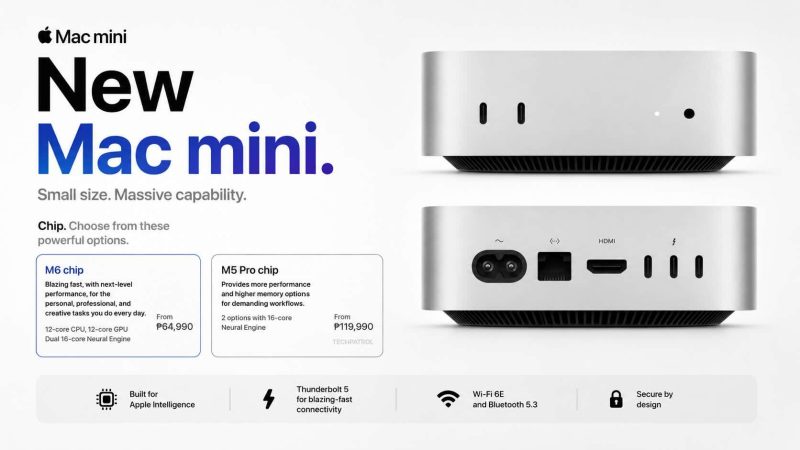
3. MAC MINI — The Desktop Mystery
The Mac mini is Apple’s compact desktop computer, and it got the quiet treatment in this price hike.
| Model | Old Price | New Price | Increase |
|---|---|---|---|
| Mac mini (256GB, M4) | ₱42,990 | ₱48,990 | +₱6,000 |
| Mac mini (512GB, M4) | ₱49,990 | ₱55,990 | +₱6,000 |
Analysis: The Mac mini got a consistent ₱6,000 increase across both storage tiers (about 12%). This is the smallest percentage increase of any product on this list, probably because:
- The Mac mini has a smaller market in the Philippines (desktop computers are less common than laptops)
- It’s already positioned as a value product
- Apple didn’t want to completely cannibalize its own sales with exorbitant pricing
Who Cares: Developers, content creators who need a desktop setup, and people who hate laptops but love Apple.
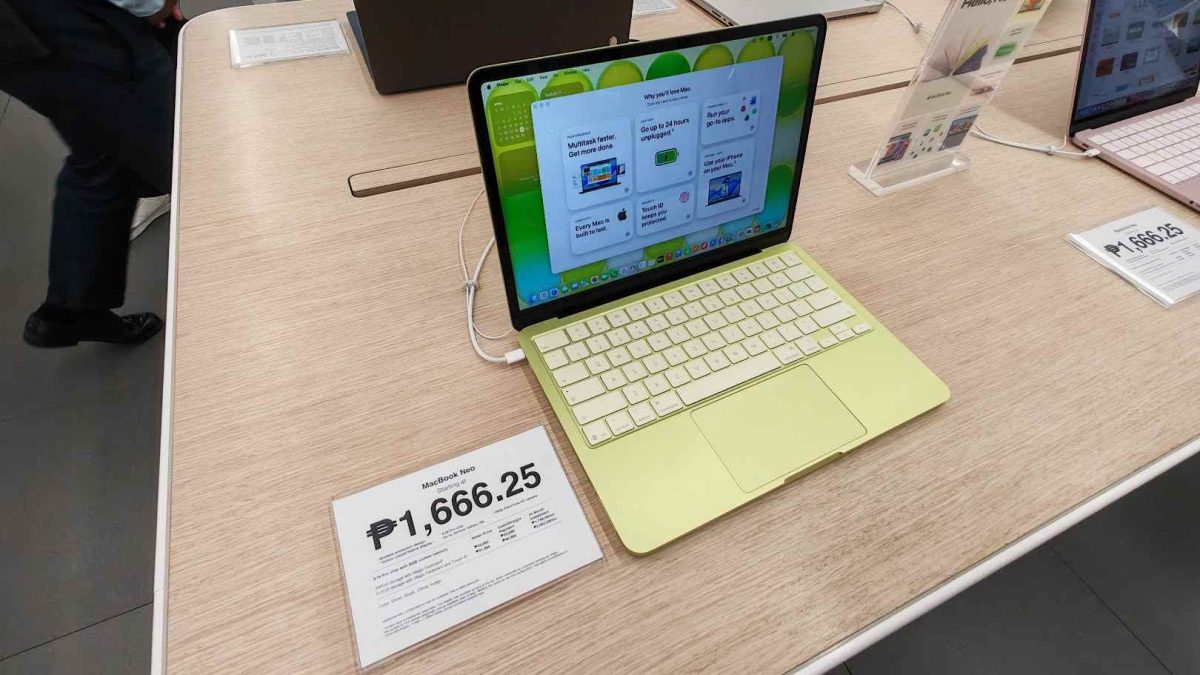
4. MACBOOK NEO — The Budget Laptop That Isn’t Really Budget Anymore
Remember when I wrote about the MacBook Neo price increase? This got worse.
| Model | Launch Price (March 2026) | Current Price (June 2026) | Total Increase Since Launch |
|---|---|---|---|
| MacBook Neo 256GB | ₱39,990 | ₱49,990 | +₱10,000 (25%) |
| MacBook Neo 512GB | ₱44,990 | ₱54,990 | +₱10,000 (22%) |
What Happened: MacBook Neo launched in March 2026 at ₱39,990, positioned as “the most affordable MacBook ever.” In just three months, it jumped to ₱49,990. That’s a 25% increase in one quarter.
Why This Is Wild:
- When MacBook Neo launched, it was genuinely positioned as an accessible entry point to Mac
- At ₱39,990, it undercut many budget Windows laptops while offering M4 performance
- Now at ₱49,990, it’s starting to make the MacBook Air look like a better value proposition
- A ₱10,000 price difference between MacBook Neo and MacBook Air is shrinkier than people realize
The Problem: In a few months, the “budget Mac” strategy has been compromised. At ₱49,990, you’re asking a lot from budget-conscious consumers.
5. MACBOOK AIR M5 — The “Affordable” Professional Laptop
This is where it gets interesting, because the MacBook Air is where most people draw the line on Mac purchases.
| Model | Launch Price (March 2026) | Current Expected Price (June 2026) | Estimated Increase |
|---|---|---|---|
| MacBook Air 13″ M5 (256GB) | ₱72,990 | ₱83,990* | ~₱11,000 |
| MacBook Air 13″ M5 (512GB) | ₱80,990 | ₱91,990* | ~₱11,000 |
| MacBook Air 15″ M5 (256GB) | ₱86,990 | ₱97,990* | ~₱11,000 |
| MacBook Air 15″ M5 (512GB) | ₱94,990 | ₱105,990* | ~₱11,000 |
*Prices estimated based on reported hike patterns; exact configurations may vary
What It Is: The entry-level “real” Mac. M5 performance, 8-10 hour battery life, lightweight, fanless design. For most professionals, this is the Mac you buy.
What Changed: MacBook Air got slammed with approximately ₱11,000 increases across the board. The 13″ base model went from ₱72,990 to roughly ₱83,990. The 15″ went from ₱86,990 to roughly ₱97,990.
Why This Matters (A Lot):
- MacBook Air is the “gateway drug” to Mac for professionals
- At ₱72,990, it felt like a justified upgrade from Windows
- At ₱83,990, people will think harder about whether they actually need a Mac
- At ₱97,990 for a 15″ MacBook Air, you’re overlapping with MacBook Pro territory
- A ₱10K+ increase is enough to make people reconsider their entire computer purchase
The Market Impact: This is where Apple might actually lose sales. MacBook Air buyers are price-conscious professionals. They’re compared to Windows alternatives. A ₱10K bump might tip some over the edge.
6. MACBOOK PRO M5 — The Professional Workstation Gets Absurdly Expensive
And now, the moment everyone’s been waiting for. The MacBook Pro.
14-inch MacBook Pro M5
| Variant | Pre-Hike Price | Current Price | Increase |
|---|---|---|---|
| MacBook Pro 14″ M5 (512GB) | ₱109,990 | ₱139,990 | +₱30,000 |
| MacBook Pro 14″ M5 (1TB) | ₱125,990 | ₱155,990 | +₱30,000 |
14-inch MacBook Pro M5 Pro
| Variant | Current Price |
|---|---|
| MacBook Pro 14″ M5 Pro (1TB) | ₱149,990 |
14-inch MacBook Pro M5 Max
| Variant | Current Price |
|---|---|
| MacBook Pro 14″ M5 Max (2TB) | ₱239,990 |
16-inch MacBook Pro M5
| Variant | Current Price |
|---|---|
| MacBook Pro 16″ M5 (1TB) | ₱159,990 |
16-inch MacBook Pro M5 Pro
| Variant | Current Price |
|---|---|
| MacBook Pro 16″ M5 Pro (1TB) | ₱179,990 |
16-inch MacBook Pro M5 Max
| Variant | Current Price |
|---|---|
| MacBook Pro 16″ M5 Max (2TB) | ₱259,990 |
The Staggering Truth:
A base 14″ MacBook Pro M5 is now ₱139,990. That’s:
- A ₱30,000 increase from pre-hike pricing
- Roughly equivalent to a brand new iPhone 17
- More expensive than some entire desktops
- Approaching ₱140,000 for a laptop
Why This Is Absolutely Wild:
When MacBook Pro M5 launched (late 2025 for M5 Pro/Max, early 2026 for M5 base), the ₱109,990 price for a 512GB model seemed reasonable for a professional machine. You were paying for best-in-class performance, beautiful display, all-day battery.
Now add ₱30,000 to that mental picture. ₱139,990 is not a “laptop price” anymore. That’s “investment in your career” money. That’s “think about it for weeks” territory.
The Shocking Comparison:
- Base 14″ MacBook Pro M5: ₱139,990
- Base 13″ MacBook Air M5: ~₱83,990
- Price difference: ₱56,000
For ₱56,000 more, you get:
- Better display (XDR vs regular)
- Faster CPU/GPU (though not hugely so)
- Extra ports
- More professional aesthetic
Is it worth ₱56,000? For professionals, maybe. For everyone else? Absolutely not.
The Numbers Game: Total Affected Products and Price Impact
Let’s put this in perspective:
Products Affected: 20+ individual SKUs across 6 major product lines
Price Increase Range: ₱5,000 to ₱30,000
Average Price Increase: ₱11,500-₱13,000
Percentage Impact:
- Lowest: 12% (Mac mini)
- Highest: 53% (Apple TV 4K)
- Average: ~23-28% across tablets and laptops
Who Got Hit Hardest (by percentage):
- Apple TV 4K (+53%)
- iPad Pro 13″ (+26%)
- iPad Pro 11″ (+23%)
- iPad Air (+28%)
- iPad mini (+23%)
Who Got Hit Hardest (by absolute dollars):
- MacBook Pro M5 (+₱30,000)
- MacBook Air M5 (+~₱11,000)
- iPad Pro 13″ (+₱23,000)
- iPad Air (+₱12,000)
- iPad mini/iPad base (+₱8,000)
What Didn’t Get More Expensive (The Miracles)
Before you think Apple hiked prices on everything, here’s what stayed the same:
- ✅ iPhone 17 series — All models unchanged
- ✅ iPhone 16 series — Still available at old prices
- ✅ iPhone Air — New model, stable pricing
- ✅ Apple Watch Series 11 — No price increase announced
- ✅ AirPods Pro 3 — Pricing stable
- ✅ AirPods Max — No increase
- ✅ Apple Vision Pro — Held at ₱189,990 (actually a relief)
Why? Apple knows phones and wearables are high-volume items. Increasing those prices would cause customer revolt. Tablets and laptops are lower volume, higher margin products where customers are more willing to pay.
Also, Tim Cook probably figures: “If we increase iPhone prices AND Mac prices, people will just never upgrade. Let’s at least keep phones accessible.”
The Real Story: When Did Prices Actually Go Up?
Important clarification: The MacBook Neo, for example, didn’t just get a ₱10,000 increase on June 25. Here’s the actual timeline:
March 2026: MacBook Neo launches at ₱39,990
June 25, 2026: MacBook Neo jumps to ₱49,990
That’s a ₱10,000 increase in 3 months. It already went up at some point (probably April or May), then got hit again on June 25.
Similar timeline applies to other products:
- MacBook Air M5: Launched March at ₱72,990, now reportedly around ₱83,990 (June 25 adjustment)
- iPad Air: Steady at ₱42,990 until June 25, now ₱54,990
- iPad mini: Was ₱34,990, now ₱42,990 (June 25)
The June 25 adjustment is the coordinated, announced price increase. But some products had already crept up beforehand.
Market Context: How This Affects You in the Philippines
1. What This Means for Students
Bad news: Apple was already overpriced for students. Now it’s worse.
The base iPad jumped from ₱24,990 to ₱32,990. For college students, that’s:
- A full month of food budget
- A semester of textbooks
- A roundtrip ticket to provincial trips
The education discount helps, but not enough to bridge the gap for many students.
2. What This Means for Professionals
If you use Apple for work, you’re probably biting the bullet. But that ₱30,000 MacBook Pro increase stings. A lot.
Potential workaround: Some professionals might:
- Stick with M4 MacBook Air instead of upgrading to M5
- Wait for M5 Pro/Max to drop in price (unlikely)
- Consider refurbished M4 models
- Seriously evaluate Windows alternatives
3. What This Means for Casual Users
If you just want a reliable device and Apple seemed like the premium option, you’re now reconsidering.
For casual consumers:
- iPad at ₱32,990 is now comparable to decent Android tablets
- MacBook Air at ₱83,990 is serious money for casual use
- iPad mini at ₱42,990 might be overkill
4. What This Means for Gray Market Importers
Gray market—where people buy devices from cheaper regions—is about to boom.
Singapore Apple prices:
- MacBook Air 13″ (base): SGD $1,599 ≈ ₱60,000
- iPad Pro 11″ (base): SGD $1,099 ≈ ₱41,000
US Apple prices (if you have connections):
- Similar or cheaper due to competitive pricing
Why does this matter? People with international access or connections might seriously consider importing. Apple’s Philippines pricing is now significantly higher than regional alternatives.
5. What This Means for Authorized Resellers
Retailers like Power Mac Center, Beyond the Box, and other authorized resellers are in an uncomfortable position:
- Customers will blame them for high prices (not Apple)
- Higher prices mean fewer sales
- Warranty coverage only through official channels
- Pressure to cut margins to stay competitive
Some resellers might try to undercut Apple’s direct pricing (unlikely). Others might see sales drop 10-20%.
The Ripple Effect: What’s Coming Next?
Expectation 1: More Price Hikes Later in 2026
Apple’s not done. Tim Cook hinted that prices might increase further if component costs don’t stabilize. Expect:
- iPhone prices to go up in September (iPhone 18 launch)
- Additional Mac price increases if DRAM costs spike again
- Potential iPad adjustments in fall product refresh
Expectation 2: Competitors Following Apple’s Lead
Dell, HP, Lenovo, Samsung, and other manufacturers are watching. If Apple gets away with 20-25% price increases without major backlash, expect similar increases from competitors.
The entire laptop market is about to get more expensive.
Expectation 3: Gray Market Boom
Expect a surge in:
- People buying iPhones in Singapore/Hong Kong and bringing them back
- Parallel import retailers setting up shop
- Apple warranty anxiety (gray market devices have limited warranty)
Expectation 4: Supply Chain Adaptation (2027)
New memory chip manufacturing capacity comes online in 2027 (Samsung, SK Hynix, and Micron are all expanding). This might ease prices. But Apple probably won’t lower prices—they’ll just accept fatter margins.
The Complete Comparison: Old vs. New Pricing
Here’s the master table of every affected product:
iPad Family
| Product | Old Price | New Price | Increase | % Change |
|---|---|---|---|---|
| iPad 11″ 64GB | ₱24,990 | ₱32,990 | +₱8,000 | +32% |
| iPad 11″ 256GB | ₱32,990 | ₱40,990 | +₱8,000 | +24% |
| iPad mini 128GB | ₱34,990 | ₱42,990 | +₱8,000 | +23% |
| iPad mini 256GB | ₱42,990 | ₱50,990 | +₱8,000 | +19% |
| iPad mini 512GB | ₱56,990 | ₱64,990 | +₱8,000 | +14% |
| iPad Air 10.9″ 128GB | ₱42,990 | ₱54,990 | +₱12,000 | +28% |
| iPad Air 10.9″ 256GB | ₱50,990 | ₱62,990 | +₱12,000 | +24% |
| iPad Air 10.9″ 512GB | ₱58,990 | ₱70,990 | +₱12,000 | +20% |
| iPad Air 11″ 128GB | ₱54,990 | ₱66,990 | +₱12,000 | +22% |
| iPad Air 11″ 256GB | ₱62,990 | ₱74,990 | +₱12,000 | +19% |
| iPad Pro 11″ 256GB | ₱72,990 | ₱89,990 | +₱17,000 | +23% |
| iPad Pro 11″ 512GB | ₱80,990 | ₱97,990 | +₱17,000 | +21% |
| iPad Pro 11″ 1TB | ₱96,990 | ₱113,990 | +₱17,000 | +18% |
| iPad Pro 13″ 256GB | ₱86,990 | ₱109,990 | +₱23,000 | +26% |
| iPad Pro 13″ 512GB | ₱94,990 | ₱117,990 | +₱23,000 | +24% |
| iPad Pro 13″ 1TB | ₱110,990 | ₱133,990 | +₱23,000 | +21% |
Mac Family
| Product | Old Price | New Price | Increase | % Change |
|---|---|---|---|---|
| Mac mini 256GB | ₱42,990 | ₱48,990 | +₱6,000 | +14% |
| Mac mini 512GB | ₱49,990 | ₱55,990 | +₱6,000 | +12% |
| MacBook Neo 256GB | ₱39,990 | ₱49,990 | +₱10,000 | +25% |
| MacBook Neo 512GB | ₱44,990 | ₱54,990 | +₱10,000 | +22% |
| MacBook Air 13″ M5 (est.) | ₱72,990 | ₱83,990 | +₱11,000 | +15% |
| MacBook Air 13″ 512GB (est.) | ₱80,990 | ₱91,990 | +₱11,000 | +14% |
| MacBook Air 15″ M5 (est.) | ₱86,990 | ₱97,990 | +₱11,000 | +13% |
| MacBook Air 15″ 512GB (est.) | ₱94,990 | ₱105,990 | +₱11,000 | +12% |
| MacBook Pro 14″ M5 512GB | ₱109,990 | ₱139,990 | +₱30,000 | +27% |
| MacBook Pro 14″ M5 1TB | ₱125,990 | ₱155,990 | +₱30,000 | +24% |
| MacBook Pro 14″ M5 Pro 1TB | — | ₱149,990 | — | — |
| MacBook Pro 14″ M5 Max 2TB | — | ₱239,990 | — | — |
| MacBook Pro 16″ M5 1TB | — | ₱159,990 | — | — |
| MacBook Pro 16″ M5 Pro 1TB | — | ₱179,990 | — | — |
| MacBook Pro 16″ M5 Max 2TB | — | ₱259,990 | — | — |
Other Devices
| Product | Old Price | New Price | Increase | % Change |
|---|---|---|---|---|
| Apple TV 4K 128GB | ₱9,490 | ₱14,490 | +₱5,000 | +53% |
Should You Buy Now? A Decision Framework
BUY NOW if:
- ✅ You actually need it for work/productivity
- ✅ Your current device is dying or broken
- ✅ You can deduct it as a business expense
- ✅ You’ve been waiting years to upgrade
- ✅ You specifically need M5 performance for professional work
WAIT if:
⏳ You can survive with your current device for another 12 months ⏳ You’re buying for casual/entertainment use ⏳ You’re on a tight budget and these prices are stretching it ⏳ You can manage with M4 or older generation Macs ⏳ You’re hoping component prices drop in 2027
SKIP ENTIRELY if:
- ❌ You were on the fence about Apple anyway
- ❌ You can use Android/Windows alternatives
- ❌ These prices feel unreasonable for your budget
- ❌ You’re buying for someone else (gift-giving is harder now)
- ❌ You just bought an Apple device in the last 3 months (bad timing)
Why This Matters: The Bigger Picture
This isn’t just about prices going up. It’s about what it means for Apple’s market position in the Philippines.
The Issue with Premium Positioning
Apple has always been a premium brand. Expensive, but worth it. That value proposition works when:
- You’re getting genuinely better quality
- The price premium is justified by performance/build/ecosystem
- Competitors are more expensive
Now?
- ₱139,990 MacBook Pro vs. ₱110,000 Windows laptop with similar specs
- ₱109,990 iPad Pro vs. ₱80,000 Android tablet with similar performance
- ₱14,490 Apple TV vs. ₱8,000 Roku/Fire TV with similar features
The value proposition is getting harder to justify for price-sensitive consumers.
The Ecosystem Lock-In Problem
Here’s the dark truth: Apple knows you’re trapped.
Once you’ve got an iPhone, MacBook, and iPad, switching to Android/Windows is painful. You’ve invested in the ecosystem. Apple’s counting on that lock-in to make these price increases stick.
And you know what? It’ll probably work. Most Apple users will grumble and pay.
But some won’t. Some will look at ₱139,990 and go: “You know what? I’m done.”
That’s a market risk Apple is taking.
The Timeline: When Prices Changed
March 2026: M5 MacBooks and updated Macs launch
- MacBook Air 13″ M5: ₱72,990
- MacBook Pro 14″ M5: ₱109,990
- MacBook Neo: ₱39,990
April-May 2026: Quiet price adjustments begin
- Some products start creeping up
- No official announcement
- Limited visibility
June 25, 2026: Coordinated Price Increase Announcement
- Apple updates all prices simultaneously
- Maximum impact: all products higher
- No escape velocity for deal-hunters
Late June 2026: We are here
- New prices taking effect
- Retailers updating inventory
- Customers seeing ₱14,490 Apple TV for first time
July-August 2026: Market adjustment
- Sales data comes in
- Apple sees if price hikes hurt volume
- Competitors respond with their own increases
Real Talk: What This Means for Your Wallet
Let’s be honest: Apple got away with this.
No product was discontinued. No major outrage (yet). No boycott campaigns that matter. Most people are just… accepting it.
Why?
Because the ecosystem is too convenient. Because your friends all have iPhones. Because you’re already invested. Because you don’t want to spend weeks learning Windows shortcuts again.
Apple knows all of this. They’re betting on it. And they’re probably right.
But here’s what I want you to understand: These prices are now baseline. Apple won’t drop them back down in 2027. If component costs stabilize, you’ll just get better margins, not cheaper devices.
This is the new normal. ₱49,990 MacBook Neo. ₱139,990 MacBook Pro. ₱14,490 Apple TV.
Adjust your expectations accordingly.
Tech Patrol’s Take: Is Apple Still Worth It?
Short answer: Depends on your situation.
Long answer:
Apple makes phenomenal products. The M5 MacBook Air is genuinely one of the best laptops ever made. The iPad Pro is overkill but fantastic for what it does. The ecosystem integration is unmatched.
But you’re now paying 20-27% more for it.
If you’re a professional who depends on these tools and can write them off as business expenses? Yeah, buy them. The productivity gains are worth it.
If you’re a student or casual user who just wants something that works? You might want to seriously consider Windows or Android alternatives.
If you’re someone in the middle—works on a computer but doesn’t need a MacBook—you’re probably overthinking it. Your M4 Air from last year is still fine.
The biggest concern: What happens next? If memory costs don’t stabilize by 2027, we could see another round of increases. At some point, Apple loses the value proposition argument.
For now, they still have it. But the margin is shrinking.
What You Should Do Right Now
If you absolutely need a new Apple device:
- Buy now rather than wait (prices likely going up more later)
- Consider going one generation back (M4 instead of M5)
- Focus on base storage (256GB is fine for most people)
- Check for education pricing if you qualify
- Look for refurbished options
If you’re on the fence:
- Wait 6 months and see if component prices stabilize
- Evaluate Windows/Android alternatives seriously
- Don’t buy just because “you’ve always used Apple”
- Consider what you actually need vs. what you want
If you just bought something in the last month:
- Unfortunately, you’re out of luck
- Check your credit card purchase protection (some cards reimburse price drops within 30 days)
- File a complaint with Apple (probably won’t help, but worth trying)
The Bottom Line: Apple Just Made Everything Expensive
Apple hiked prices across nearly its entire Mac and iPad lineup. We’re talking ₱5,000 to ₱30,000 increases depending on the product.
The reasons are real: component costs are genuinely high due to AI infrastructure demand.
The impact is significant: new products are now less accessible, the value proposition is weaker, and alternatives look more attractive.
The outcome is uncertain: will customers accept these prices, or will they finally switch? We’ll find out over the next 6-12 months.
For now, if you need a Mac or iPad, you’re paying more. Significantly more. There’s no way around it.
Just make sure it’s worth it.
Have you seen these new prices? Are you still buying Apple, or are you reconsidering? Let us know in the comments—we’re all suffering together, and misery loves company.
Related Reading from TechPatrol
Product-Specific Coverage:
- MacBook Neo Price Increase: Why Apple’s Budget Mac Is Getting Expensive — Our earlier deep-dive into the MacBook Neo’s price journey
- iPad Air vs. iPad Pro 2026: Which Is Actually Worth It? — Updated buying guide with new pricing
- MacBook Air vs. Windows Alternatives: Value Comparison — See how M5 Air stacks up against ₱80K Windows machines
Market Analysis:
- Gray Market Imports: Is It Legal? Worth It? — Understanding parallel imports and warranty implications
- Apple Philippines Pricing vs. Singapore/Hong Kong — Regional price comparison guide
- Memory Crisis 2026: Why Chips Cost So Much — Technical explainer on the DRAM shortage
Buying Guides:
- Best Apple Device to Buy at These New Prices — Our recommendations
- Alternatives to Apple: Android Tablets & Windows Laptops — If you’re jumping ship
- Refurbished Apple Products: Are They Safe? — Finding deals on slightly older devices
Disclaimer: Prices listed in this article are based on official Apple Philippines pricing as of June 25-26, 2026. Some configurations may vary. Education pricing and promotional offers may apply. Always verify current prices on apple.com/ph before purchasing.