Introduction
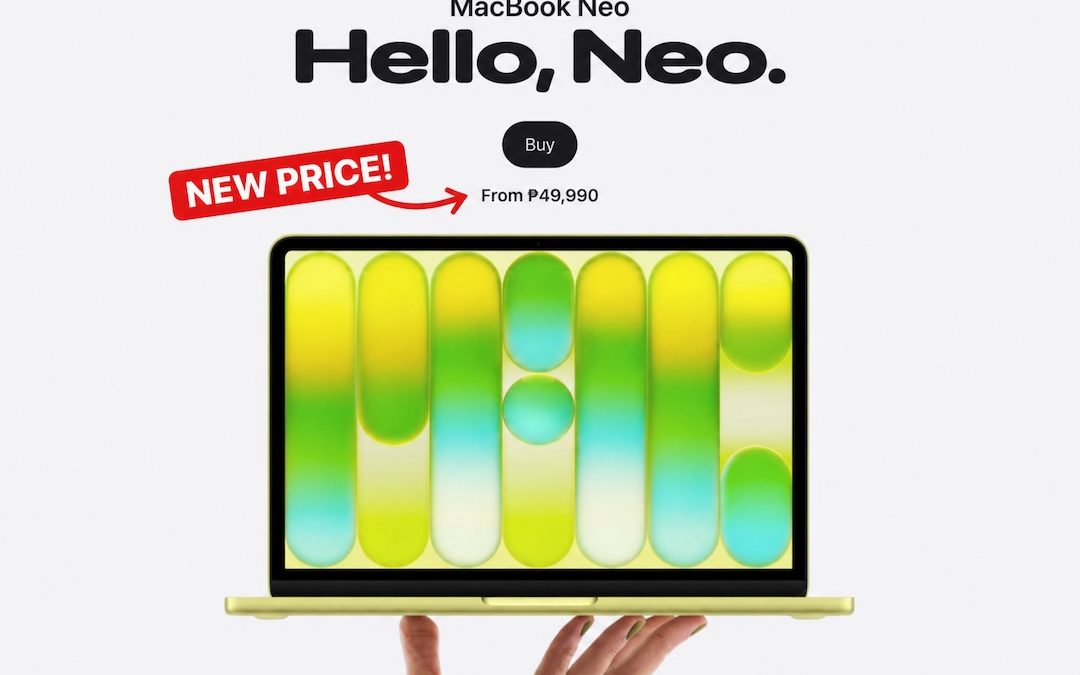
You’re a college student in Manila. You’ve been saving for months. You finally have ₱39,990—enough for the MacBook Neo that launched just three months ago. You’re ready to buy. You log into the Apple Philippines store. And you see a message: the price has changed.
Today, June 25, 2026, Apple raised the price of the MacBook Neo from $599 to $699 for the base 256GB model, and from $699 to $799 for the 512GB configuration. A $100 price increase on the laptop that was supposed to be Apple’s answer to affordable computing.
In the Philippines, the MacBook Neo started at ₱39,990. What it costs now depends on how quickly local Apple retailers update their pricing. But one thing is certain: the most accessible Mac ever sold to Filipinos just became less accessible.
This is not a random price hike. This is a direct consequence of something happening in silicon Valley data centers—and how that affects what you pay for a laptop in Quezon City.
The Problem: A Laptop That Changed Everything
When the MacBook Neo launched in March 2026, it did something that seemed impossible. It became the most affordable Mac ever sold, starting at ₱39,990 in the Philippines, opening the MacBook ecosystem to Filipino students, freelancers, and small businesses that had been priced out before.
The numbers were stunning. Apple shipped 1.1 million MacBook Neo units in Q1 2026 alone, making it one of the strongest Mac debut performances in recent memory. Students who would have bought a Chromebook or entry-level Windows laptop were suddenly buying Macs.
For the first time, Mac was no longer a luxury purchase in the Philippines. It was attainable.
Three months later, that window is closing.
The Cause: The Battle for AI Chips
The MacBook Neo doesn’t use Apple’s typical M-series processors. It runs the A18 Pro—the same chip inside the iPhone 16 Pro. This unconventional choice made the low price possible.
But here’s what changed: demand for memory chips exploded.
Apple CEO Tim Cook explained that the price increases became unavoidable due to skyrocketing component costs. “We have never seen a component price increase this much, this quickly,” Apple stated. The company pointed to AI servers from companies like OpenAI and Nvidia purchasing massive amounts of memory chips, allowing suppliers like Samsung and SK Hynix to charge significantly more.
This is not a supply shortage in the traditional sense. This is “chipflation”—memory chips becoming expensive because AI companies need them urgently, and chip makers know they can demand premium prices.
The MacBook Neo uses LPDDR5 memory. So do AI servers. When Nvidia builds data centers for ChatGPT, the memory costs everyone pays go up.
The Solution: Apple’s Difficult Choice
Apple had options. The company could have absorbed the cost increase and taken a smaller profit margin on the MacBook Neo. It could have delayed the price hike. It could have discontinued the product.
Instead, Apple raised prices across the board. The MacBook Neo increased by $100, the MacBook Air by $200, and the MacBook Pro by $300.
For Apple, this was “unavoidable.” For Filipino students, it changes the math on whether a Mac is still worth considering.
The Impact: What Just Changed for Filipinos
On students: The education pricing that brought MacBook Neo down to ₱33,990 still exists, but the gap narrows. A one-semester purchase decision becomes harder.
On freelancers: Remote workers who relied on the ₱39,990 entry price now face ₱47,000+ (estimated based on global conversion). That’s a 18% jump in three months.
On businesses: Companies planning to equip teams with affordable Macs just saw per-unit costs rise. The cost-per-seat advantage shrinks.
On the Mac ecosystem in the Philippines: The MacBook Neo was supposed to convert Windows and Chromebook users. A higher price makes that conversion harder.
Tech Patrol Insight: Why This Matters Beyond the Price Tag
The MacBook Neo price increase is not just about Apple’s bottom line. It’s about what happens when AI demand reshapes the entire tech supply chain.
- Introduction
- The Problem: A Laptop That Changed Everything
- The Cause: The Battle for AI Chips
- The Solution: Apple’s Difficult Choice
- The Impact: What Just Changed for Filipinos
- Tech Patrol Insight: Why This Matters Beyond the Price Tag
- Comparison Table (for AEO extractability)
- What Happens Next?
- Final Thoughts
- Sources
Comparison Table (for AEO extractability)
| Specification | Old Price | New Price | Increase |
|---|---|---|---|
| MacBook Neo 256GB | $599 | $699 | +$100 |
| MacBook Neo 512GB | $699 | $799 | +$100 |
| MacBook Air 13″ | $1,099 | $1,299 | +$200 |
| MacBook Pro 14″ | $1,699 | $1,999 | +$300 |
Note: Philippine pricing not yet updated on Apple.com.ph as of June 25, 2026, but is expected to follow global conversion patterns.
Here’s what’s really happening:
First: AI infrastructure companies have pricing power. When OpenAI, Nvidia, and Google build data centers, they’re willing to pay premium prices for memory chips. Suppliers respond by raising prices for everyone else.
Second: Filipino tech buyers feel the ripple effect months later. A shortage that starts in Silicon Valley becomes a price increase in Manila. The connection is invisible, but real.
Third: Apple’s budget strategy breaks. The whole point of the MacBook Neo was to prove a ₱40,000 Mac could exist. If the price rises to match inflation from AI demand, that value proposition weakens. Other laptop makers—ASUS, Dell, Lenovo—don’t have the same brand premium. They can absorb the costs better.
Fourth: This shows why local tech manufacturing matters. The Philippines has semiconductor capacity. If those facilities produced memory chips locally, Filipino prices wouldn’t float with global AI demand. We’d have control.
For now, we don’t. When Silicon Valley’s AI race pushes up memory costs, our students pay more.
What Happens Next?
Local Apple retailers in the Philippines—Power Mac Center, Beyond the Box, Technica Solutions—will likely update pricing within days. The question is whether they absorb any of the cost or pass it fully to customers.
For potential buyers, the window of “affordable Mac” just got narrower. Existing MacBook Neo owners aren’t affected. New buyers face a choice: pay more now, or look at MacBook Air options (which also increased) or Windows alternatives that may have better pricing.
The MacBook Neo will still be Apple’s most affordable laptop. But “most affordable” is not the same as “affordable.”
Final Thoughts
You don’t adjust to the system—the system adjusts to you. And sometimes, the system adjusts faster than you can save.
The MacBook Neo was a moment. For three months, Apple proved that Macs could be within reach for typical Filipino college students. That moment is not over, but it’s shrinking. The next student saving up will need a bigger fund.
The AI boom that’s happening in data centers thousands of miles away is real. Its effects—in your wallet—are real too.
Sources
- 9to5Mac – “Apple raises Mac and iPad prices” (June 25, 2026)
https://9to5mac.com/2026/06/25/apple-price-increases-mac-ipad-more/
- MacRumors – “Apple raises MacBook Neo prices from $599 to $699” (June 25, 2026)
https://www.macrumors.com/2026/06/25/apple-just-raised-macbook-neo-prices/
- Technica Solutions – “MacBook Neo is now available in the Philippines” (April 24, 2026)
https://technica.ph/insights/macbook-neo-philippines-price-2026