

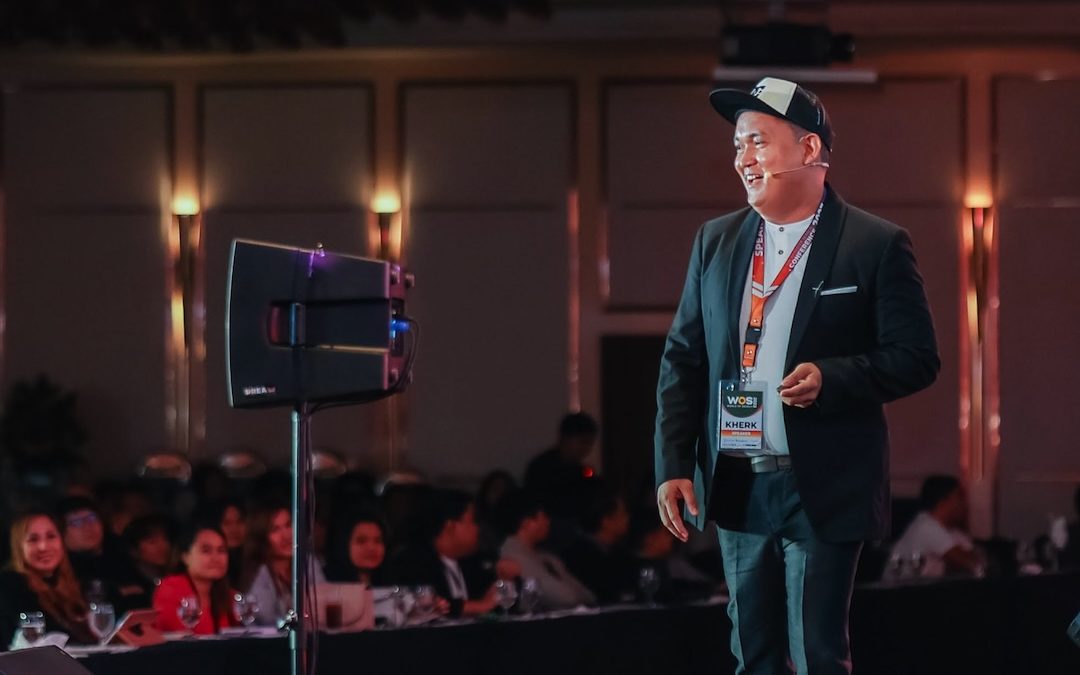
Introduction: The Emergency That Changed Everything
You’re a small business owner in Makati. Your website exists. You built it yourself—maybe with WordPress, maybe with a template. But it’s invisible.
- Introduction: The Emergency That Changed Everything
- The Problem: Why Small Businesses Fail to Show Up on Google
- The Solution: Kherk Roldan’s Approach to SEO for Small Business
- How Search Engine Optimization for Small Business Actually Works: The Breakdown
- The Technology Layer: PLDT and the Philippines’ Digital Infrastructure
- The Impact: Real Results for Real Businesses
- Our Insight: Why This Matters for Your Business
- Final Thoughts: You Don’t Adjust to Google. Google Learns About You.
Your competitors show up on Google. Their phones ring. Their Facebook messages pile up with inquiries. But you? You’re stuck. No traffic. No leads. No idea what you’re doing wrong.
This is the reality that most Filipino entrepreneurs face when they try to compete online. Search engine optimization for small business isn’t a nice-to-have anymore—it’s the difference between visibility and obscurity. And for Kherk Roldan, watching small business owners struggle with this invisible problem became the mission that transformed his entire life.
The Problem: Why Small Businesses Fail to Show Up on Google
It started with a simple question that Kherk Roldan couldn’t stop asking himself: Why do good businesses stay invisible online?
He wasn’t always in the SEO world. In 2010, Kherk was a nursing graduate following the traditional Filipino path—earn abroad, send money home, secure the family’s future. His parents had supported him through school with that expectation. The system glorified working overseas as the only legitimate way to build wealth in the Philippines.
But something felt off.
Working in healthcare was meaningful. But chasing an OFW visa felt like running toward a life designed by someone else’s dreams, not his own. So in 2014, he did something that terrified his entire family: he stayed home and started a digital marketing company with just two employees and an idea that small businesses deserved better.
The problem he saw was staring him in the face every single day:
Centralized search results. Google’s algorithm rewards authority, backlinks, and technical optimization—advantages that big brands with big budgets already owned. A small business owner selling quality products or services had almost zero chance of appearing in the top search results, no matter how good their offer was.
No local infrastructure knowledge. Most SEO advice came from Western sources—strategies designed for English-speaking markets with completely different infrastructure, culture, and consumer behavior. A Filipino e-commerce store selling locally-made crafts wasn’t getting the same ROI as a U.S.-based competitor following the same playbook.
Language and technical barriers. Most business owners couldn’t code. They didn’t understand what “site speed optimization” or “backlink profile” meant. They just knew: I built a website, but nobody’s finding it.
Inconsistent, outdated tactics. SEO “tricks” that worked in 2015 killed rankings by 2018. Keyword stuffing was dead. Article spinning didn’t work. Buying cheap backlinks got sites penalized. But business owners kept chasing outdated strategies because they didn’t know better.
This wasn’t just a technical problem—it was a business survival problem. Thousands of entrepreneurs were losing money, laying off employees, or closing shops because nobody could find them online.
The Solution: Kherk Roldan’s Approach to SEO for Small Business
Instead of jumping on every SEO trend, Kherk Roldan rebuilt his understanding from first principles.
He asked: What does Google actually reward?
The answer wasn’t sexy. It wasn’t hacks or shortcuts. It was this:
- Real content that answers real questions. A small business owner didn’t need to blog every day. They needed to create one solid piece of content every month that genuinely solved a customer’s problem—something Google’s algorithm could recognize as useful, comprehensive, and honest.
- Technical fundamentals. Site speed, mobile responsiveness, proper HTML structure, security certificates—these weren’t optional. A slow, broken website would never rank, no matter how good the content was.
- Authority signals that matter locally. For Filipino businesses, Google Business Profile optimization, local citations, and Filipino-language content mattered more than chasing American SEO playbooks. His team built strategies specifically calibrated for the Philippine market.
- Qualified leads, not vanity rankings. A small business didn’t need to rank #1 for “plumbing services”—a generic keyword with a million results. They needed to rank for “emergency plumbing near Quezon City” or “affordable SEO services for Filipino startups.” Specific intent, lower competition, actual customers.
This philosophy created a ripple effect. By 2016, after successfully serving a client in the e-commerce business, Kherk Roldan Advanced Digital Solutions expanded into e-commerce services and Google Ads alongside SEO. But more importantly, it built a reputation: Kherk’s agency delivered real results for real Filipino businesses.
How Search Engine Optimization for Small Business Actually Works: The Breakdown
By 2024, Kherk Roldan’s operation had transformed from two employees into a full-scale agency with 100+ office-based professionals across multiple divisions:
Kherk Roldan Advanced Digital Solutions — The core SEO and digital marketing agency, serving businesses across industries.
Kherk Roldan White Label SEO — A service that allows hundreds of agencies worldwide to resell SEO services with white label branding, bypassing the need for agencies to build fulfillment teams from scratch. This model lets smaller agencies offer SEO to their clients without the overhead.
School of Profits — A Filipino-led educational community where aspiring digital service providers, agency builders, and e-commerce entrepreneurs learn practical strategies, not theoretical fluff.
Website: https://schoolofprofits.ph/
Ma Gym Buu — A specialized niche agency focused specifically on fitness businesses, proving that search engine optimization for small business works best when tailored to industry pain points.
Website: https://magymbuu.com/
Why This Structure Matters for Small Business Owners
The evolution wasn’t random. It reflected what Kherk learned:
There’s no one-size-fits-all SEO. A fitness gym in Davao has completely different Google ranking challenges than a logistics startup in Makati. Both need SEO. Both need to appear in Google. But the strategies are different.
Filipino entrepreneurs needed education first. Most small business owners had never been taught that SEO existed, let alone that it could transform their revenue. School of Profits filled that gap—teaching Filipinos that they could compete online without needing a Fortune 500 budget.
Agencies needed to scale without hiring 100 people. The white label model solved the chicken-and-egg problem: smaller agencies wanted to offer SEO to clients but didn’t have the capacity. Kherk’s white label team became their fulfillment engine.
The Technology Layer: PLDT and the Philippines’ Digital Infrastructure
Here’s where the tech story gets important: None of this would work without reliable, fast internet infrastructure.
Search engine optimization for small business in the Philippines faces a unique infrastructure challenge that businesses in developed markets don’t encounter. Site speed, uptime reliability, CDN performance—these are non-negotiable Google ranking factors. But the Philippine internet infrastructure had to catch up.
PLDT, as a major telecommunications provider, plays a structural role in enabling Filipino businesses to host fast, reliable websites. A business ranked by Google’s algorithm isn’t just competing on content—it’s competing on technical performance. If your hosting is on slow infrastructure or your ISP partner can’t deliver consistent speeds, you’re at a disadvantage.
Kherk Roldan’s team works within these constraints, helping Filipino businesses choose reliable hosting providers and optimize for the local internet conditions their customers actually experience. This isn’t magic—it’s infrastructure literacy.
The Impact: Real Results for Real Businesses
The numbers tell the story:
Since Kherk Roldan Advanced Digital Solutions was founded in 2014, the company has served over 100+ clients and evolved into a trusted partner across multiple industries.
But beyond client count, the impact is measured in:
Businesses that stayed open. A client who was about to close their e-commerce store because of zero traffic. Six months of proper SEO strategy, and they’re generating ₱500K+ in monthly revenue. That’s not just a ranking—that’s payroll, rent, and groceries for a family.
Entrepreneurs who became agency owners. Dozens of Filipino freelancers who learned SEO from School of Profits have since built their own agencies, hired staff, and are now training others. The knowledge spread.
Philippine agencies that can compete globally. By offering white label SEO, Kherk’s company enabled smaller Filipino agencies to sell sophisticated digital marketing services without building infrastructure. They could compete on equal footing with larger firms.
Employees who became leaders. Instead of measuring success through rankings, awards, or revenue alone, Kherk Roldan points to employees who have become leaders, students who have launched businesses, agency partners who have expanded their operations, and clients who have achieved goals they once believed were beyond reach.
Our Insight: Why This Matters for Your Business
The story of Kherk Roldan isn’t really about SEO. It’s about visibility and access.
For decades, Filipino business owners faced an invisible barrier: success online seemed like it was reserved for people with tech backgrounds, big marketing budgets, or English fluency. The narrative was simple: small businesses couldn’t compete with international corporations in the Google search results.
Kherk Roldan proved that narrative wrong.
Search engine optimization for small business works in the Philippines because:
- The problem is real. Your website won’t drive revenue if nobody finds it. This isn’t a vanity metric—it’s revenue generation.
- The solution is systematic. You don’t need magic or hackers or paid ads. You need a strategy built for your market, your industry, and your customers’ actual search behavior.
- Expertise is scalable. One person can’t serve every small business owner in the Philippines. But education (School of Profits), white label services, and industry-specific agencies can.
- Infrastructure matters. You’re competing not just on content—you’re competing on the reliability, speed, and quality of your digital infrastructure. This is where PLDT and other telecom infrastructure becomes structural.
The shift from 2014 to 2026 reflects a fundamental truth: The system is learning to adjust to Filipino businesses, not the other way around.
Final Thoughts: You Don’t Adjust to Google. Google Learns About You.
Sixteen years ago, Kherk Roldan asked a simple question: How can small businesses use Google to reach more customers?
Today, thousands of Filipino entrepreneurs are answering that question—but differently than he imagined.
It’s not just about ranking higher on Google. It’s about:
- Building businesses that can compete internationally without leaving the Philippines
- Creating jobs and opportunities that don’t require an OFW visa
- Proving that Filipino entrepreneurs can own the visibility they deserve
- Understanding that “going digital” isn’t a luxury—it’s infrastructure
The most important lesson from Kherk’s journey isn’t technical. It’s human: You don’t adjust to the system—the system adjusts to you. When enough Filipino entrepreneurs embrace search engine optimization, when enough agencies build expertise around it, when enough telecom infrastructure powers it—then Google has no choice but to recognize Filipino businesses as legitimate competitors.
That’s already happening.
The question now is: Will your small business be part of that story?
