


The Kia PV5 Cargo Philippines launch is official: Kia’s purpose-built electric van now sells for ₱2,098,000, and fleet reservations opened nationwide on October 22, 2026. Kia Philippines, under Ayala’s ACMobility, unveiled the van at PEVS 2026, the 14th Philippine Electric Vehicle Summit at the SMX Convention Center in Pasay.
This isn’t a passenger EV with the seats ripped out. The PV5 sits on Kia’s dedicated EV platform, carries the 2026 International Van of the Year title, and targets one buyer: the Filipino business owner tired of watching diesel prices eat delivery margins. It hauls up to 805 kg, claims 384 km on a charge, and can power tools at a job site through Vehicle-to-Load.
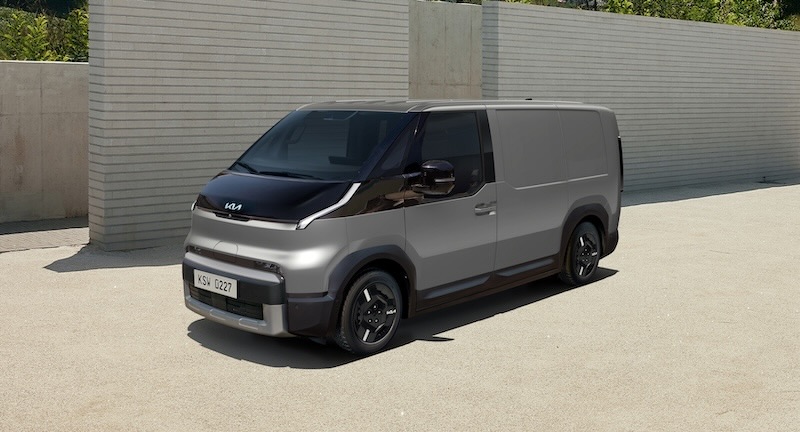
The pitch is clear. The real question is whether ₱2.1 million for an electric van makes sense for a Metro Manila fleet today. Here’s everything you need to decide.
- Kia PV5 Cargo Price Philippines and Specs at a Glance
- Kia PV5 Cargo Payload and Cargo Space: Built for Deliveries
- Kia PV5 Cargo Range: Can It Handle Metro Manila Routes?
- Kia PV5 Cargo Charging Time: Overnight or Lunch Break
- Kia PV5 V2L: A Power Station on Wheels
- Safety and Cabin Tech
- Kia PV5 Cargo vs Foton Transvan EV
- Where to Buy Kia PV5 Cargo Philippines
- TechPatrol Verdict
- Frequently Asked Questions
Kia PV5 Cargo Price Philippines and Specs at a Glance
| Kia PV5 Cargo Specs | Details |
|---|---|
| Price (SRP) | ₱2,098,000 |
| Motor | Permanent Magnet Synchronous Motor |
| Output | 163 PS, 250 Nm |
| Battery | 51.5 kWh NMC |
| Range | Up to 384 km (NEDC) |
| DC fast charging | 10% to 80% in about 30 mins (350 kW charger, CCS2) |
| AC charging | 10% to 80% in 4 hrs 45 mins (11 kW wallbox, Type 2) |
| Payload | Up to 805 kg |
| Cargo volume | 4,420 liters |
| Cargo bay (L x W x H) | 2,255 x 1,565 x 1,520 mm |
| Exterior (L x W x H) | 4,695 x 1,895 x 1,905 mm |
| Wheelbase | 2,995 mm |
| V2L output | Up to 3.6 kW |
| Screens | 12.9-inch touchscreen, 7.5-inch driver cluster |
| Wheels | 16-inch steel with wheel caps |
| Colors | Snow White Pearl, Steel Grey, Aurora Black Pearl |
Kia PV5 Cargo Payload and Cargo Space: Built for Deliveries
The numbers that matter to a logistics operator sit in the back. The Kia PV5 Cargo payload tops out at 805 kg, spread across a 4,420-liter bay that measures 2,255 mm long, 1,565 mm wide, and 1,520 mm tall. That’s enough floor length for standard pallets and enough height for stacked balikbayan-size boxes.
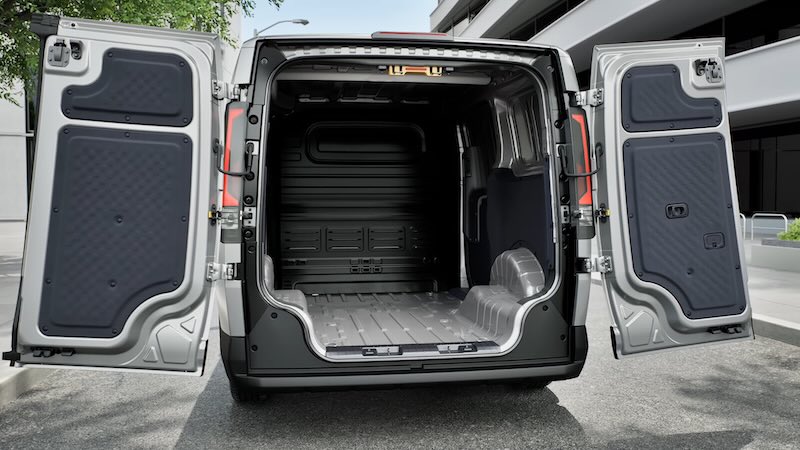
Kia added the details that save time on every drop. Dual-swing rear doors open wide, the loading height sits low, and eight heavy-duty tie-down hooks plus universal L-track mounting points keep cargo from sliding around on EDSA’s stop-and-go crawl.
Outside, the van stays compact. At 4,695 mm long and 1,895 mm wide, it fits through narrow Binondo side streets and tight mall loading docks that larger vans avoid. The 2,995 mm wheelbase keeps the cabin and cargo bay roomy without stretching the body.
Kia PV5 Cargo Range: Can It Handle Metro Manila Routes?
Kia rates the Kia PV5 Cargo range at up to 384 km on the NEDC cycle from a 51.5 kWh battery. Kia positions that figure for daily distribution within Metro Manila and nearby provinces, and that framing is honest.
A caveat every fleet manager should know: NEDC is the most optimistic of the common test cycles. Real-world range drops with a full 805 kg load, heavy aircon use in 34°C afternoons, and expressway speeds. Plan routes around 250 to 300 km per day and you’ll have a buffer. For a Makati to Cavite or Quezon City to Bulacan delivery loop, that covers a full shift with room to spare.
Running costs are where electric vans earn their keep. A full 51.5 kWh charge at an illustrative ₱12 per kWh residential rate comes to roughly ₱620. Diesel for a comparable daily route runs several times that, before you factor in oil changes, filters, and transmission service that an EV never needs.
Kia PV5 Cargo Charging Time: Overnight or Lunch Break
The Kia PV5 Cargo charging time depends on your setup:
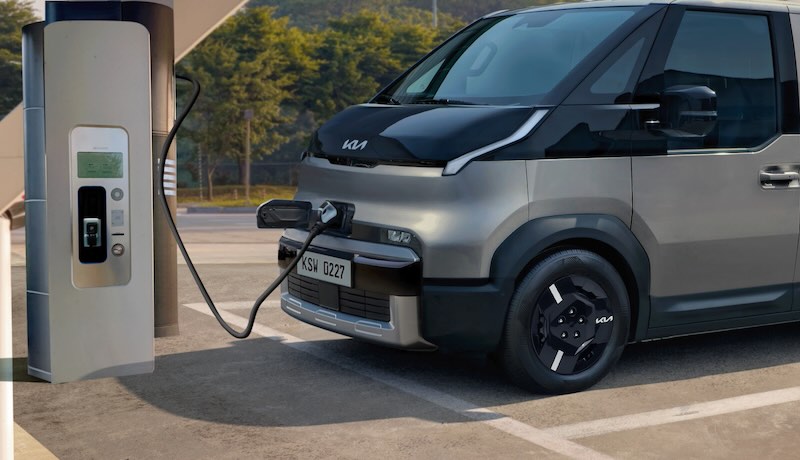
- DC fast charging (CCS2): 10% to 80% in about 30 minutes on a 350 kW charger. That’s a lunch-break top-up between morning and afternoon runs.
- AC charging (Type 2): 10% to 80% in 4 hours and 45 minutes on an 11 kW wallbox. Plug in at the depot after the last delivery and the van is ready by morning.
Most fleets will live on the AC wallbox. The 350 kW figure is a ceiling, not a guarantee; few public chargers in the country deliver that much power yet, so expect longer DC sessions at slower stations. Kia ties every purchase into ACMobility’s Evro charging app network, which helps with route planning.
Kia PV5 V2L: A Power Station on Wheels
The Kia PV5 V2L feature exports up to 3.6 kW from the high-voltage battery. That runs power tools, work lights, a small aircon unit, or a sound system at an event setup.
For contractors, caterers, and event crews, this kills the need to haul a gasoline generator. It also doubles as backup power during brownouts, which any Filipino household or sari-sari store owner will appreciate. For context, 3.6 kW outpaces most portable power stations sold locally, and the PV5 carries a far larger battery behind it.
Safety and Cabin Tech
Kia equips the van with its DriveWise suite: Forward Collision Avoidance Assist with Autonomous Emergency Braking, Smart Cruise Control, Lane Keeping Assist, Lane Following Assist, and Driver Attention Warning. That last one matters for drivers running 10-hour delivery shifts.
Front and rear parking distance warnings and a rear-view monitor help in tight worksites. Front, side, and curtain airbags, Electronic Stability Control, Hill-Start Assist, and Downhill Brake Control round out the package.
Inside, a 12.9-inch touchscreen and 7.5-inch cluster run the show, with wired and wireless Apple CarPlay and Android Auto for Waze navigation. Dual high-output USB-C ports and 12V outlets keep driver phones and scanners charged all day.
Kia PV5 Cargo vs Foton Transvan EV
The closest rival in the electric van Philippines market is the Foton Transvan EV, which Carmudi lists at ₱2,058,000 with 116 hp. The Kia costs ₱40,000 more but brings 163 PS, a full ADAS suite, V2L, and a larger infotainment setup.
For fleets that only need A-to-B hauling at the lowest price, the Foton holds its ground. For operators who want driver-assist safety, job-site power, and Ayala-backed fleet support, the PV5 justifies the small premium. In the electric cargo van Philippines 2026 lineup, the PV5 is the most feature-loaded option at this price point.
Where to Buy Kia PV5 Cargo Philippines
Fleet reservations are open at all 38 Kia dealerships nationwide as of October 22, 2026. Buyers get access to ACMobility’s B2B tools: ChargeFleet management, Greenstrum infrastructure support, Power-on-Wheels mobile support, and the Evro charging network. Check kiaphilippines.com for your nearest dealer.
TechPatrol Verdict
The Kia PV5 Cargo Philippines launch gives local businesses a credible reason to go electric. At ₱2,098,000, it isn’t cheap, but the math favors operators running fixed daily routes within Metro Manila and nearby provinces. Lower energy and maintenance costs chip away at the price gap every month.
The 805 kg payload, compact footprint, and V2L output make it versatile enough for couriers, caterers, contractors, and event crews. The ACMobility ecosystem adds peace of mind for fleets nervous about charging.
Our one warning: treat the 384 km NEDC figure as a best case. Plan for less, install a wallbox at your depot, and the PV5 should pay you back.
Frequently Asked Questions
What is the Kia PV5 Cargo price Philippines? The Kia PV5 Cargo sells for ₱2,098,000 in the Philippines.
What is the Kia PV5 Cargo range? Kia rates it at up to 384 km per charge on the NEDC cycle. Expect less in real-world loaded driving.
What is the Kia PV5 Cargo charging time? DC fast charging takes it from 10% to 80% in about 30 minutes on a 350 kW charger. AC charging on an 11 kW wallbox takes 4 hours and 45 minutes for the same range.
How much can the Kia PV5 Cargo carry? The Kia PV5 Cargo payload is up to 805 kg, with 4,420 liters of cargo space.
Where can I buy the Kia PV5 Cargo in the Philippines? Fleet reservations are open at all 38 Kia Philippines dealerships nationwide since October 22, 2026.
When did the Kia PV5 Cargo launch in the Philippines? Kia Philippines launched the PV5 Cargo at PEVS 2026 at the SMX Convention Center, Pasay City, on October 22, 2026.
