Stop scrolling. If you’re a vlogger, motovlogger, or content creator who lives for immersive 360 footage, the battle between the DJI Osmo 360 II (just dropped) and the Insta360 X6 (reigning champion) just got serious. Both are pushing into native 8K, 1-inch class sensors, and user-replaceable lenses—but they’re solving the “best 360 camera” problem in completely different ways. One prioritizes raw speed and ecosystem lock-in. The other obsesses over battery life and display quality. Neither is wrong. But only one will survive in your camera bag.
- The Tension: What Changed This Year
- Specs Head-to-Head: Where They Actually Differ
- Video & Framerate: The Smoothness Winner
- Battery & Runtime: The Endurance Champion
- Storage: The No-MicroSD Flex
- Display: The Visibility Matchup
- Audio & Wind Isolation: The Motorcycle Factor
- Waterproofing & Durability: The Build Quality Question
- The Scene: Real-World Usage Breakdown
- For Motorcycle Content Creators
- For High-Speed Sports (Skateboarding, FPV, Motorsports)
- For Mobile-First Creators (Publishing Straight from Phone)
- For Battery-Heavy Shooting Days
- For Long-Term Investment & Durability
- The Twist: Price & Availability in the Philippines
- DJI Osmo 360 II
- Insta360 X6
- The Lesson: Which Camera Wins Your Workflow?
- Choose DJI Osmo 360 II If You:
- Choose Insta360 X6 If You:
- The Promise: What This Means for Your Content
- One More Thing
- The Bottom Line
The Tension: What Changed This Year
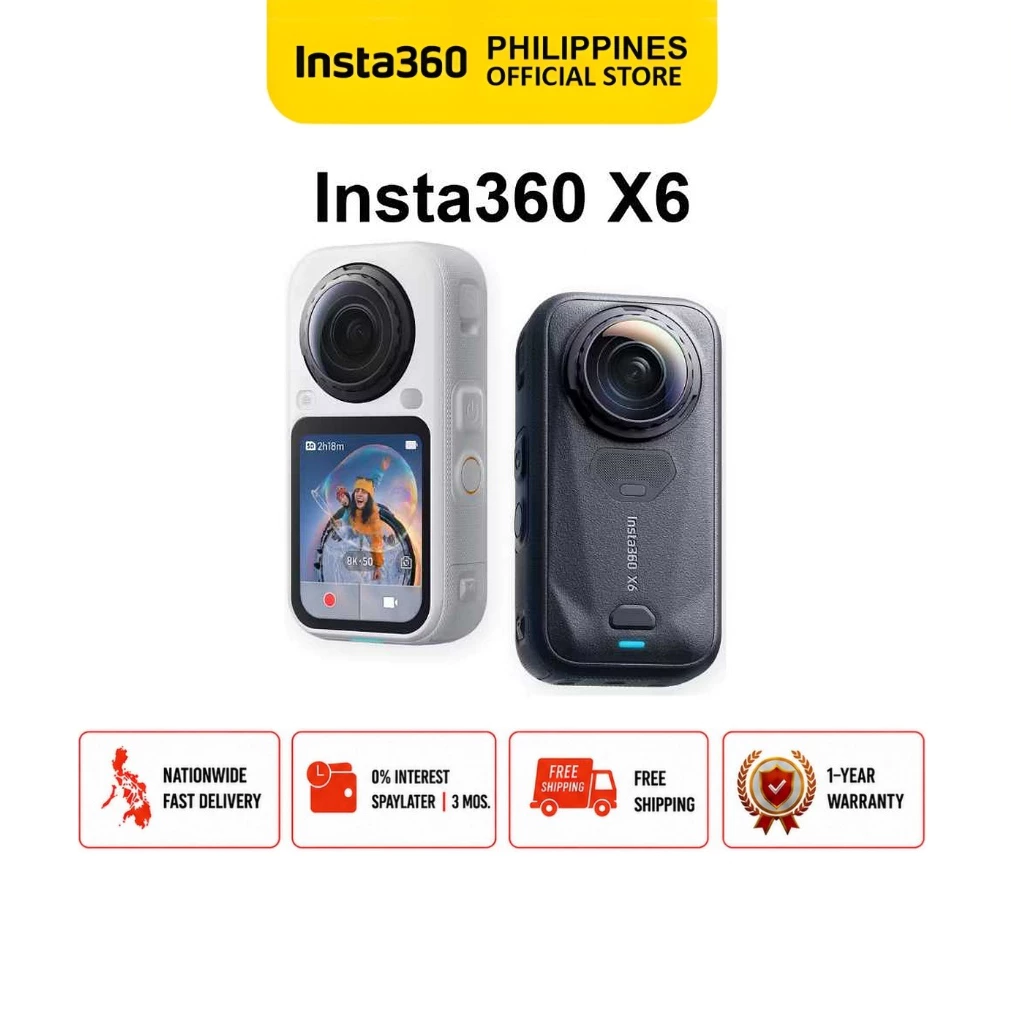
Until last week, Insta360 was the undisputed heavyweight. The X6 arrived in 2024 with a 1200-nit OLED screen, 140-minute battery runtime, and native direct-to-phone editing that made creators forget about desktop software. It was the “no-compromise” 360 camera.
Then DJI dropped the Osmo 360 II—and suddenly, the playbook flipped.
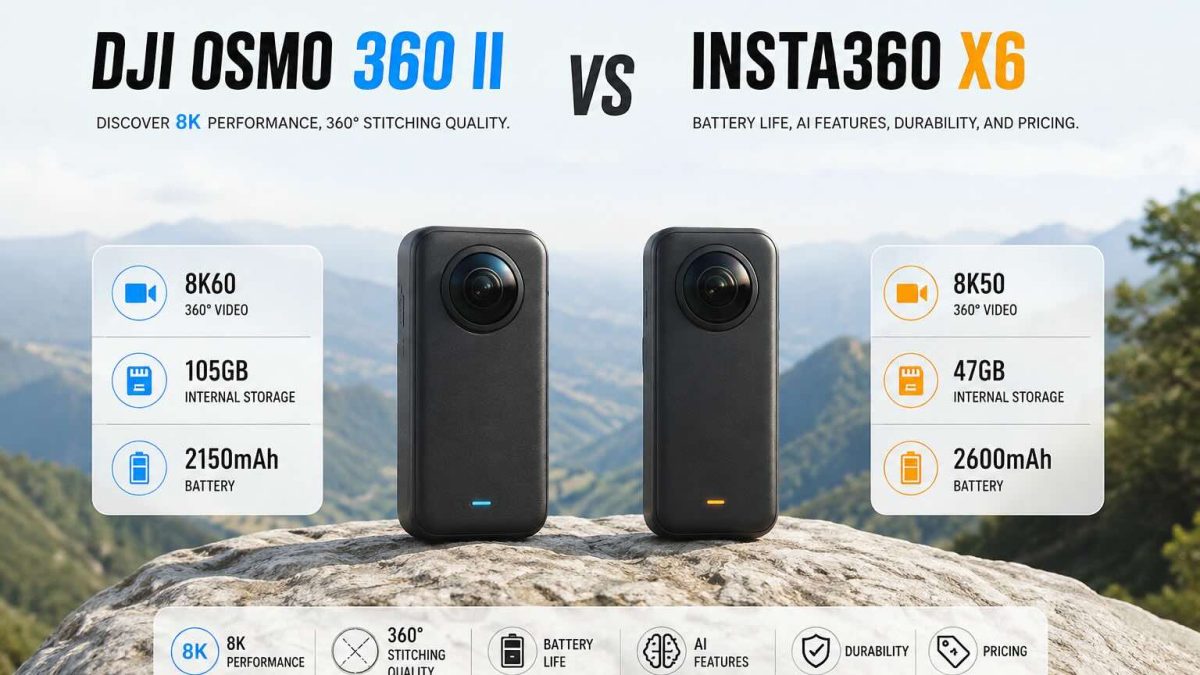
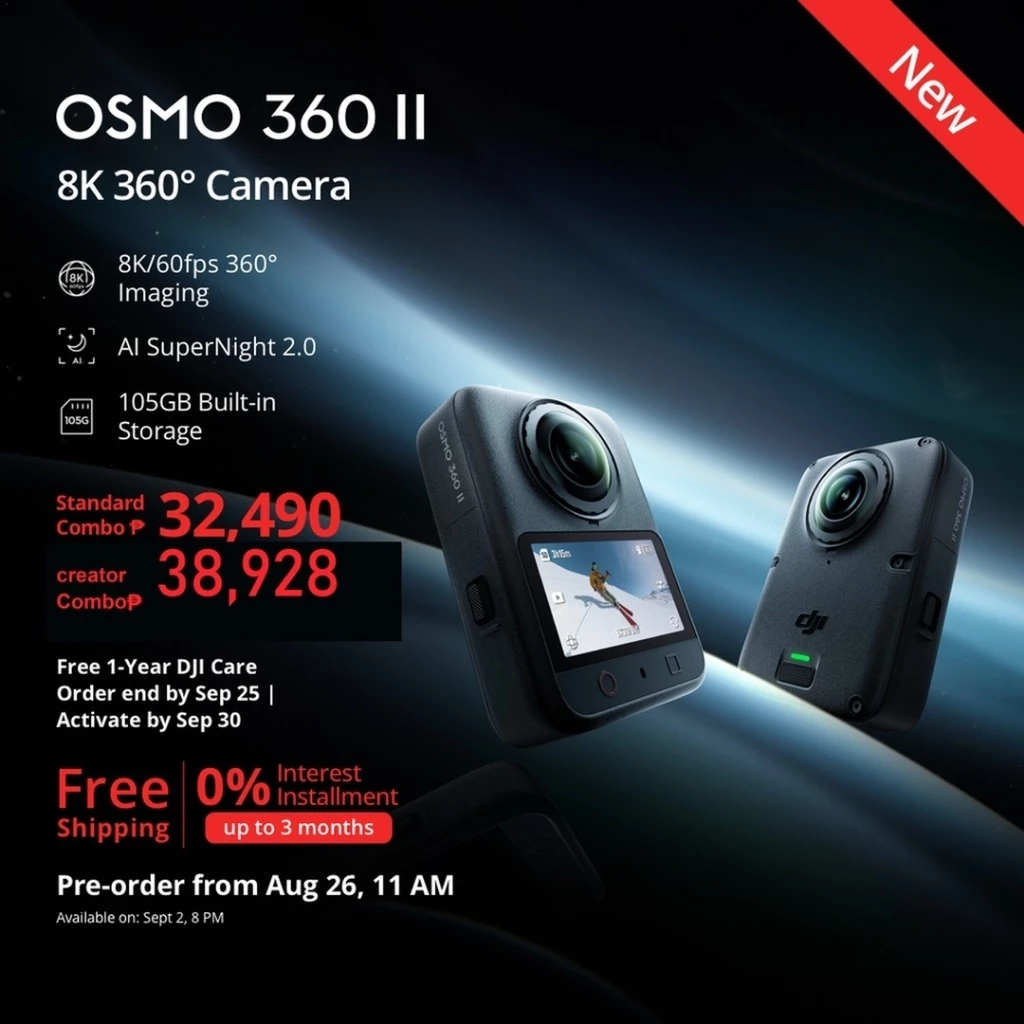
The new Osmo doesn’t just match the X6. It beats it where it matters most for high-speed sports: native 8K at 60fps (not 50), twice the internal storage (105GB vs. 47GB), and seamless integration with DJI’s Mic ecosystem. For motorcyclists and adrenaline creators, those differences are the difference between “acceptable” and “professional.”
But Insta360 isn’t standing still either. The X6’s display still looks better in sunlight. Its battery still lasts longer. And its editing workflow is so mobile-first that creators working on a phone can publish 360 content directly from the camera without ever touching a laptop.
The real question isn’t which camera is better. It’s which philosophy wins: raw performance, or user experience?
Related: Insta360 X6 vs. Insta360 X5: Flagship 360 Action Camera Showdown
Specs Head-to-Head: Where They Actually Differ
Video & Framerate: The Smoothness Winner
| Feature | DJI Osmo 360 II | Insta360 X6 |
|---|---|---|
| Native 8K framerate | 8K/60fps | 8K/50fps |
| 4K slow-mo | 4K/120fps | 4K/100fps |
| 8K upscaled slow-mo | 8K/480fps (AI) | N/A (X6 caps at 4K) |
| Video formats | 10-bit D-Log M, 8-bit H.265 | 10-bit I-Log, 8-bit H.265 |
Winner: DJI Osmo 360 II
The +10fps bump might sound minor on spec sheets, but for motorcycle footage, drone racing, or action sports with fast lateral movement, those extra frames translate directly to smoother motion in post. The AI-driven 8K/480 slow-motion in DJI Studio is a flex (even if it’s interpolated, not native), but the X6’s 4K/100fps ceiling leaves Insta360 shooting lower resolution when you need slow-motion drama.
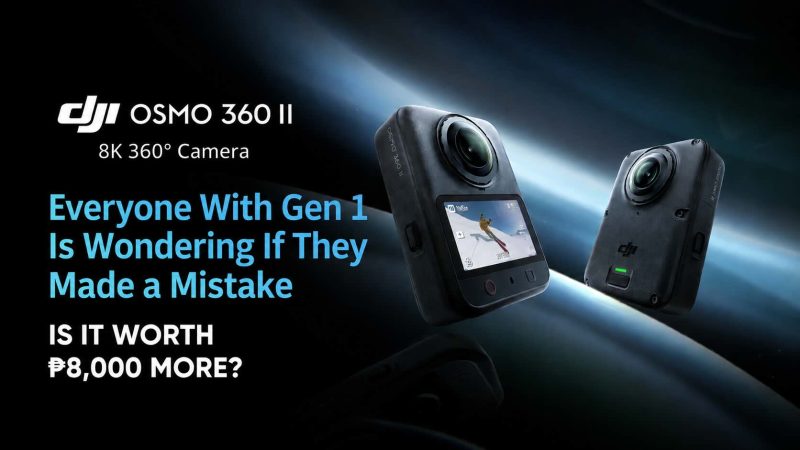
Related: DJI Osmo 360 vs Osmo 360 II: Everyone With Gen 1 Is Wondering If They Made a Mistake
Battery & Runtime: The Endurance Champion
| Feature | DJI Osmo 360 II | Insta360 X6 |
|---|---|---|
| Battery capacity | 2150 mAh | ~3000 mAh (estimated) |
| 8K/30fps runtime | 100–110 min | 140 min |
| 8K/60fps runtime | ~75–85 min | N/A (X6 tops out at 50fps) |
| Battery extension | DJI Extension Rod (+180 min) | Built-in, no accessories |
Winner: Insta360 X6
Real talk: if you’re shooting a full day of content without access to power, the X6 wins. At 140 minutes of continuous 8K recording, you’re looking at 2+ hours of uninterrupted footage—enough to cover most outdoor events, destination vlogging, or a motorcycle rally without swapping batteries. The Osmo 360 II’s 100-minute baseline means you’re tethered to a power bank or swapping batteries mid-session. Yes, DJI sells a battery extension rod that doubles runtime, but that’s an extra ₱2,500+ accessory purchase. Insta360’s advantage here is built-in, not optional.
Storage: The No-MicroSD Flex
| Feature | DJI Osmo 360 II | Insta360 X6 |
|---|---|---|
| Built-in storage | 105GB usable | 47GB usable |
| MicroSD slot | Yes, supports up to 512GB | Yes, supports up to 512GB |
| Real-world capacity | Shoot 45 min of 8K without card | Shoot ~20 min of 8K without card |
Winner: DJI Osmo 360 II
Here’s the hidden edge: the Osmo 360 II’s massive internal storage means you can roll camera without a microSD card in your pocket. For motorcycle jaunts, quick street shoots, or travel when you’ve left your SD cards at home, this is huge. The X6’s 47GB is generous for an action camera, but it’s barely enough for 25 minutes of 8K—meaning microSD adoption is mandatory, not optional.
Display: The Visibility Matchup
| Feature | DJI Osmo 360 II | Insta360 X6 |
|---|---|---|
| Screen type | 2.0-inch LCD | 2.32-inch OLED |
| Brightness | 800 nits | 1200 nits |
| Resolution | 960 × 400 | 1280 × 480 |
| Touch response | Standard press | Pressure-sensing (full-screen press) |
Winner: Insta360 X6
Sunlight readability on motorcycles is non-negotiable. The X6’s 1200-nit OLED display is visibly brighter, sharper, and more responsive than the Osmo’s 800-nit LCD. If you’re tracking a shot on a sun-baked highway or adjusting settings without pulling over, the X6’s display wins every time. The Osmo’s screen isn’t bad—it’s just playing on hard mode in bright conditions.
Audio & Wind Isolation: The Motorcycle Factor
| Feature | DJI Osmo 360 II | Insta360 X6 |
|---|---|---|
| Mic array | 4-mic, wind reduction | 4-mic, dedicated motorcycle mode |
| Wind guards | Standard | 360° integrated guards |
| DJI Mic integration | Native, no receiver needed (Mic 2/3) | Requires 3.5mm adapter |
| Unique feature | OsmoAudio wireless sync | “Hidden Engine Mic” motorcycle mode |
Winner: Insta360 X6 (for motorcyclists)
If you’re motovlogging, the X6’s “Hidden Engine Mic” mode is a game-changer. It specifically attenuates wind noise while preserving engine audio—something DJI’s generic wind reduction can’t match. However, if you’re using a DJI Mic (Mic 2 or Mic 3), the Osmo 360 II eliminates the need for a receiver box, which simplifies your rig. For most Filipino motovloggers pairing with a shotgun mic anyway, this is a wash—but the X6’s dedicated motorcycle audio profile has a real edge.
Waterproofing & Durability: The Build Quality Question
| Feature | DJI Osmo 360 II | Insta360 X6 |
|---|---|---|
| Native IP rating | IP68, 10m depth | IP68, 15m depth |
| Deep water case | Optional 50m case (₱2,800+) | Rated for 15m natively |
| Lens durability | Ultra-hard replaceable elements | Fixed optical design |
| Lens replacement cost | ₱1,190–1,890 (dual or single) | N/A (not user-replaceable) |
Winner: Insta360 X6 (native depth) / DJI Osmo 360 II (long-term durability)
The X6 is deeper out-of-the-box (15m vs. 10m), which matters if you’re shooting water sports or underwater vlogging. But the Osmo 360 II’s replaceable lens elements are a long-term durability win. Scratch a lens coating on the X6? You’re sending it for warranty repair. Scratch the Osmo? Spend ₱1,190 and you’re back to pristine glass. For content creators working in dusty, sandy, or rough conditions, that’s a serious reliability edge.
The Scene: Real-World Usage Breakdown
For Motorcycle Content Creators
Winner: Insta360 X6 (with an asterisk)
The X6’s dedicated motorcycle audio mode and superior display brightness are built for two-wheeled storytelling. But—and this is crucial—if you’re already running DJI mics or flying DJI drones elsewhere in your kit, the Osmo 360 II’s ecosystem integration means one fewer wireless receiver to strap to your bike. Test both in actual sunlight before choosing.
For High-Speed Sports (Skateboarding, FPV, Motorsports)
Winner: DJI Osmo 360 II
Native 8K/60fps is non-negotiable for fast-moving subjects. Every frame counts when your skateboard or racing drone is at the edge of blur. The Osmo’s extra 10fps directly translates to usable, smooth footage. The X6’s 50fps can work, but you’re leaving sharpness on the table.
For Mobile-First Creators (Publishing Straight from Phone)
Winner: Insta360 X6
Insta360’s editing app is leagues ahead of DJI’s mobile experience. If your workflow is “shoot at destination, edit on phone, post to Instagram that evening,” the X6 does that with zero friction. DJI’s mobile app exists, but it’s a cloud-upload bottleneck.
For Battery-Heavy Shooting Days
Winner: Insta360 X6
140 minutes without swapping is the difference between one battery change and three. If you’re covering a full festival, all-day adventure, or multi-location shoot without access to power, the X6’s built-in endurance wins.
For Long-Term Investment & Durability
Winner: DJI Osmo 360 II
Replaceable lenses, newer sensor tech, and DJI’s track record of supporting older hardware with firmware updates means the Osmo 360 II will age better. In two years, you might be replacing scratched lenses (cheap). The X6 might be showing sensor wear with no upgrade path.
The Twist: Price & Availability in the Philippines
DJI Osmo 360 II
- Standard Combo: ₱32,490 (Camera + ND filter kit)
- Adventure Combo: ₱39,490 (+ carrying case, cleaning kit, USB hub)
- Limitless Riding Combo: ₱34,490 (camera + motorcycle mount + grip)
Available: Shopee, Lazada, TikTok Shop, djiph.com, SM electronics malls
Insta360 X6
- Single camera: ₱18,990 (online exclusive)
- Standard Bundle: ₱24,990 (+ ND filters, carrying case, cleaning kit)
- Adventure Bundle: ₱28,990 (+ extended battery, ND filter kit, memory card)
Available: Shopee, Lazada, AliExpress Global, Insta360 official
The math: The X6’s base price is lower, but DJI’s Limitless Riding Combo (₱34,490) directly targets motovloggers and bundles the motorcycle mount—a piece of gear you’d buy separately for Insta360 anyway (usually ₱3,500–5,000). At purchase parity (₱32–35k), you’re comparing feature-for-feature, not price-for-price.
The Lesson: Which Camera Wins Your Workflow?
Choose DJI Osmo 360 II If You:
- Shoot high-speed action (motorcycles, skating, drones, motorsports)
- Want native 8K/60fps without compromise
- Are already in the DJI ecosystem (drones, Mic 2/3, ND filters)
- Plan to keep the camera for 3+ years and want lens durability
- Don’t need the camera to last all day on a single battery
- Value storage flexibility (105GB built-in means fewer microSD headaches)
Choose Insta360 X6 If You:
- Prioritize battery endurance (140-minute runtime is unmatched)
- Edit on your phone and need a seamless mobile workflow
- Motovlog in bright sunlight (that 1200-nit OLED display wins outdoors)
- Want deeper native waterproofing (15m vs. 10m)
- Prefer the dedicated motorcycle audio mode (“Hidden Engine Mic”)
- Already own Insta360 360Mod lenses and want ecosystem continuity
The Promise: What This Means for Your Content
The difference between these cameras isn’t “one is better.” It’s philosophy.
The DJI Osmo 360 II says: You’re a creator who shoots fast, hard, and often. Here’s a camera that handles the raw performance demands of sports and adrenaline content, with ecosystem features that scale with your kit.
The Insta360 X6 says: You’re a creator who shoots everywhere, edits on mobile, and values batteries that last all day. Here’s a camera built for real-world endurance and workflow simplicity.
For Filipino vloggers and motovloggers, the X6’s ₱24,990 entry point and 140-minute runtime make it the easier sell for beginners. But the Osmo 360 II’s 8K/60fps and ecosystem integration make it the pro’s choice for channels that’ve outgrown single-device workflows.
Both will produce stunning 360 footage. Your call depends on whether you optimize for performance or endurance.
One More Thing
The real wildcard? DJI’s firmware roadmap. Both cameras will improve over the next year. But DJI’s history of dropping features via software (think Osmo Pocket stabilization improvements) means the Osmo 360 II could close the “mobile editing” gap that currently favors Insta360. Conversely, Insta360’s rapid accessory ecosystem might drop a motorcycle-specific rig that changes the game entirely.
Watch this space.
The Bottom Line
| Metric | Winner |
|---|---|
| Raw performance | DJI Osmo 360 II |
| Battery endurance | Insta360 X6 |
| Daylight visibility | Insta360 X6 |
| Motorcycle audio | Insta360 X6 |
| Long-term durability | DJI Osmo 360 II |
| Ease of use | Insta360 X6 |
| Ecosystem integration | DJI Osmo 360 II |
| Price clarity | Insta360 X6 |
Tl;dr: The Insta360 X6 is the all-day workhorse for creators who need 140 minutes of battery life and mobile editing. The DJI Osmo 360 II is the performance camera for sports content and creators already locked into DJI gear. At their respective price points (₱24–35k), both are solid buys—just for different reasons.