Epson, a renowned name in professional printing worldwide, has disclosed its partnership with ASEAN Fashion Designers Showcase (AFDS) to promote sustainable fashion using cutting-edge technology.
In this joint effort, Epson has collaborated with seven local designers from Singapore, Indonesia, Laos, Malaysia, the Philippines, Thailand, and Vietnam to craft an exclusive fashion line focusing on sustainability that reflects the cultural heritage of each country. The complete “Sustainability in Asia” collection will be presented during Epson’s LFP Innovation Day in Bangkok on March 21, 2024. Prior to the main event, the designs will be exhibited at Epson Solution Centers in each respective country across the region.
The designers are utilizing Epson’s range of dye sublimation printers such as SureColor SC-F6430, SureColor SC-F9430H, and SureColor SC-F10030 to create vibrant and precise colored apparel pieces for these distinctive collections.
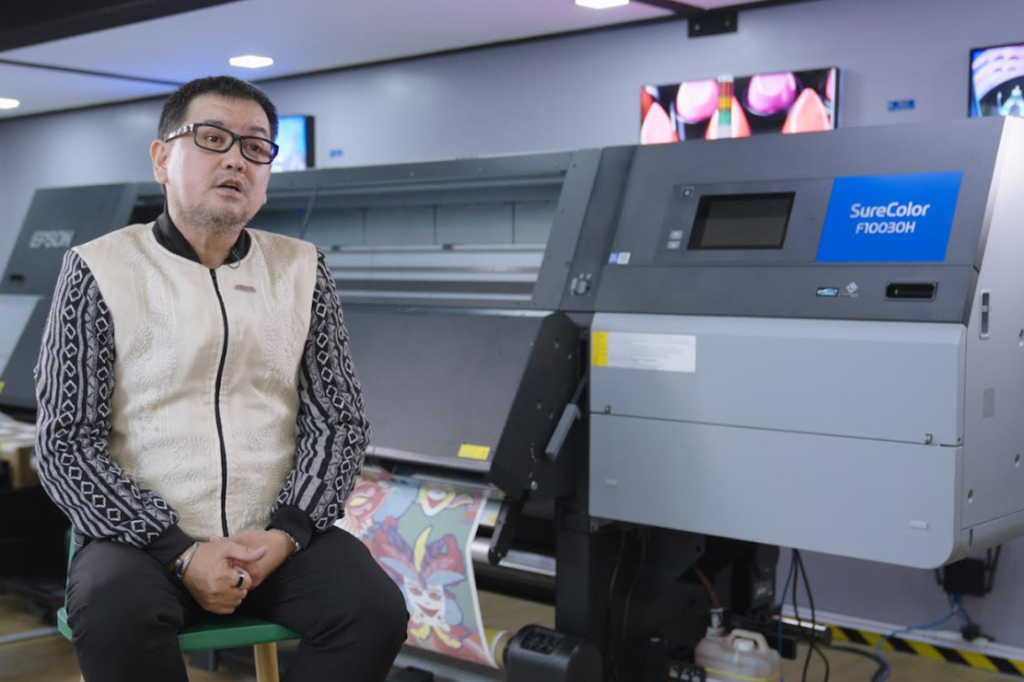
Filipino designer Dave Ocampo represents the Philippines at this year’s AFDS. Ocampo focuses on creating ready-to-wear styles that are both wearable and classic, while also prioritizing sustainable practices by sourcing fabrics locally and supporting local communities. His designs aim to make fashion accessible to the public, emphasizing sleek and timeless silhouettes.
“The collection aims to showcase the beauty of the Philippines through colors, symbols, and patterns,” shared Ocampo. “The design highlights Philippines’ very own colorful festivals, cultural symbols that are deeply rooted in its history, and patterns that are uniquely tied to its heritage and identity. Partnering with Epson for digital textile printing allows us to bring the details and vibrant colors to life.”
Sublimation transfer is a simple printing technique where the design is initially printed on a dye sublimation transfer media. By applying heat and pressure, the design on the media is then directly transferred onto the fabric. Through this method, the ink becomes permanently bonded to the fabric, resulting in vibrant prints that are resistant to fading.
In contrast to traditional printing methods that require a significant amount of water for fabric preparation, dyeing, and rinsing, digital textile printing using dye sublimation is a more environmentally conscious approach for apparel companies. It generates less waste and reduces over-production since designers can produce printed fabric as needed. This allows fashion designers to maintain a sustainable textile printing business while also reducing costs and minimizing environmental impact.
Furthermore, embracing digital technology gives designers complete creative freedom to print anything they can imagine, whenever they want. This technology enables them to create and produce intricate designs, offering endless possibilities and options that cater to their individual preferences.