- Introduction
- The Silent Cost
- How the System Got Here
- The Prepaid Load Forever Act
- How It Works
- For Active Accounts (Used Within 1 Year)
- For Dormant Accounts (Inactive 1+ Years)
- Coverage & Rollout
- Consumer Refunds
- Why Telco Infrastructure Enables This Fix
- What This Means for Filipinos
- Immediate Impact
- Systemic Impact
- Human Impact
- TECH PATROL INSIGHT: Why This Matters Beyond the Peso
- FINAL THOUGHTS: The System Should Adjust to You
- SOURCES & REFERENCES
- News Reports on House Bill 9903 & Prepaid Load Forever Act
- Senate Bill 1095 & Legislative Background
- NTC Regulations & Consumer Protection Framework
- Relevant Legislative History
Introduction
You’re checking your phone. Three months ago, you bought PHP 200 in prepaid load.
You planned to use it on weekends to call home.
Life happened.
Work got busy.
Family emergencies shifted your priorities.
Then one morning, you dial your mother—and you get a message: “Insufficient balance. Your prepaid load expired on June 15, 2026.”
You didn’t use the load. The money was yours. But the telco kept it anyway.
This isn’t a hypothetical. Prepaid load expiry happens to millions of Filipinos every month. It’s silent. It’s normalized. And for years, nobody asked the obvious question: Why should money you already bought have an expiration date?
That’s about to change.
The Silent Cost
The math is brutal.
Under current rules, prepaid credits expire after one year of inactivity. For students juggling multiple part-time jobs, healthcare workers pulling double shifts, or overseas workers rationing calls home, that expiry deadline becomes invisible theft.
PHP 200 here. PHP 500 there. Over a year, it adds up.
Consider Maria, a 23-year-old nursing assistant in Manila. She buys a PHP 500 load during the Christmas season—earmarked for video calls with her family in Bicol. A patient emergency consumes her December. Work stretches into January. By February, her load has expired. The money is gone. The telco doesn’t refund it. No notice was sent. It simply vanishes.
Multiply Maria by millions of Filipinos. That’s real money leaving real pockets.
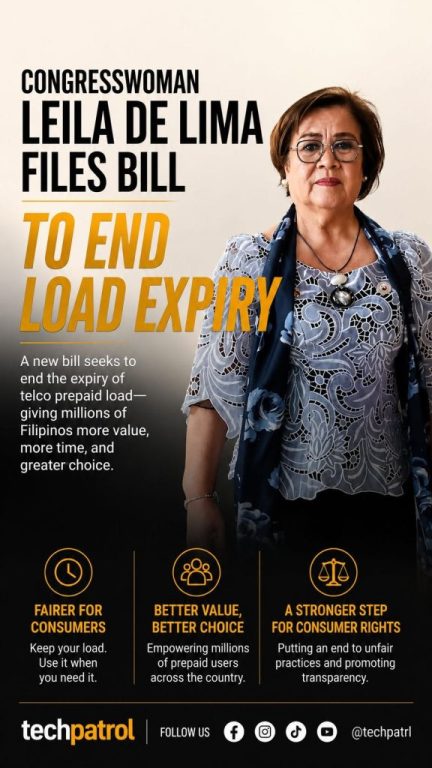
The anger isn’t just about the lost peso—it’s about the principle. “Why does the load they purchased and already own have an expiration?” asked House Senior Deputy Minority Leader and Mamamayang Liberal Party-list Rep. Leila de Lima. The question cuts to something deeper: consumer respect.
How the System Got Here
The current rule exists because of how telecom companies structured their business model decades ago. Prepaid systems were designed to encourage usage. If credits don’t expire, the thinking went, customers hold balances indefinitely and never buy more. Expiry creates urgency. Urgency drives re-purchases.
It’s profitable for telcos. It’s predatory for consumers.
The legal framework codifying this dates back to Joint Memorandum Circular 05-12-2017, issued by the National Telecommunications Commission (NTC), Department of Information and Communications Technology (DICT), and Department of Trade and Industry (DTI). Under this circular, all prepaid load credits remain valid for exactly one year. After that—forfeiture. No exceptions. No flexibility.
Telco companies loved this rule. Consumers had no choice but to accept it.
For dormant accounts (inactive for one year or more), the rules get even harsher. Telcos can deduct PHP 1 daily from accounts until credits run out. After that, they can reclaim the phone number and reassign it. Your line, your history, your contacts—gone.
De Lima framed it plainly: “Lugi sa sistemang ito ang ating mga consumers na napipilitang ubusin ang load para lang hindi masayang.” (Consumers lose out under this system, forced to use up their load so it doesn’t go to waste.)
It’s a system designed to benefit corporations, not people.
The Prepaid Load Forever Act
Enter House Bill 9903: The Prepaid Load Forever Act.
Filed by Rep. de Lima and based on Senate Bill 1095 (authored by Senate President Sherwin Gatchalian), this legislation takes a simple stance: Prepaid load you’ve paid for shouldn’t expire.
The bill seeks to:
- Prohibit expiration dates on unused prepaid load credits
- Prevent forfeiture of active account balances
- Require refunds for forfeited credits without valid cause
- Allow deductions only for dormant accounts (inactive 1+ years), at a rate of PHP 1/day, and only to cover administrative costs
Here’s what matters: The bill doesn’t kill dormant account management entirely. It recognizes that telcos need to manage infrastructure and reclaim numbers from abandoned accounts. But it does two things telcos hate:
- It stops the automatic cash grab from your prepaid balance
- It forces transparency and fairness in the process
De Lima was direct about why this matters now: “Mahalaga ang serbisyo ng telekomunikasyon lalo na sa mga panahong ito, pero hindi ito lisensya para lamangan at pagsamantalahan ang consumers.” (Telecom services are important now more than ever, but that’s not a license to exploit consumers.)
How It Works
For Active Accounts (Used Within 1 Year)
Your prepaid load never expires. You buy it. It’s yours. No countdown timer. No surprise forfeiture. Whether you use it next week or next month doesn’t matter—the money stays in your account until you spend it.
For Dormant Accounts (Inactive 1+ Years)
This is where the bill balances practicality with consumer protection. If your account hasn’t been used for a full year:
- Telcos can charge PHP 1 per day to cover maintenance costs
- This continues until your credit balance reaches zero
- Only then can the telco reclaim your phone number
The intent: Accounts that are truly abandoned get cleaned up. But your money doesn’t disappear overnight. You get a grace period. You get a daily charge you can see. You get fairness.
Coverage & Rollout
The bill applies to all telecom operators in the Philippines—not just one. PLDT, Globe, Smart, and smaller providers would all fall under the same rules. This prevents companies from creating workarounds or competing on “who exploits consumers fastest.”
Consumer Refunds
Here’s the kicker: The bill includes provisions to refund credits that were already forfeited under the old system. Millions of pesos in consumer money is sitting in telco accounts right now. The bill says: give it back.
Telcos won’t like this. They’re counting on that money. But it’s not theirs to keep.
Why Telco Infrastructure Enables This Fix
This is where the story gets interesting from a tech perspective.
The NTC doesn’t enforce consumer protection rules through magic. They enforce them through regulatory infrastructure. When the NTC issues a memorandum circular, it creates reporting requirements. Telcos must document:
- How many credits expired each month
- How many accounts were flagged as dormant
- How much money was forfeited
- Where that money went
This data flows through centralized telecommunications infrastructure—the same networks that enable 911 calls, internet access, and mobile banking. The NTC monitors this data. They audit it. They can flag violations.
The Prepaid Load Forever Act strengthens this infrastructure by:
- Creating clearer rules for NTC oversight (no more ambiguity about what’s “valid cause” for forfeiture)
- Mandating digital transparency (telcos must track and report dormant account deductions daily, not yearly)
- Enabling enforcement (the NTC can issue fines if telcos violate the rules)
Think of it this way: Telco networks are the pipes. Regulation is the pressure valve. Without clear rules, telcos maximize profit. With clear rules enforced through the NTC’s regulatory infrastructure, telcos must respect consumer rights.
The bill doesn’t anti-telco. It’s pro-infrastructure accountability. It says: “The systems you’ve built to serve Filipinos must serve them fairly.”
This matters because the NTC oversees more than just prepaid load—they regulate 5G rollouts, internet speed standards, rural connectivity programs, and emergency response systems. When the NTC’s authority strengthens in one area (prepaid load fairness), it creates precedent for other consumer protections.
What This Means for Filipinos
Immediate Impact
- No more surprise forfeiture of money you’ve already spent
- Clearer rules about dormant account charges (PHP 1/day, transparent)
- Potential refunds of billions of pesos wrongly forfeited over the years
- Less pressure to “use up” your load before it expires
Systemic Impact
This is bigger than prepaid load. The Prepaid Load Forever Act signals something crucial: The NTC is willing to prioritize consumer protection over corporate convenience.
That sets a tone. Next could come:
- Regulations on data charges
- Rules preventing sudden price hikes
- Standards for service quality compensation
- Clearer rules on network outages and refunds
Human Impact
For Maria, the nursing assistant, it means:
- The PHP 500 she saved for Christmas calls home no longer vanishes
- She can build a balance at her own pace, without artificial deadlines
- She regains control over money she’s already earned and paid for
For millions like her—students, healthcare workers, OFWs, underserved populations—it means the system finally adjusts to them, instead of them adjusting to an unfair system.
TECH PATROL INSIGHT: Why This Matters Beyond the Peso
The Prepaid Load Forever Act isn’t just consumer protection legislation. It’s a statement about how technology should serve humanity.
The Philippines is building digital infrastructure—5G networks, mobile banking platforms, e-commerce ecosystems. These systems connect millions of Filipinos to opportunity. But they only work if people trust them. And they only trust them if they’re fair.
Right now, prepaid load expiry erodes that trust. It tells consumers: “The system will take from you if you’re not vigilant.” It creates friction. It wastes time and emotional energy. It feels exploitative because it is exploitative.
The Prepaid Load Forever Act flips this: “The system respects your money. The system respects your time. The system respects you.”
This is what digital inclusion looks like in practice. Not just access to networks, but access that’s dignified. Access that doesn’t punish you for being busy or struggling or simply human.
The Philippines has the opportunity to become a regional leader in consumer-first telecom regulation. This bill is the first step.
FINAL THOUGHTS: The System Should Adjust to You
You don’t adjust to the system—the system adjusts to you.
For decades, the prepaid load expiry system forced Filipinos to bend around corporate convenience. The Prepaid Load Forever Act is about straightening that relationship.
It’s not radical. It’s not anti-business. It’s just fair.
And in a country where millions of people rely on prepaid load to stay connected to family, work, and opportunity, fairness isn’t optional. It’s essential.
Rep. de Lima said it best: “Malinaw na hindi ito makatarungan sa mga consumers.” (It’s clear this isn’t just to consumers.)
The time to fix it is now.
SOURCES & REFERENCES
News Reports on House Bill 9903 & Prepaid Load Forever Act
- De Lima files bill to end expiry on telco prepaid load – Gizguide (June 23, 2026)
- Leila de Lima files bill seeking 20% discount on mobile load – Gizguide (June 18, 2026)
- Mobile load, internet discounts pushed – The Manila Times (June 18, 2026)
- Student Discount Para Sa Load Act proposed in House – Technobaboy (June 17, 2026)
Senate Bill 1095 & Legislative Background
- Senate Bill 1095: Prepaid Load Forever Act – Filed by Senate President Sherwin Gatchalian (2025)
- Senator pushes passage of ‘load forever’ bill – The Manila Times (November 30, 2020)
- Proposed ‘Prepaid Load Forever’ bill to help online learners, entrepreneurs – GMA News Online (December 4, 2020)
NTC Regulations & Consumer Protection Framework
- NTC Rules on Prepaid Load – eLegal Philippines
- Joint Memorandum Circular 05-12-2017 – National Telecommunications Commission, DICT, DTI (Prepaid Load Validity Guidelines)
- What to Do If Your Prepaid Data Load Expires Early (Philippines) – Respicio.ph (October 3, 2025)
Relevant Legislative History
- All prepaid load denominations now good for 1yr – Philippine News Agency (Previous NTC ruling on prepaid validity periods)
- Senate Bill 1095 Full Text – Win Gatchalian (Available from Senate of the Philippines Legislative Reference Bureau)
- House Bill 9903 Full Text – Leila de Lima (Available from House of Representatives Legislative Documents)