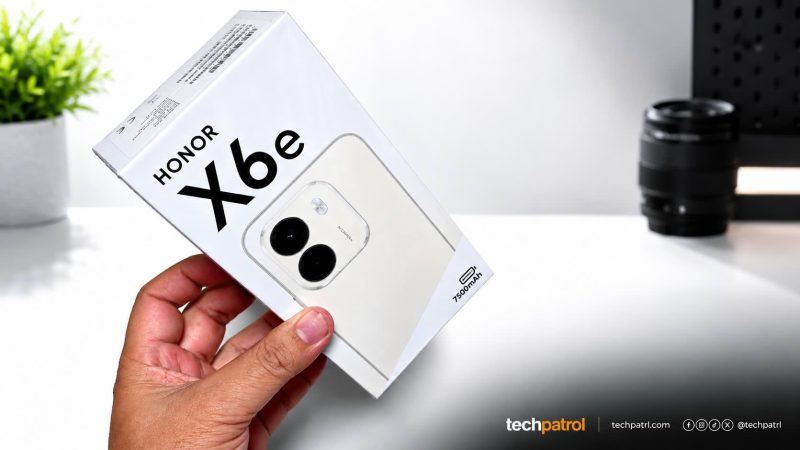
Everyone’s confused about which HONOR to buy right now. The HONOR X7e just launched this year with a massive battery at ₱9,999 (on sale from ₱14,999). The HONOR X9d 5G launched earlier with an even bigger battery and more features at ₱17,999. But here’s the real question: are you paying for actual upgrades, or just for the newer generation sticker?
We tested both phones to find out which one you should actually buy based on what matters in real life.
- The Specs on Paper: Why The X9d Looks Better
- Honor X7e
- Honor X9d 5G
- What Actually Matters: Real-World Performance
- Battery Life: The X9d’s Main Advantage
- Display: OLED vs LCD (This Actually Matters More Than You Think)
- Camera: 108MP vs 50MP (Megapixels Aren’t Everything)
- Performance: Helio G99 vs Snapdragon 6 Gen 4
- Durability: IP64 vs IP69K (One Matters More Than You Think)
- Storage: 128GB vs 256GB
- The Real Question: Is The X9d Worth ₱8,000 More?
- Which Phone Should You Actually Buy?
- Buy the X7e (₱9,999 on sale, ₱14,999 retail) if you:
- Buy the X9d (₱17,999) if you:
- The Lesson
- Which One Gets My Personal Recommendation?
The Specs on Paper: Why The X9d Looks Better
Honor X7e:
- 7,500mAh battery
- MediaTek Helio G81 Ultra
- 6GB RAM / 128GB storage
- 50MP camera
- 6.61″ HD+ 120Hz LCD (1604×720)
- IP64 water resistance + 5-Star SGS drop protection
- 45W fast charging
- Launched: July 2026
Honor X7e
120Hz
1604×720
6GB RAM
128GB Storage
8MP ultra-wide
2MP macro
45W fast charge
~24 hours
Related: Honor X7e Price Philippines: ₱14,999 for 7,500mAh Battery launched
Honor X9d 5G:
- 8,300mAh battery (830mAh larger)
- Snapdragon 6 Gen 4 (newer processor)
- 12GB RAM / 256GB storage (double on both)
- 108MP camera
- 6.79″ 1.5K AMOLED 120Hz display (2640×1200)
- IP69K water resistance + SGS Triple Resistant Certification (higher durability rating)
- 66W fast charging (faster)
- Launched: January 2026
Honor X9d 5G
120Hz
1.5K (2640×1200)
12GB RAM
256GB Storage
8MP ultra-wide
2MP macro
66W fast charge
~28+ hours
On paper, the X9d is technically superior in almost every way. But price matters: the X9d costs ₱8,000 more (₱17,999 vs ₱14,999 retail for the X7e). That’s a big gap for mid-range phones.
Related: HONOR X9d 5G Review, Pre-order Promo Price, Tesla Cybertruck raffle
What Actually Matters: Real-World Performance
Battery Life: The X9d’s Main Advantage
This is where the X9d legitimately wins.
X7e battery scenario: Heavy use day (8 hours of work apps, social media, 1 hour gaming, 30 minutes YouTube).
- Starts at 100%, ends at 15-18% by evening
- Full day is possible but requires conscious management
- You’ll hit 5% battery anxiety around 8-9 PM
X9d battery scenario: Same heavy usage pattern.
- Starts at 100%, ends at 22-28% by evening
- Full day guaranteed, even with heavy use
- No battery anxiety until 10 PM or later
The real difference: The X9d gives you 2-3 extra hours of battery life. For students, workers, content creators who are away from chargers all day, that matters. For casual users, it’s nice but not essential.
Charging speed: The X9d’s 66W charging is faster than the X7e’s 45W, so when you do charge, the X9d gets to 100% quicker. But both phones can hit a full charge in under an hour.
Display: OLED vs LCD (This Actually Matters More Than You Think)
X7e’s LCD screen:
- 1604×720 resolution (HD+)
- 120Hz refresh rate
- Colors look washed out compared to modern OLED
- Gets the job done for everyday use
X9d’s OLED screen:
- 2640×1200 resolution (1.5K—much sharper than X7e)
- 120Hz refresh rate
- Vibrant colors, deep blacks, 6000 nits peak brightness
- Way more immersive for watching videos, scrolling social media, gaming
The real difference: The X9d’s OLED display is noticeably better in two ways: it has a much higher resolution (nearly 2x more pixels) AND it’s OLED technology instead of LCD. The sharper pixels plus the vibrant OLED colors make a huge difference when you’re looking at your phone all day. If you spend most of your time on your phone screen (social media, streaming, gaming), the X9d’s display is worth the upgrade. The X7e’s LCD is fine but feels dated by comparison.
Camera: 108MP vs 50MP (Megapixels Aren’t Everything)
X7e camera:
- 50MP with standard sensor
- Good in daylight, struggles in low light
- Natural color processing
- Video stabilization is adequate
X9d camera:
- 108MP with larger 1/1.67-inch sensor
- Better low-light performance because of the larger sensor (not just megapixels)
- More aggressive AI processing (AI Eraser, AI Outpainting, AI Remove Reflection)
- Better OIS stabilization for video
The real difference: The X9d’s larger sensor is the actual upgrade, not the megapixels. In low-light situations, the X9d will outperform the X7e noticeably. For daytime shots, both are solid. For video, the X9d’s stabilization is smoother. If you shoot content regularly, the X9d is better. If you take occasional photos, the X7e is fine.
Performance: Helio G99 vs Snapdragon 6 Gen 4
X7e’s Helio G99:
- Entry-level gaming processor
- Handles everyday apps smoothly
- Can game, but expect frame drops in intensive titles
- Gets warm but doesn’t throttle badly
X9d’s Snapdragon 6 Gen 4:
- Newer chip, 29% better GPU performance
- Handles gaming better than the X7e
- Smoother multitasking with 12GB RAM (X7e has 6GB)
- More future-proof
The real difference: The X9d is faster, but for everyday use—messaging, social media, light gaming—you won’t notice the difference much. The X7e handles normal use just fine. Only if you game heavily or use demanding apps will you notice the X9d pulling ahead.
Durability: IP64 vs IP69K (One Matters More Than You Think)
X7e’s IP64:
- Water resistant to splashes
- Can handle rain and accidental water
- 5-Star SGS drop protection (drops up to specific heights)
X9d’s IP69K:
- Can handle high-pressure water jets
- Submersion up to 1.5 meters for 30 minutes
- Triple Resistant Premium Certification (drops + water + dust)
- Better durability rating overall
The real difference: Both phones are durable enough for normal Filipino life. The X9d is overkill for most people. Unless you regularly expose your phone to harsh conditions, the X7e’s IP64 is plenty. The X9d’s durability advantage is marketed as more important than it is.
Storage: 128GB vs 256GB
The X9d has double the storage. For most people, this means:
- More space for photos and videos without deleting things
- More apps installed without worrying about storage
- More breathing room for cache files
The X7e’s 128GB will fill up if you’re a heavy video shooter or app collector. The X9d’s 256GB is genuinely useful.
Verdict: If storage headroom matters to you, the X9d is the better choice. If you manage storage well or mostly use cloud storage, the X7e is fine.
The Real Question: Is The X9d Worth ₱8,000 More?
What you’re actually paying extra for:
- 800mAh more battery (2-3 extra hours per day)
- OLED display (better looking, more immersive)
- Better camera for low-light and video
- Faster processor (but you probably won’t notice)
- Double the storage
- Better durability rating (overkill for normal use)
For ₱8,000, that’s actually pretty solid. The OLED display and better camera alone justify a ₱5-6k upgrade. The battery life extension is the bonus.
Which Phone Should You Actually Buy?
Buy the X7e (₱9,999 on sale, ₱14,999 retail) if you:
- Primarily use your phone for messaging, social media, and browsing
- Take occasional photos in good lighting
- Don’t game heavily
- Charge your phone daily anyway
- Want to save money for other things
- Can tolerate managing storage a bit more carefully
Real example: A student who uses their phone for classes, TikTok, messaging, and casual gaming. The X7e is perfect. The ₱5-8k savings can go toward a wireless charger, a case, or something else.
Buy the X9d (₱17,999) if you:
- Want guaranteed all-day battery even on heavy use days
- Shoot photos and videos regularly
- Want a better display for streaming and gaming
- Use demanding apps or game competitively
- Store lots of content on your phone
- Want the peace of mind of owning a more durable phone
Real example: A content creator, regular gamer, or professional who uses their phone all day and relies on it for work. The X9d’s OLED display, camera, battery, and storage make a real difference.
The Lesson
Budget doesn’t mean outdated, and expensive doesn’t always mean better.
The X7e proves that an entry-level phone can have flagship-adjacent battery capacity and durability. It’s genuinely solid for everyday use. The X9d proves that a mid-range phone can have features that rival higher-end devices.
The gap between them isn’t huge. It’s ₱8,000 worth of specific upgrades: better display, better camera, better battery, more storage. Whether those upgrades matter depends entirely on how you use your phone.
Stop thinking “newer = better.” Think “does this phone match what I actually do with my phone?” If you do light work, the X7e wins. If you need all-day battery, better camera, and a gorgeous screen, the X9d wins.
The FOMO around buying the “wrong” HONOR is unnecessary. Both are solid phones. One just has more features. That’s it.
Which One Gets My Personal Recommendation?
If I had to choose: I’d buy the X7e on the ₱9,999 sale and put the ₱8,000 I saved toward accessories, a power bank, or upgrading in a year when better phones launch.
Why? Because the X9d’s advantages (OLED, better camera, extra battery) are nice but not critical for most people. The X7e handles daily life perfectly fine. Save the money.
But if you shoot content or game daily: The X9d is actually worth it. The OLED and camera upgrades aren’t marginal—they’re genuinely noticeable when you use those features every day.
See also: HONOR X9d 5G Review, Pre-order Promo Price, Tesla Cybertruck raffle