

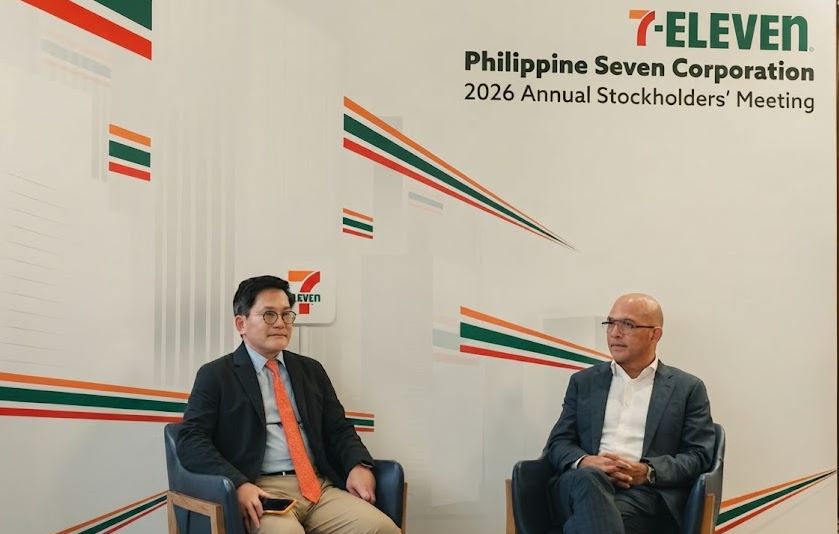
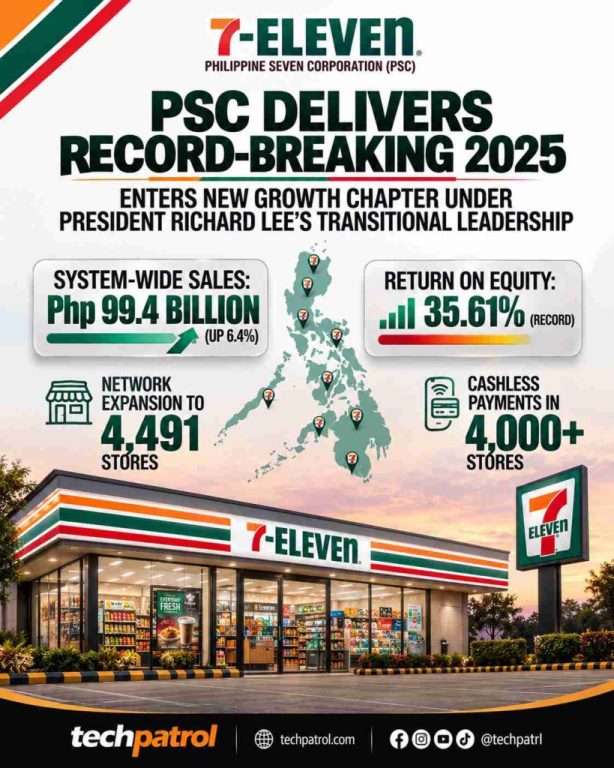
Philippine Seven Corporation (PSC) closed 2025 with system-wide sales of ₱99.4 billion, a record for the exclusive 7-Eleven licensee in the country. The company confirmed the figures at its Annual Stockholders’ Meeting, alongside a leadership handover completed the year before and a cashless payment rollout that now covers more than 4,000 branches nationwide.
If you’ve tapped a card or scanned a QR code at the counter instead of digging for coins, you’ve already felt this story. The convenience store chain most Filipinos pass every day just quietly became a bigger cashless payment network than most banks.
- Why Should Filipinos Care About 7-Eleven’s Cashless Rollout?
- What Exactly Happened?
- Key Facts:
- How Does the Cashless Rollout Actually Work?
- Payment options at the counter
- Why the pace matters
- The leadership context behind it
- The Bigger Picture: Why This Matters
- 1. Convenience retail is becoming payment infrastructure
- 2. It normalizes digital payments in areas banks haven’t reached
- 3. It signals confidence from new leadership
- 4. Franchise partners benefit from shared infrastructure
- What This Means for You
- The TechPatrol Take
- What Happens Next?
- Got Thoughts on Cashless Retail in PH?
- Additional Resources
Why Should Filipinos Care About 7-Eleven’s Cashless Rollout?
This isn’t just a retail earnings story. 7-Eleven runs 4,491 stores across the country, more than any other convenience chain, which means its payment infrastructure choices touch millions of daily transactions.
- It affects how you pay for load, bills, and snacks at the store you already visit
- It signals where the largest brick-and-mortar network in the country is putting its tech budget
- It nudges cash-heavy neighborhoods toward digital payments simply through repeated exposure
- Here’s the honest reality check: cashless acceptance rolled out fast, but adoption still depends on whether individual stores keep the terminals running and staffed properly during peak hours
What Exactly Happened?
PSC reported its full-year 2025 results at its Annual Stockholders’ Meeting. The numbers mark the company’s strongest year on record, even against a tougher retail environment than 2024.
Key Facts:
- System-wide sales reached ₱99.4 billion, up 6.4% from ₱93.5 billion in 2024
- Revenues climbed 7.2% to ₱95.1 billion from ₱88.7 billion
- Net income held at ₱3.6 billion despite a harder consumer spending environment
- Total assets grew 10.5% to ₱47.8 billion; stockholders’ equity jumped 23% to ₱11.2 billion
- Return on equity hit a record 35.61%, up 41 basis points year-on-year
- Store count grew from 4,130 to 4,491, an addition of 423 branches in one year
- Cashless acceptance expanded from just over 1,000 stores at the end of 2025 to over 4,000 stores by May 2026
President Richard Lee, who took over the role in July 2025, described the year as one built on continuity rather than reinvention, a point echoed by Chairman Jose Victor Paterno in the same stockholders’ meeting.
How Does the Cashless Rollout Actually Work?
Payment options at the counter
Stores in the expanded network now accept credit cards, debit cards, QR Ph, and e-wallets on top of cash. For a chain built on quick, in-and-out purchases, that means less time spent counting change during rush hour.
Why the pace matters
Going from roughly 1,000 cashless-ready stores at the close of 2025 to over 4,000 by May 2026 is a five-month sprint across thousands of physical locations, each needing new terminals, staff training, and network setup. That’s a faster rollout than most Philippine retail chains manage in a full year.
The leadership context behind it
Lee moved from Chief Operating Officer into the President role in July 2025, while Paterno stepped up to Chairman. PSC frames this as a planned transition rather than a shake-up, which explains why an infrastructure project this large kept moving through a change in leadership instead of stalling.
The Bigger Picture: Why This Matters
1. Convenience retail is becoming payment infrastructure
With over 4,000 outlets now cashless-ready, 7-Eleven’s terminal network rivals the physical footprint of many digital wallet providers, minus the app download.
2. It normalizes digital payments in areas banks haven’t reached
A 7-Eleven counter is often closer, and open longer, than a bank branch. Every tap-to-pay transaction there is a small nudge toward broader digital payment habits nationwide.
3. It signals confidence from new leadership
Lee didn’t pause the digital transformation agenda after taking over. He accelerated it, which tells you where PSC’s next phase of growth is headed.
4. Franchise partners benefit from shared infrastructure
With 46.58% of the network franchised, individual store owners get cashless capability without building their own payment systems from scratch.
Related: Catch ‘Em All at 7-Eleven! Pokémon Takes Over Convenience Stores in the Philippines
What This Means for You
The short answer: if you shop at 7-Eleven, you likely already have access to cashless payment, or will soon, since more than 4,000 of the 4,491 stores nationwide are already covered.
Why it matters to Filipinos:
- Faster checkout, especially during commute-hour rushes
- One less reason to carry loose change for small purchases
- A push toward digital payment habits that carries over to other merchants
But here’s what’s important: rollout numbers don’t guarantee a smooth experience at every branch. Terminal uptime, staff familiarity with the system, and network reliability in far-flung areas will decide whether this actually feels seamless or just adds a new line at checkout.
The TechPatrol Take
The headline number here is ₱99.4 billion in sales, but the more interesting story is what PSC did with its capital expenditure. Instead of only chasing new store count, it funneled serious investment into payment rails across an existing network of thousands of locations. That’s a bet that convenience retail’s next competitive edge isn’t just shelf space, it’s how fast and how flexibly customers can pay.
It also says something that this rollout didn’t slow down during a change in company leadership. Succession plans on paper are one thing. Keeping a multi-thousand-store tech rollout on schedule through a presidency change is another, and it’s the kind of operational detail that matters more than the sales figure everyone will quote.
What Happens Next?
- Continued expansion of cashless acceptance toward the remaining branches outside the current 4,000+ coverage
- Further store network growth building on the 423 new locations added in 2025
- Ongoing investment in store modernization, supply chain, and operational efficiency per PSC’s stated priorities
- Possible expansion of proprietary foodservice offerings, which PSC credited as a growth driver alongside fresh food sales
Got Thoughts on Cashless Retail in PH?
Drop a comment below on whether cashless checkout at 7-Eleven has actually been smooth for you, or subscribe to TechPatrol for more coverage of how Philippine retail and enterprise tech are evolving.
Questions? Thoughts? Drop a comment below.
Additional Resources
Related Products/Companies:
Industry References:


