- Overview
- What Happened: The Tacloban School Shooting
- The Incident
- The Investigation Link to GoreBox
- Understanding GoreBox: The Game That Inspired Violence
- What GoreBox Is
- Core Features (And Why They’re Dangerous)
- Official Age Rating
- Why GoreBox Poses a Unique Danger to Philippine Minors
- 1. Unrestricted Access via Mobile Devices
- 2. Realistic Firearms Mechanics
- 3. Consequence-Free Violence
- 4. Sandbox Customization Creates Real-World Threat Modeling
- 5. No Narrative Humanity
- The Philippine Regulatory Vacuum: How GoreBox Slipped Through
- Current State of Game Regulation in the Philippines
- Why Current Systems Failed
- The Neuroscience: How Violent Games Affect Developing Brains
- What Research Shows
- The Dose Matters
- International Precedent: How Other Nations Regulate
- Germany
- South Korea
- Singapore
- Australia
- United States
- Philippines’ Situation
- The Case for Regulation vs. Banning
- Should We Ban GoreBox Entirely, or Regulate?
- TechPatrol’s Position: We Need Comprehensive Regulation WITH GoreBox Specifically Banned
- The CICC’s Temporary Ban: What’s Next?
- Current Status (June 2026)
- Why “Temporary” Isn’t Enough
- What Should Happen Next
- Responding to the “But ESRB Is Enough” Argument
- The Defense
- Why That’s Incomplete
- Legal Framework: What Laws Already Support Regulation
- Existing Philippine Laws Provide Authority
- Legal Precedent: CICC Already Has Authority
- The Role of Parents, Schools, and Society
- This Isn’t About Parenting Alone
- Addressing Counterarguments
- “This Is Censorship”
- “Video Games Don’t Cause Violence”
- “Regulation Costs Too Much”
- “Other Countries Don’t Ban Games”
- The Path Forward: A 5-Point Action Plan
- For Congress
- For the Executive
- For Digital Platforms (Google, Apple)
- For Schools and Parents
- For TechPatrol and Media
- Conclusion: From Tragedy to Prevention
- Sources & References
- News Reports on the Tacloban Shooting & GoreBox Link
- GoreBox Game Information
- Philippine Video Game Regulation & Legal Framework
- Child Protection & Data Privacy Laws
- International Game Regulation Systems
- Official Philippine Child Safety Resources
- Parental Control & Game Rating Resources
Overview
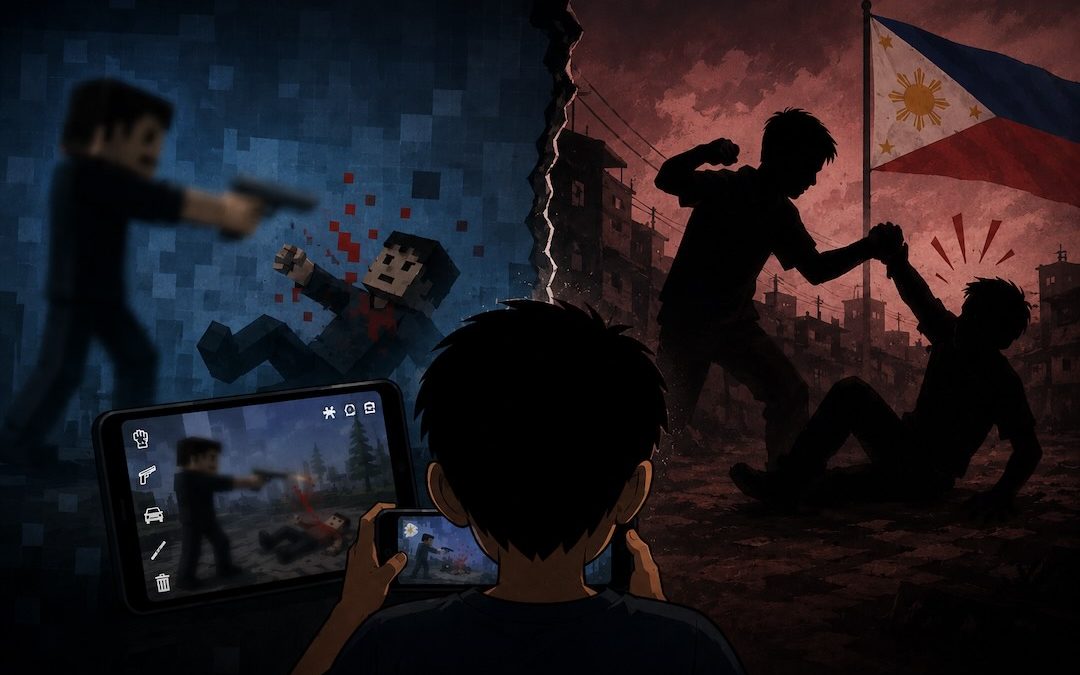
On June 22, 2026, a tragic shooting at San Jose National High School in Tacloban City claimed the lives of at least four students and left 15 others injured. Two Grade 9 students—one aged 14 and another 15—were arrested as suspects. Within 24 hours, Philippine authorities identified a critical detail: the 14-year-old suspect had a documented history of playing GoreBox, an extremely violent physics-based sandbox game rated R18+ that explicitly depicts gore, dismemberment, and realistic blood effects.
This connection has reignited an urgent national debate: Does the Philippines need stricter regulation or outright bans on ultra-violent video games? The answer is increasingly clear—and the time to act is now.
What Happened: The Tacloban School Shooting
The Incident
On the morning of June 22, two junior high school students opened fire inside a classroom at San Jose National High School in Tacloban City. The incident unfolded quickly, leaving:
- At least 4 students dead (updated toll from initial reports)
- 15-20 students wounded by gunshot injuries
- Several others sustaining non-gunshot injuries during the panic
- The entire community traumatized and questioning how this happened
The Investigation Link to GoreBox
Police Regional Office Eastern Visayas (PRO 8) Director Brigadier General Jason Capoy confirmed in a June 23 statement that investigators found the 14-year-old suspect had played GoreBox extensively prior to the incident. When asked about the game, Capoy remarked:
“Just like Roblox, there’s a game. There’s also shooting, firearms. The game is somewhat violent.”
Investigators also discovered that the 14-year-old suspect had been brought to a shooting range at some point, where he gained basic familiarity with firearms mechanics—knowledge he later applied during the attack.
This pattern is alarming: A minor with no previous violent history became exposed to:
- An ultra-violent simulation game featuring weapons, gore, and no meaningful consequences
- Real-world firearm training at a shooting range
- No apparent intervention, supervision, or mental health assessment
Understanding GoreBox: The Game That Inspired Violence
What GoreBox Is
GoreBox is a sandbox game developed by F2 Games and released July 21, 2023. It’s available on Windows, Linux, and critically, Android devices—meaning it’s accessible to any teenager with a smartphone.
Official Description: “A chaotic physics-driven sandbox where creativity meets destruction.”
Actual Content: One of the most graphically violent games on the market, period.
Core Features (And Why They’re Dangerous)
| Feature | What It Means | Risk Factor |
|---|---|---|
| Weapons Arsenal | Shotguns, rifles, revolvers, explosives, melee weapons | Players simulate mass shooting scenarios |
| Gore & Dismemberment | Realistic blood pooling, limb severing, ragdoll physics responding to wounds | Desensitization to violence; graphic violence as entertainment |
| AI NPCs (“GoreDolls”) | Blocky humanoid characters that scream, bleed, and die | Targets for violence simulation |
| Creator Mode | Build custom maps and recreation scenarios | Players can recreate real-world attacks or shooting locations |
| Physics Engine | Advanced ragdoll physics that realistically simulates injuries | Violence feels authentic, not cartoonish |
| Sandbox Freedom | No objectives, no story—only tools and violence | No narrative context to humanize victims; pure destruction for its own sake |
Official Age Rating
On the Google Play Store (Android), GoreBox carries an IARC rating of 18+ (equivalent to M for Mature in ESRB terms). The game explicitly states it’s restricted due to:
- Extreme violence
- Gore and graphic depictions of injury
- Blood effects
Yet it remains freely available for download to minors.
Why GoreBox Poses a Unique Danger to Philippine Minors
1. Unrestricted Access via Mobile Devices
Unlike traditional games requiring a console or gaming PC, GoreBox runs on Android smartphones. In the Philippines, where mobile gaming dominates and 43 million people play games—many of them teenagers with unsupervised smartphones—this accessibility is critical.
The Problem:
- A 14-year-old can download GoreBox in seconds from Google Play
- Parents don’t receive age verification warnings
- No parental controls are enforced by default
- The game operates in a regulatory vacuum
2. Realistic Firearms Mechanics
GoreBox doesn’t treat shooting as an abstract button-press. The game features:
- Realistic weapon handling
- Ammunition mechanics (loading, reloading)
- Ballistic physics
- Tactical realism in a sandbox environment
For the Tacloban suspect, this meant the game taught basic firearm operation in the same way a teenager might learn to reload a revolver—which investigators confirmed he later demonstrated during the actual shooting.
3. Consequence-Free Violence
Unlike narrative-driven games with moral choices or story consequences, GoreBox offers pure destruction. Kill an NPC? Nothing happens. Commit a virtual massacre? The game respawns the victims immediately. There’s no narrative frame suggesting harm is wrong—violence is simply the only available action.
4. Sandbox Customization Creates Real-World Threat Modeling
The game’s map editor allows players to:
- Recreate real locations
- Build shooting scenarios
- Design “optimal” violence setups
- Share creations with a global community
Research from Singapore found players using GoreBox to plan and practice real-world attacks, not just play casually.
5. No Narrative Humanity
GTA has protagonists and stories. God of War has mythological context. Even Doom has aliens. GoreBox has none of this—just blocky humans you destroy in silence. This removes the psychological barrier that even violent games typically maintain: some sense that you’re causing harm.
The Philippine Regulatory Vacuum: How GoreBox Slipped Through
Current State of Game Regulation in the Philippines
The Philippines has no comprehensive video game rating system.
Instead, the country relies on:
1. International Standards (ESRB/IARC)
- Games self-classify using international bodies
- No Philippine government enforcement
- No penalties for misrating
- No audit mechanism
2. Fragmented Local Ordinances
- Makati City: Restricts sale of “explicitly violent” games to minors
- Marikina City: Bans minors from internet cafes during school hours
- Quezon City: Similar restrictions on violent game sales
- Problem: These are city-level, not national. GoreBox is available nationwide via Google Play, beyond municipal jurisdiction.
3. Emerging Bills (Not Yet Law)
- Senate Bill No. 1063 (Video and Online Games Regulation Act) proposed in 2022
- Would expand MTRCB authority to games
- Status: Still pending; no progress in 4 years
- Digital advocates have blocked passage citing ESRB is “sufficient”
Why Current Systems Failed
- Google Play Store doesn’t enforce Philippine local ordinances. Ordering GoreBox to stop serving minors requires national action, not city ordinances.
- No government body checks age ratings. A developer can rate their game 18+ and no one verifies if that’s truthful. GoreBox is accurately rated, but enforcement is absent.
- Parents lack visibility. Filipino parents aren’t alerted when their child downloads an 18+ game. Google Play sends no notifications.
- School systems aren’t integrated. No system flags when a student downloads violent content during the school day.
- Digital advocate resistance. Arguments like “ESRB is enough” and “enforcement costs money” have blocked regulation for 4+ years while exposure to children increased.
The Neuroscience: How Violent Games Affect Developing Brains
What Research Shows
Brain Development in Teenagers (Age 14-18):
- Prefrontal cortex (impulse control, moral reasoning) is still developing until age 25
- Amygdala (emotional response) is fully active and reactive
- Reward pathways are hypersensitive to stimulation
- Risk assessment abilities are immature
What Violent Games Do:
- Desensitization to violence through repeated exposure (hours playing GoreBox)
- Priming effect: Exposure to violent images increases accessibility of violent thoughts
- Reward reinforcement: Each “kill” triggers dopamine, creating a feedback loop
- Empathy reduction: Neuroimaging shows reduced activation in empathy-related brain regions after violent game exposure
- Aggressive script development: Teens internalize violent problem-solving strategies
Critical Point: The Tacloban suspect didn’t have a documented history of violence. He was a typical student. The combination of:
- Unrestricted access to ultra-violent simulation
- Real firearm training
- Adolescent brain still developing impulse control
- No intervention or monitoring
…created the conditions for tragedy.
The Dose Matters
The research is clear: occasional violent game play among well-adjusted teens isn’t definitively causative. But intensive, unrestricted exposure to extreme content (like GoreBox) combined with other risk factors is a different story.
International Precedent: How Other Nations Regulate
Germany
- Bans games depicting graphic violence against humanoids
- GoreBox would be automatically prohibited under German law
- Violators face prosecution
- Result: Games available in Germany are versions with reduced gore or don’t launch at all
South Korea
- Mandatory game rating system (GRB) with government enforcement
- 18+ games restricted to adults; sales to minors are criminal offenses
- Regular audits of rating accuracy
- Result: Retailers train staff; age verification is routine
Singapore
- IMDA (Media Development Authority) regulates games with legal authority
- After investigating GoreBox use in planning real attacks, Singapore fast-tracked blocking measures
- Games can be banned outright if deemed harmful
- Result: GoreBox use spiked criminal investigation; platform cooperation is mandatory
Australia
- Classification Board rates games (similar to films)
- Retailers who sell restricted games face fines
- Digital platforms (Steam, Google Play) cooperate to enforce local ratings
- Result: Games rated 18+ are actively protected from youth access
United States
- No law mandates ESRB enforcement
- BUT: Industry self-regulation is robust; retailers (GameStop, Best Buy) enforce age verification
- Parents have tools (parental controls, built-in warnings)
- Result: While not perfect, a social norm of compliance exists
Philippines’ Situation
- No equivalent system exists
- No government body with authority
- No retailer compliance mechanisms
- No digital platform cooperation agreements
- Result: Complete access for minors to 18+ content
The Case for Regulation vs. Banning
Should We Ban GoreBox Entirely, or Regulate?
This is the core policy question. Here’s the honest debate:
The Regulation Approach
What It Would Look Like:
- Government establishes a Philippine gaming rating board (or expands MTRCB authority)
- Mandatory age verification via Google Play and app stores
- Retailers (internet cafes, game shops) train staff to enforce 18+ restrictions
- Packaging and digital storefronts display ratings clearly
- Parents receive alerts when minors attempt to download 18+ games
- Regular audits of game ratings for accuracy
Advantages:
- Respects adult freedom to play mature content
- Doesn’t require banning a legal product
- Allows for nuanced decisions (not all 18+ games are equally harmful)
- Builds broader regulatory infrastructure for future issues
- Mirrors successful international models (South Korea, Australia)
Disadvantages:
- Requires government budget and institutional capacity
- Digital advocates argue it’s “unnecessary” and “expensive”
- Enforcement across digital and physical retail is complex
- Doesn’t address the specific danger of ultra-extreme content like GoreBox
The Banning Approach
What It Would Look Like:
- CICC (Cybercrime Investigation and Coordinating Center) bans GoreBox outright
- Google Play forced to remove app from Philippines
- Retailers prohibited from selling physical copies
- Users caught distributing the game face penalties
Advantages:
- Immediate protection for minors
- No regulatory infrastructure needed
- Clear message: This specific game is too dangerous
- Precedent already set: CICC temporarily blocked GoreBox on June 23, 2026
Disadvantages:
- VPNs and alternative sources still allow access
- Sets precedent for banning other games (slippery slope)
- Addresses symptom (this game) not root cause (lack of regulation)
- International publishers may resist, creating diplomatic friction
- Doesn’t build long-term child protection infrastructure
TechPatrol’s Position: We Need Comprehensive Regulation WITH GoreBox Specifically Banned
Here’s why both are necessary:
- GoreBox is an outlier. Even among mature games, it’s uniquely designed for violence simulation with no narrative, moral, or gameplay purpose beyond destruction. It’s to games what uncut snuff films are to cinema. Banning it sets a justified precedent: some content is simply too extreme, regardless of regulation.
- Regulation is the long-term solution. GoreBox won’t be the last dangerous game. Without a Philippine gaming board, the next ultra-violent title will be equally unregulated. Banning GoreBox without building regulation means we’re fighting one battle at a time.
- The temporary ban is already happening. CICC blocked GoreBox on June 23, 2026. The moment is now to escalate to permanent ban legislation AND push for comprehensive regulation.
The CICC’s Temporary Ban: What’s Next?
Current Status (June 2026)
CICC Undersecretary Aboy Paraiso announced:
- GoreBox is temporarily blocked on Philippine networks
- The ban is “pending investigation”
- Duration is unspecified
- Monitoring of other dangerous content will intensify
Why “Temporary” Isn’t Enough
A temporary ban is a holding action. Unless escalated to permanent legislation, GoreBox can be unblocked as soon as the investigation concludes. The perpetrators’ arrest shouldn’t be the endpoint—it should be the catalyst for systemic change.
What Should Happen Next
Immediate (Next 30 Days):
- Expand the CICC ban to permanent
- Issue executive order banning GoreBox distribution nationally
- Direct DOJ to prepare prosecution framework for illegal distribution
Short-Term (Next 90 Days):
- Congress fast-tracks Senate Bill 1063 (or equivalent) through committee
- Hold hearings with child psychologists, educators, and law enforcement
- Draft rules specifically prohibiting games that depict realistic violence without narrative context
Medium-Term (6-12 Months):
- Establish Philippine Gaming Board (or assign MTRCB authority)
- Mandate age verification on Google Play and app stores
- Create prosecution framework for retailers selling 18+ games to minors
- Launch public awareness campaign on game ratings and parental controls
Responding to the “But ESRB Is Enough” Argument
The Defense
Digital advocates often argue: “GoreBox is correctly rated 18+ by IARC. That’s sufficient. We don’t need a government gaming board; we need better parenting and enforcement of existing ratings.”
Why That’s Incomplete
True statements within the argument:
- GoreBox IS accurately rated 18+
- Better parenting is important
- ESRB provides clear information
Where it fails:
- IARC rating is meaningless without enforcement. Calling something “18+” and actually restricting it to 18+ are different things. Google Play doesn’t enforce age restrictions; it merely labels. A 10-year-old can download it.
- ESRB was designed for retail stores, not digital distribution. When ESRB was created, games were sold in GameStop where a cashier could check ID. Digital stores eliminated that friction. Merely having a rating system doesn’t work if the distribution mechanism ignores it.
- “Better parenting” is unfair as sole solution. Parents can’t supervise every app download. They can’t monitor every device 24/7. They can’t be expected to understand the difference between “Fortnite” (cartoon violence) and “GoreBox” (realistic gore simulation). Technology should have guardrails.
- The Tacloban suspect’s parents may have been unaware. We don’t know if they knew about GoreBox. A “just parent better” response ignores that parental monitoring was likely occurring but failed because systems aren’t designed to surface this information to parents.
- Developed nations don’t rely on ESRB alone. Germany enforces bans. South Korea mandates compliance. Australia has a classification board. The US is an outlier in assuming self-regulation is sufficient. The Philippines should not copy America’s weak model when stronger alternatives exist.
Legal Framework: What Laws Already Support Regulation
Existing Philippine Laws Provide Authority
The Philippines doesn’t need to create regulation from scratch. These existing laws support action:
1. Constitution Article II, Section 15
“The State shall protect and promote the right to health of the people…”
2. Child Protection Laws (RA 10190, Convention on Rights of the Child)
- Government must protect children from harmful media
- Child’s best interests are paramount
3. Cybercrime Prevention Act (RA 10175)
- Gives CICC authority over online safety
- Already used to block GoreBox temporarily
4. Anti-Child Pornography Act (RA 9775)
- While focused on sexual exploitation, establishes principle that government can ban specific online content harmful to minors
5. Data Privacy Act (RA 10173)
- Requires protection of children’s personal data
- Supports age verification mechanisms
Legal Precedent: CICC Already Has Authority
The CICC temporary ban demonstrates the government already has the power to block content. The question is whether to escalate to permanent bans and systemic regulation.
The Role of Parents, Schools, and Society
This Isn’t About Parenting Alone
But parents DO have immediate tools:
- Use Google Play Parental Controls
- Set age limit for installable apps
- Require password for in-app purchases
- Monitor download history
- Have conversations about game content
- Ask kids what they’re playing
- Watch gameplay together
- Discuss how violence in games differs from real harm
- Know the ratings
- 18+ typically means graphic violence
- M for Mature is equivalent to PG-13 violence
- T for Teen = violence but not graphic
But schools and government must also act:
- School Information Campaigns
- Teach students media literacy
- Explain why some games are restricted
- Connect to broader digital citizenship
- Mental Health Services
- Identify students at risk (bullying, isolation, aggression)
- Early intervention can prevent tragedy
- Resource schools with counselors
- Government Enforcement
- Create the infrastructure parents can’t create alone
- Digital platforms won’t self-regulate without legal pressure
- Retailers need clear rules, not vague guidance
Addressing Counterarguments
“This Is Censorship”
Response: Government regulation of content harmful to children is not censorship; it’s child protection. We don’t call age-gating pornography “censorship.” We call it appropriate boundary-setting. Adults can still access GoreBox through VPNs or other means; we’re protecting minors from unrestricted access.
“Video Games Don’t Cause Violence”
Response: This is a strawman. Nobody serious argues games automatically cause violence. The claim is narrower: ultra-violent games combined with other risk factors (isolation, firearm access, mental health issues) can contribute to likelihood of violence in vulnerable teenagers. The Tacloban case wasn’t caused solely by GoreBox, but GoreBox was part of a dangerous combination.
“Regulation Costs Too Much”
Response: A small gaming board costs less annually than a single school shooting costs in medical bills, counseling, security upgrades, and lost productivity. The Philippines already has the MTRCB (film/TV regulator). Expanding its mandate is cheaper than inaction.
“Other Countries Don’t Ban Games”
Response: Germany and Australia DO ban games. South Korea enforces mandatory ratings. The claim that “no one bans games” is false. Even the US has cultural pressure (retailers enforce ESRB) because industry knows government will regulate if self-regulation fails.
The Path Forward: A 5-Point Action Plan
For Congress
- Enact comprehensive gaming regulation law (fast-track SB 1063 or equivalent)
- Establish Philippine Gaming Board with MTRCB or new body
- Mandate age verification on digital platforms for 18+ games
- Create enforcement provisions including fines for retailers/platforms
- Require parental notification systems when minors attempt 18+ downloads
For the Executive
- Sign executive order permanently banning GoreBox
- Direct CICC to maintain ban and monitor similar content
- Allocate budget for gaming board operations
- Direct NTC to work with digital platforms on compliance
- Launch public awareness campaign on game ratings and child safety
For Digital Platforms (Google, Apple)
- Enforce age verification in Philippines app stores
- Send parental notifications when 18+ games are attempted
- Cooperate with CICC on content removal
- Fund safety research on extreme content
- Provide transparency reports on youth access to restricted content
For Schools and Parents
- Teach media literacy and game rating systems
- Monitor children’s device use with built-in parental controls
- Report harmful content to CICC (Hotline 1326, report@cicc.gov.ph)
- Advocate for regulation through parent organizations
- Support mental health initiatives that identify at-risk youth
For TechPatrol and Media
- Continue covering this story to keep pressure on lawmakers
- Educate the public on game ratings and their meaning
- Interview experts (psychologists, law enforcement, parents)
- Hold platforms accountable for compliance with child safety
- Report on progress toward regulation
Conclusion: From Tragedy to Prevention
The Tacloban school shooting was a tragedy. Four students are dead. Dozens are wounded. A community is grieving. But from this tragedy must come change.
The temporary block of GoreBox is a start. But it’s only a start.
The Philippines now has a choice:
- Do nothing. Return to normal after the news cycle fades. Wait for the next incident. Repeat this tragedy every few years while hoping it doesn’t happen again.
- Ban GoreBox only. Remove this specific game but leave the regulatory vacuum intact. The next dangerous game will be equally unregulated.
- Build systemic change. Use this moment to establish the regulatory infrastructure that should have existed all along. Make regulation the norm, not the exception.
The third path is the only one that honors the victims of the Tacloban shooting—not through empty thoughts and prayers, but through concrete action to prevent the next tragedy.
Game regulation isn’t about restricting freedom. It’s about protecting the 43 million Filipino gamers—many of them children—from content specifically designed to simulate violence without consequence, without narrative, without humanity.
The time to act is now. Before the next school opens its doors and another 14-year-old walks in having spent months immersed in unrestricted, consequence-free violence simulation.
Sources & References
News Reports on the Tacloban Shooting & GoreBox Link
- Police say Tacloban school shooting suspect played violent videogame ‘GoreBox’ – Rappler (June 23, 2026)
- Police: Tacloban school shooting suspect played ‘violent’ game – Philippine Daily Inquirer (June 23, 2026)
- Police arrest 2 suspects in Tacloban school shooting – Philippine News Agency
- Police link Tacloban campus shooter to violent mobile game – PhilStar.com (June 23, 2026)
- 2 students in custody after shooting at high school in Philippines kills 3 and wounds 20 – NBC News
- Bullying seen as motive in Tacloban school shooting – SunStar Philippines
- Tacloban school shooting death toll rises to 4, Red Cross tends to injured survivors – Business Mirror
- PBBM orders probe, heightened security after Tacloban school shooting incident – Philippine Information Agency
GoreBox Game Information
- GoreBox on Steam – Official Steam Page with ratings, reviews, and detailed description
- GoreBox on Metacritic – Metacritic Game Details
- GoreBox for Android – Uptodown – Android APK Information
- GoreBox Reviews on Metacritic – Critic and User Reviews
- GoreBox on TapTap – Asian Gaming Platform with User Reviews
- Gorebox – IMDb Parents Guide – Content warnings and detailed parental information
- Gorebox Video Game Details – IMDb – IMDb Game Listing
Philippine Video Game Regulation & Legal Framework
- Regulations for Mobile Games Philippines – Respicio & Co. Law Firm comprehensive guide
- Understanding Philippine Legal Frameworks Governing Online Gaming – Respicio & Co. (December 2024)
- Online Child Safety in the Philippines: Legal Remedies for Minors Exposed to Sexual Content in Games – Respicio & Co. (February 2026)
- Regulation on Philippine gaming industry sought as digital advocates cry foul – CoinGeek (August 2025)
- Regulation of video and online games – Senate Bill No. 1063 – Senator Win Gatchalian official site
- Gatchalian seeks to pause, change rules on video and online gaming – Manila Bulletin (October 2022)
- Philippines Strengthens Measures to Combat Online Gaming Crimes and Protect Children – NewsNet5 (March 2026)
- Online Gaming: More Fun in the Philippines? A Legal Analysis – Law student dissertation on Philippine gaming regulation
Child Protection & Data Privacy Laws
- Republic Act 10173 – Data Privacy Act of the Philippines
- Republic Act 10190 – Special Protection of Children Against Child Abuse, Exploitation and Discrimination Act
- Republic Act 9775 – Anti-Child Pornography Act of 2009
- Republic Act 9995 – Anti-Photo and Video Voyeurism Act of 2009
- Republic Act 10175 – Cybercrime Prevention Act of 2012
International Game Regulation Systems
Germany:
- German game rating system emphasizing protection from violence
South Korea:
- GRB (Game Rating and Administration Committee) mandatory classification system
Australia:
- Australian Classification Board (ACB) – Official Australian game and media ratings
Singapore:
- IMDA (Media Development Authority) gaming regulation framework
Official Philippine Child Safety Resources
- CICC Hotline: 1326 (Cybercrime Investigation and Coordinating Center)
- CICC Email: report@cicc.gov.ph
- Official Channels: Report online exploitation at https://www.cicc.gov.ph
Parental Control & Game Rating Resources
- Google Play Parental Controls – How to set up family library and app restrictions
- ESRB – Entertainment Software Rating Board – Game rating system used internationally
- IARC – International Age Rating Coalition – Age rating system for Google Play and other app stores
Note on Sources: This article synthesizes reporting from June 22-23, 2026, from major Philippine news outlets (Rappler, Philippine Daily Inquirer, PhilStar, Business Mirror, SunStar Philippines), international media (NBC News, Al Jazeera), law firms specializing in Philippine gaming regulation, and official government statements. Game information is sourced from official store listings (Steam, Google Play, Metacritic) and verified user reviews. Philippine regulatory frameworks are cited from official law texts and expert legal analysis.
Author’s Note:
This article is intended as an explainer for policymakers, parents, and concerned citizens. The opinions expressed reflect evidence-based analysis of game regulation approaches used successfully in other democracies. The goal is not to blame games for all violence, but to acknowledge that ultra-extreme content designed purely for violence simulation deserves the same regulatory scrutiny we apply to other media that could harm minors.