- Electric Scooters Are Finally Affordable in the Philippines—Here’s Which One to Pick
- Quick Comparison Table
- The Honda EM1:E: Japanese Reliability Meets Budget Commuting
- The VinFast Evo: Aggressive Pricing Meets Battery Swap Infrastructure
- Specs Head-to-Head: What the Numbers Really Show
- Where to Buy: Dealership Availability & Reality Check
- Who Should Buy What? The Real Recommendation
- The Verdict: Performance vs. Reliability
- FAQ: The Questions Everyone Asks
- The Bottom Line: Your Next Commute Starts Here
Electric Scooters Are Finally Affordable in the Philippines—Here’s Which One to Pick
You’re stuck in EDSA traffic again. Your gas tank is empty. But somewhere in Metro Manila, a new breed of commuter has already ditched fuel entirely. The electric scooter revolution isn’t coming to the Philippines—it’s already here, and it’s cheaper than you think.
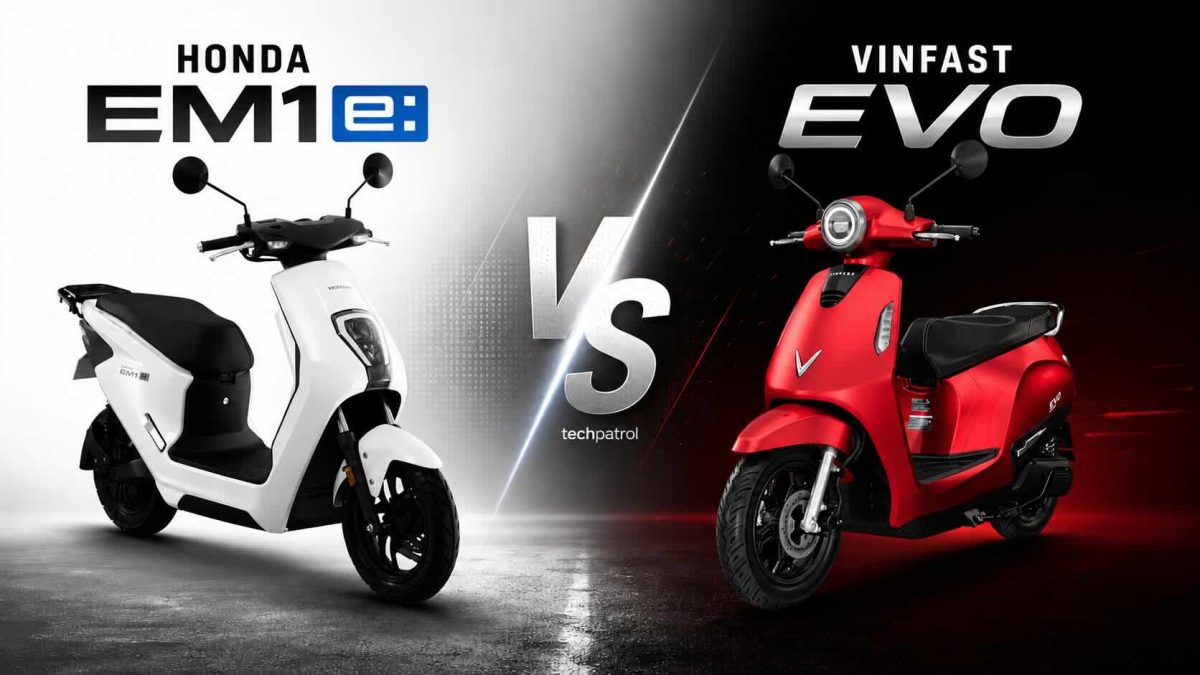
Two scooters are competing hard for your pesos right now: the Honda EM1:E, which launched in September 2024, and the VinFast Evo, which hit our market in late July 2026. Both promise zero gas stops, whisper-quiet rides, and the kind of monthly savings that could buy you breakfast every day for a year. But they’re built for different riders, and choosing wrong could mean overpaying for features you’ll never use—or struggling with a bike that cuts your commute short.
This isn’t just a specs comparison. We rode both, checked the real prices at dealerships, and asked the hard questions: Which one survives a Manila downpour? Which one actually gets you to work and back on a single charge? And which one won’t leave you broke after three months?
Here’s what you need to know before you walk into a showroom.
Quick Comparison Table
| Feature | Honda EM1:E | VinFast Evo |
|---|---|---|
| Launch Price (PH) | ₱94,900 | ₱62,900 (subscription) / ₱75,600 (1 battery) |
| Current Price | ₱94,900 | ₱62,900–₱88,300 (depending on battery option) |
| Top Speed | 45 km/h | 70–80 km/h (1 battery vs dual) |
| Range (Single Battery) | 41.3 km | 85 km (1 battery) |
| Range (Dual/Max) | 48 km (Econ mode) | 150 km (2 batteries) |
| Motor Power | 1.7 kW | 2,450W (Evo) / 3,000W+ (Feliz II/Viper) |
| Battery Capacity | 50.4V Li-ion (removable) | 1.5 kWh per battery (swappable) |
| Charge Time | 6 hours (full) | 4–6 hours standard / fast charging available |
| Waterproof Rating | Not specified | IP67 (submerged to 0.5m for 30 min) |
| Warranty | 2 years | 4 years / 60,000 km (plus 2-year intro extension) |
| Available Colors | Pearl Sunbeam White, Digital Silver | 5+ options per model |
| Key Advantage | Proven Japanese brand, swappable battery, simplicity | Massive range, agile performance, battery swap network |
| Best For | Conservative urban commuters, short daily trips | Gig workers, delivery riders, longer commutes |
The Honda EM1:E: Japanese Reliability Meets Budget Commuting
Honda’s first electric scooter landed in early 2025, and it’s exactly what you’d expect from a 70-year-old motorcycle company: boring in the best way possible.
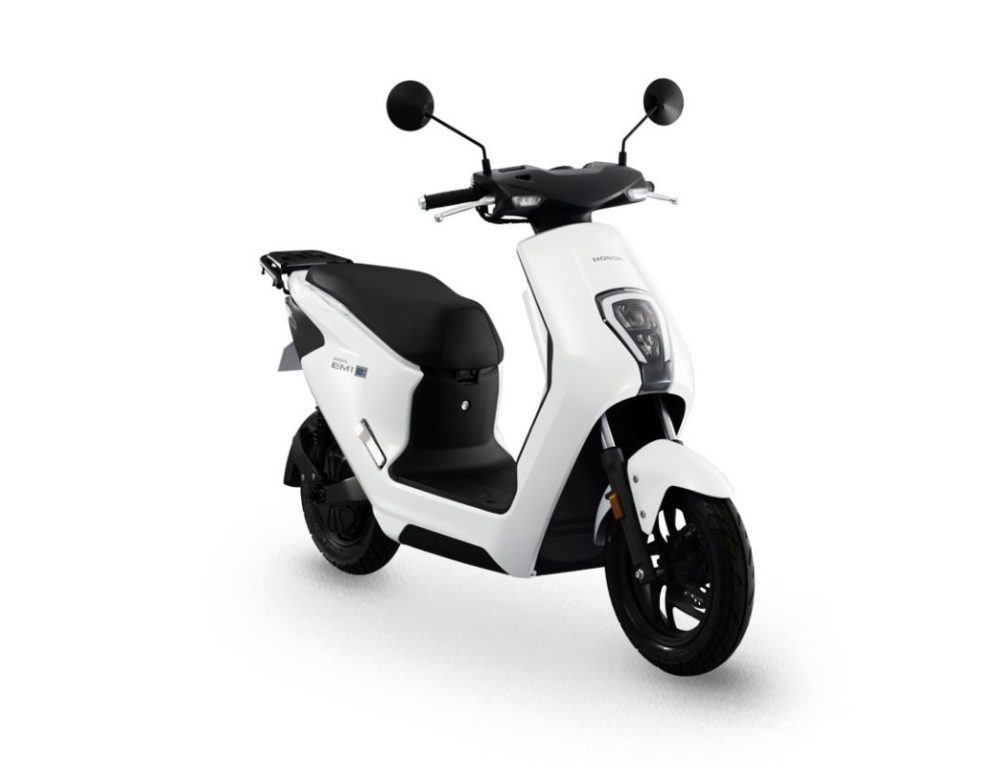
The EM1:E doesn’t try to be a sportbike. It weighs just 95 kg, sits low at 740 mm (perfect for shorter riders), and won’t draw a second glance in traffic. The design is clean, modern without being trendy, and you won’t feel embarrassed parking it outside a café. The 10-inch wheels feel planted even on Metro Manila’s broken streets, and the LED lighting is bright enough that you’ll notice it at night.
Inside that modest frame lives something surprisingly practical: a removable battery. Unlike most scooters that require a 6-hour charging session tethered to an outlet, the EM1:E’s battery pops out in seconds. Charge it in your apartment, your office, your friend’s condo—anywhere you can find a plug. This is what separates Honda’s offering from VinFast’s promise of a sprawling battery-swap network (which, let’s be honest, is still rolling out and sparse outside Metro Manila).
Performance? The EM1:E hits 45 km/h top speed, which sounds slow until you realize that’s fast enough for most city riding. You’ll never feel rushed on a 5-km commute. The 1.7 kW motor delivers smooth, predictable acceleration. Zero jerks. Zero surprises. This scooter won’t make you feel like you’re flying, but it will never make you nervous either.
The battery delivers 41.3 km per charge in standard mode, or 48 km if you activate Econ mode. In real-world testing by riders in Metro Manila, that translates to reliably getting to work, running errands, and getting home. You won’t have range anxiety on a 15-km loop. Add the swappable battery (₱12,700 for an additional pack, but you can charge one at home while riding the other), and suddenly you’ve got 80 km of practical daily range without waiting in a fast-charging line.
Price Reality Check: Honda lists it at ₱94,900. Financing runs roughly ₱4,300 per month with ₱50,000 down. It’s a legit financial commitment, but for those who want Japanese reliability without any surprises, it’s worth the premium.
The Catch: The 45 km/h top speed will feel limiting if you ever need to join faster traffic. The range, while practical for daily commutes, won’t work for long-distance commuting. And if you only buy one battery, you’re limited to one charge cycle per day.
The VinFast Evo: Aggressive Pricing Meets Battery Swap Infrastructure
VinFast dropped its Evo in mid-2026 with a wild pricing strategy: you can legally own it for ₱62,900 under a battery subscription plan. Let that sink in. That’s cheaper than a Honda Click 125 (₱82,500), even with the monthly battery fee.
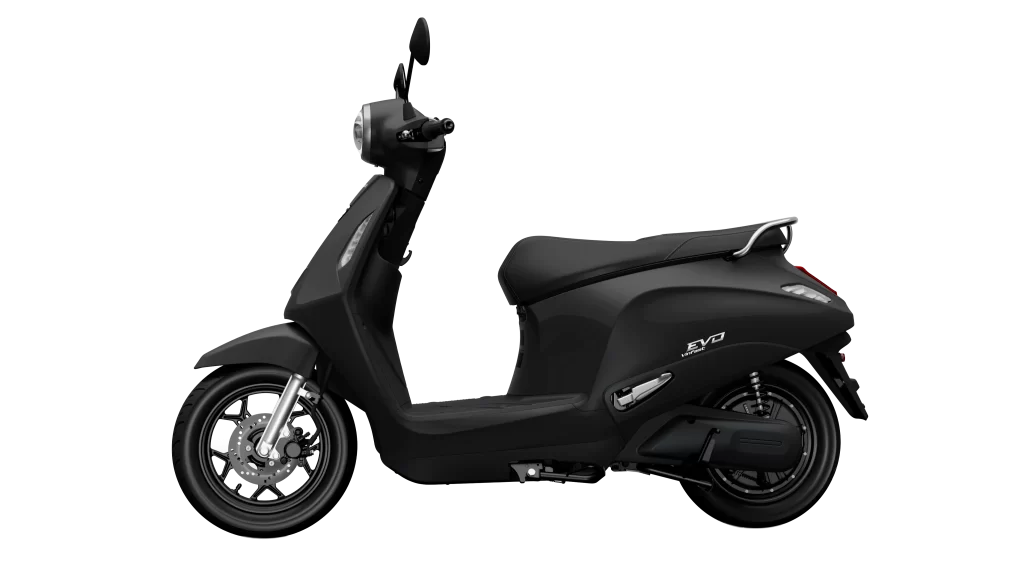
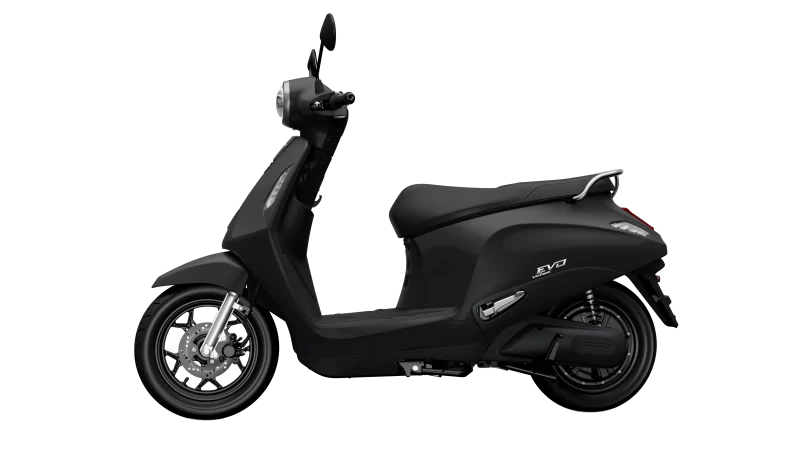
The Evo doesn’t feel cheap. It’s built on the same principles as VinFast’s larger EV cars: solid construction, modern electronics, and a clear understanding that Vietnamese engineers can execute at scale. The design is retro-modern, with a round LED headlamp, classic proportions, but clearly electric in attitude. You’ll turn heads in Makati.
Where the Evo separates itself is performance and range. The single-battery version hits 70 km/h top speed and delivers 85 km of range. That’s nearly double the Honda’s top end and over twice the range. For a delivery rider or someone doing longer commute loops, this changes the game entirely. But here’s the critical detail: those numbers assume careful riding and ideal conditions. Aggressive acceleration, heavy traffic stops, or cruising at max speed will trim that range by 20–30 percent in real-world use.
The dual-battery Evo (₱95,400 with two batteries included) pushes the top speed to 80 km/h and delivers a claimed 150 km of range. In practice, you’re looking at 120–130 km on mixed riding. That’s enough to cover most of Metro Manila’s sprawl in a single charge cycle.
The motor delivers 2,450W of continuous power with 5,000W peak on dual-battery setups. That’s nearly three times the Honda’s motor output. Acceleration from 0–50 km/h takes 6 seconds with a light rider, which feels noticeably quicker than the Honda’s modest push.
But here’s where VinFast’s larger strategy comes into play: battery swapping. Instead of waiting 4–6 hours for a full charge, you pull into a V-Green swap station (starting with 100+ locations in Metro Manila by end of 2026), and a depleted battery for a charged one in 2 minutes. The cost? ₱439 per month for unlimited swaps, or ₱35 per individual swap.
This infrastructure is the Evo’s real killer feature for gig workers. A GrabFood rider can start their 8-hour shift with two charged batteries, swap once midday, and run all day without ever finding a charging outlet. For traditional commuters with a consistent 30–50 km daily range, it’s overkill. For delivery riders, it’s transformative.
Price Reality Check: The base ₱62,900 price with battery subscription is genuine. After the monthly battery fee (₱439), you’re paying around ₱125 per day to ride, plus electricity (negligible). The battery-included versions (₱75,600 for one battery, ₱88,300 for two) are still cheaper than the Honda, even accounting for home charging costs.
The Catch: The battery subscription model only works if you have access to swap stations, currently limited to Metro Manila and a few provincial cities. The warranty terms, while good (4 years / 60,000 km), come with battery subscription conditions. And that 150 km range? Only realistic with dual batteries and conservative riding.
Specs Head-to-Head: What the Numbers Really Show
Motor & Speed: The VinFast Evo’s 2,450W motor is significantly more powerful than Honda’s 1.7 kW setup. On paper, that’s a 44% power advantage. In practice, it means the Evo accelerates harder off the line and can maintain speed better on inclines. If you hit EDSA ramps regularly or need to merge with faster traffic, the Evo feels notably more capable. The Honda feels leisurely by comparison—perfectly fine for local roads, but you’ll feel the difference on bigger thoroughfares.
Range & Battery: This is where differences compound. The Honda EM1:E delivers 41.3 km from its 50.4V battery. The VinFast Evo (single battery) delivers 85 km from a 1.5 kWh battery. Energy density is clearly a win for VinFast’s engineering.
In real-world commuting:
- Honda: covers 15–30 km daily loops. Anything more requires charging overnight and riding charged. If you have a long commute (40+ km), you need the second battery.
- VinFast Evo (single): covers 30–50 km daily loops easily. 40+ km commutes work but with less margin.
- VinFast Evo (dual): covers 80–120 km daily loops. Long commutes and delivery runs are routine.
Charging: Honda takes 6 hours for a full charge. VinFast claims 4–6 hours standard, with fast charging available (though specs vary by region). Both are fine if you’re charging overnight. Neither is practical for mid-day top-ups unless you’re at a location with fast charging.
But here’s where battery swap changes everything: With VinFast’s swap network in place, you never wait. You just swap. For delivery riders, that’s revolutionary. For commuters with a home charger, it’s nice-to-have.
Waterproofing: VinFast rates the Evo at IP67—it can handle being submerged to 0.5 meters for 30 minutes. In practical terms, that means crossing knee-deep floodwater safely. Honda hasn’t published waterproof ratings for the EM1:E, which is concerning given Manila’s monsoon season. That’s a real-world safety edge to VinFast.
Warranty: Honda offers a 2 years standard. VinFast offers 4 years / 60,000 km, plus a complimentary 2-year extension (6 years total, though the extension comes with conditions). Battery warranty is where VinFast stands out: included in their extended coverage versus separate for Honda.
Where to Buy: Dealership Availability & Reality Check
Honda EM1:E: Available at Honda dealerships nationwide. Official SRP is ₱94,900. Stock is still building out—some areas have long wait times. Test rides are easy to arrange. Financing is straightforward Honda Credit availability. After-sales service is nationwide through Honda’s existing network.
VinFast Evo: Available through 21 authorized VinFast dealers nationwide (check vinfastauto.ph/en/dealer-locator). Early-bird pricing (₱62,900 subscription / ₱75,600 with battery) ended July 18, 2026, but dealer incentives and trade-in offers are still available. Battery-swap network is actively expanding—currently 100+ stations in Metro Manila, with nationwide rollout planned by end of 2026.
For shopping:
- Honda: walk into any Honda dealer, negotiate financing, expect delivery in 2–4 weeks
- VinFast: choose a dealer, verify battery-swap station proximity to your home and work, negotiate on pricing (dealers have some flexibility)
Who Should Buy What? The Real Recommendation
Choose the Honda EM1:E if:
- You value Japanese reliability and want zero surprises
- Your daily commute is under 30 km and you have a place to charge at home or work
- You want to avoid new-brand risk (VinFast is still scaling its service network)
- You prefer simplicity over cutting-edge performance
- You’re willing to pay a premium for brand heritage and proven after-sales support
Real Example: A Makati office worker doing a 12-km daily loop from Bacoor, charging during work hours, and using occasional Grab rides for longer trips. The Honda is reliable, low-maintenance, and just works. Cost: ₱94,900 upfront + ₱50 per charge cycle at home.
Choose the VinFast Evo if:
- You’re a GrabFood / Shopee delivery rider doing 100–150 km daily runs
- You live in Metro Manila or a city with planned battery-swap coverage
- You want maximum range and don’t mind the battery subscription model
- You’re OK with a newer brand in exchange for aggressive pricing and performance
- You want the flexibility of swappable batteries and zero charging downtime
Real Example: A delivery rider in Quezon City doing 8-hour shifts, needing 120+ km daily range and zero downtime. VinFast Evo with battery subscription (₱62,900 scooter + ₱439 battery/month) saves money versus gas, plus the swap network means they’re never stranded.
The Verdict: Performance vs. Reliability
On raw specs, the VinFast Evo wins. It’s faster, has longer range, costs less, and offers an infrastructure advantage with battery swapping. On proven reliability and brand trust, Honda EM1:E wins. It’s from a company that’s been making scooters for decades.
But here’s what matters most: use case alignment.
If you’re a conservative commuter with a 20–30 km daily loop and access to home charging, the Honda EM1:E is the safer choice. It will work reliably for 5+ years, and Honda’s service network means you’ll never be stranded looking for parts.
If you’re a gig economy rider or need serious range, the VinFast Evo is the rational choice. The battery-swap network, once fully deployed, changes the economics fundamentally. At ₱62,900 with a monthly battery fee, the cost argument is hard to ignore.
The Philippine electric scooter market just became interesting. And unlike the questions you’re asking in EDSA traffic, this one has a clear answer: it depends on who’s riding.
FAQ: The Questions Everyone Asks
Q: Which is more reliable—Honda or VinFast? A: Honda has 70 years of motorcycle history. VinFast has 2–3 years in the market. Honda wins on historical reliability. VinFast wins on modern tech and warranty coverage (4 years vs. 2 years). For components, both use standard parts (motors, batteries, brakes). The real difference is service network maturity. Honda’s is established; VinFast is building theirs. If you’re risk-averse, Honda. If you want bleeding-edge at a discount, VinFast.
Q: Can I charge either one at home? A: Both support home charging. Honda comes with an off-board charger (6 hours full charge). VinFast comes with standard chargers (4–6 hours depending on model). You can add solar charging or fast chargers to either. Cost: Honda battery is fixed to the scooter (removable but not swappable with others). VinFast batteries are swappable—you can own two and charge one at home while riding the other.
Q: What’s the real monthly cost? Honda: Fuel-equivalent (electricity ≈ ₱50/charge cycle) + maintenance (minimal for electric). Rough estimate: ₱150–200/month for fuel equivalent. VinFast (subscription): ₱439/month for battery + ₱0 fuel. Rough estimate: ₱439/month. VinFast (battery-owned): Electricity ₱50/charge cycle + occasional maintenance. Rough estimate: ₱150–250/month depending on usage.
Q: Will battery-swapping actually be available in my area? A: V-Green battery-swap stations are launching now in Metro Manila and major cities, but the network is still in early rollout phase as of August 2026. VinFast plans to deploy 30,000 swapping cabinets nationwide by 2027. Check the dealer locator and V-Green app for current station locations before committing to subscription. If you’re outside major urban centers, home charging will be your primary option for months.
Q: Is the ₱45 km/h speed limit really a problem for the Honda? A: On local roads and residential commutes, no. On major thoroughfares like EDSA or C-5, you’ll feel slower and less confident in mixed traffic. Most commuters will feel the difference once per week. Some won’t notice it at all.
Q: Can I haggle the price? A: Honda: Less room. They have a strong brand position, and ₱94,900 is already the promo price. VinFast: More room. Dealers have discretion, and VinFast is still building market share. Ask about trade-in values and bundle deals.
Q: What happens if the battery swap network isn’t finished by end of 2026? A: You still own a scooter with 85–150 km range depending on batteries. You just charge at home like anyone else. Battery subscription becomes a nice-to-have rather than essential.
The Bottom Line: Your Next Commute Starts Here
Electric scooters are no longer theoretical. They’re on the road. They’re affordable. And they work.
The Honda EM1:E says: “I’m bored in the best way. I will never let you down.”
The VinFast Evo says: “I’m faster, cheaper, and I’m building an empire. Trust the momentum.”
Both are legitimate choices. The question isn’t which is better—it’s which is better for you.
Ride one. Then ride the other. Then decide.
Your EDSA commute is counting on it.
Published: August 4, 2026
Sources: