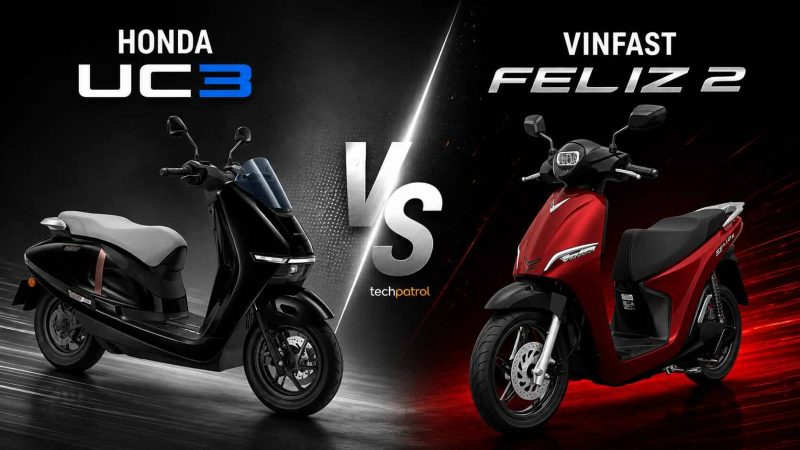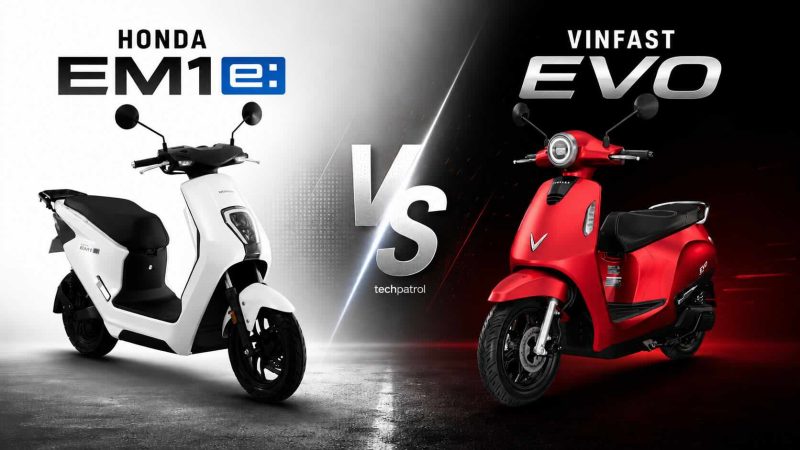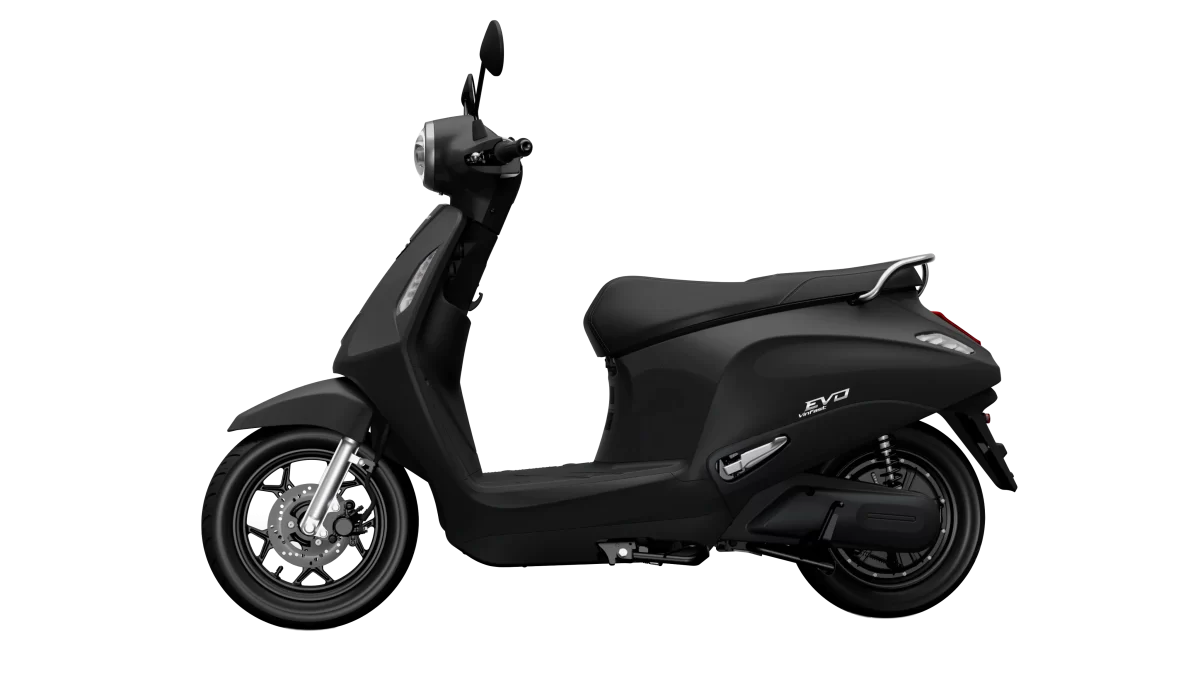
The VinFast Evo starts at ₱62,900 in the Philippines—that’s cheaper than most gas scooters and undercuts the Honda Click by nearly ₱20,000. It’s the lightest, most efficient model in VinFast’s three-bike lineup, targeting riders who want zero emissions, zero oil changes, and maximum cash in pocket.
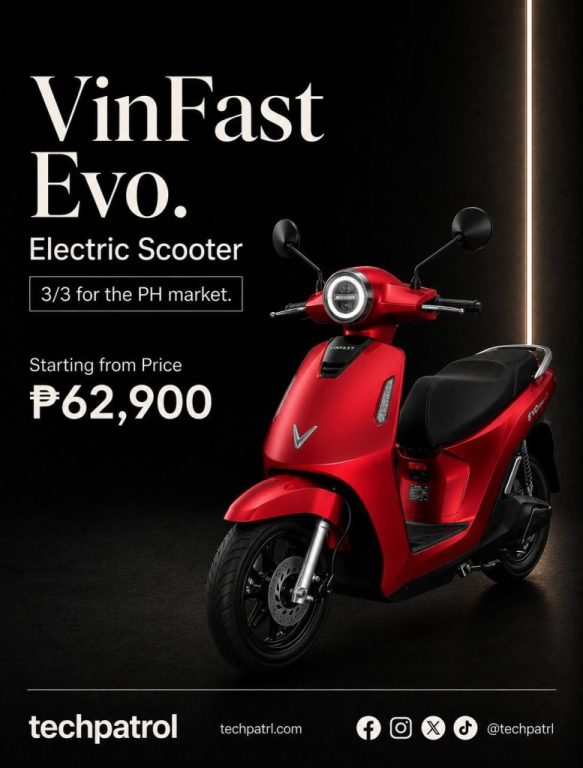
The real question isn’t whether it’s affordable. It is. The question is whether it works for your daily commute when battery-swapping infrastructure is still rolling out and charging at home might be your only option for months.
Related: VinFast Electric Motorcycles Now Available in the Philippines: Complete Pricing & Specs
- VinFast Evo Price Breakdown: Subscription vs. Ownership
- Battery Subscription Model (Lowest Entry Price)
- Battery Ownership Model (Pay More Upfront, Own Everything)
- Real-World Cost Comparison: Evo vs. Honda Click
- VinFast Evo Specifications: Everything You Need to Know
- Core Performance
- Physical Specs
- Features & Build Quality
- Warranty & Support
- Who Should Buy the VinFast Evo?
- Delivery Riders & Gig Workers
- Office Commuters (5-30 km Daily)
- Students & Casual Urban Riders
- Who Should Skip It (For Now)
- Highway Riders
- Battery-Swap Dependent Riders
- Long-Distance Commuters (50+ km Single Trip)
- Evo vs. Feliz II vs. Viper: Where Does Evo Fit?
- VinFast Evo
- VinFast Feliz II
- VinFast Viper
- Battery: The Heart of the Evo
- LFP Technology Explained
- Single vs. Dual Battery Decision
- Range Reality Check: Can 150 km Get You Through a Day?
- Realistic Daily Scenarios
- Charging the Evo: Home Setup & Costs
- Home Charging at 240V (Standard PH Household)
- Dealer Charging (When Battery Swapping Isn’t Available)
- Future: V-Green Battery-Swapping Stations
- Evo in the Real World: Delivery Rider Use Case
- Competitors: How Evo Stacks Up
- VinFast Evo vs. Honda Click 125i
- VinFast Evo vs. Yamaha Mio i 125
- VinFast Evo vs. Budget E-Scooters (Segway, Ninebot)
- Pros and Cons: The Honest Assessment
- Pros
- Cons
- Detailed Spec Breakdown for Tech-Minded Riders
- Motor & Power Delivery
- Regenerative Braking
- Battery Management System (BMS)
- Waterproofing: IP67 Explained
- Should You Buy the VinFast Evo? The Decision Framework
- Buy if:
- Wait if:
- Buy Elsewhere if:
- FAQs
- VinFast Evo Dealer Locator & Next Steps
- What to Ask Your Dealer
- The Evo in 2026 Context: Why Now Matters
- Final Verdict
VinFast Evo Price Breakdown: Subscription vs. Ownership
VinFast offers two ways to buy the Evo—each changes the total cost you’ll pay.
Battery Subscription Model (Lowest Entry Price)
| Config | Price | Monthly Cost | Swap Fee | Total Per Swap |
|---|---|---|---|---|
| 1 Battery Subscription | ₱62,900 | ₱439 | ₱35 | ₱474 |
| 2 Battery Subscription | ₱62,900 | ₱799 | ₱35 per swap | ₱834 |
What you get: Access to VinFast’s battery-swapping network. You own the scooter. VinFast owns the batteries. Swap dead batteries for charged ones at V-Green stations in 2 minutes.
The catch: Battery infrastructure is nascent. Outside Metro Manila and a few key cities, swapping stations don’t exist yet. Until they do, you’re charging at home or at dealer locations (4.5-9 hours per charge).
Battery Ownership Model (Pay More Upfront, Own Everything)
| Config | Price |
|---|---|
| Evo + 1 Battery | ₱75,600 |
| Evo + 2 Batteries | ₱88,300 |
What you get: Scooter + batteries outright. No subscription fees. No swapping fees. You charge whenever you want, wherever you want.
The trade-off: Higher upfront cost. You need to plan charging (4.5 hours single, 9 hours dual). No access to the future battery-swapping network.
Real-World Cost Comparison: Evo vs. Honda Click
This is what matters for a Manila commuter.
| VinFast Evo (Subscription) | Honda Click 125i | Savings | |
|---|---|---|---|
| Entry price | ₱62,900 | ₱82,500 | ₱19,600 |
| Monthly cost (year 1) | ₱439 | ₱600 (fuel) | ₱161 |
| Annual battery swaps (100 swaps) | ₱3,500 | — | — |
| Year 1 total | ₱67,239 | ₱89,700 | ₱22,461 |
Electricity cost (at home charging): ~₱0.50 per km. Gas at ₱60/liter: ~₱2.00 per km.
For a delivery rider doing 50 km daily: VinFast saves ₱75/day on fuel alone. That’s ₱22,500 annually.
VinFast Evo Specifications: Everything You Need to Know
Core Performance
| Spec | Detail |
|---|---|
| Motor Power | 5,200W (dual battery), 3,000W (single battery) |
| Top Speed | 80 kph |
| Acceleration | 0-50 kph in 6 seconds (single rider, 65kg) |
| Range (Single Battery) | 85 km |
| Range (Dual Battery) | 150 km |
| Charging Time (Single) | 4.5 hours (0-100%) |
| Charging Time (Dual) | 9 hours (0-100%) |
Physical Specs
| Spec | Detail |
|---|---|
| Dimensions | 1,850 x 675 x 1,130 mm |
| Wheelbase | 1,295 mm |
| Ground Clearance | Typical for scooters (around 130-150mm) |
| Weight | Lightweight design (exact weight not listed by VinFast) |
| Battery Capacity | 1.5 kWh per battery (LFP type) |
| Waterproof Rating | IP67 (submersible to 0.5m for 30 minutes) |
Features & Build Quality
| Category | Features |
|---|---|
| Lighting | Full LED system, LED projector headlight, LED turn signals, LED taillight |
| Display | 4.8-inch LED color digital dashboard (trip distance, speed, battery %, time) |
| Suspension | Shock absorption with hydraulic dampers |
| Brakes | Regenerative braking system |
| Tires | Vacuum tires (pneumatic, not solid) |
| Storage | Under-seat storage (practical for delivery bags, helmets) |
Warranty & Support
| Coverage | Period |
|---|---|
| Standard Warranty | 4 years or 60,000 km (whichever first) |
| Extended Warranty | +2 years or +12,000 km (optional, with conditions) |
| Maximum Coverage | 6 years or 72,000 km |
Who Should Buy the VinFast Evo?
Delivery Riders & Gig Workers
The Evo is built for you. 150 km range on dual batteries covers most Metro Manila delivery zones. ₱0.50 per km electricity cost beats gas scooters by 75%. You break even on the ₱62,900 price in less than 4 months if you’re doing 30+ deliveries daily.
Warning: Battery-swapping network is limited. Your dealer or home charging is your lifeline right now.
Office Commuters (5-30 km Daily)
Single battery (85 km) handles a 40 km round trip with margin. 4.5-hour home charging fits a standard work schedule. Monthly ₱439 subscription is cheaper than parking fees and gas in most cities.
Students & Casual Urban Riders
The Evo is lightweight and agile in traffic. It parks anywhere. It costs less to buy and operate than a gas scooter. The downside: 80 kph top speed feels limiting for highway commutes.
Who Should Skip It (For Now)
Highway Riders
If your commute touches expressways, the 80 kph top speed is too slow. The Feliz II (90 kph) or Viper are better choices.
Battery-Swap Dependent Riders
Without a full network, you can’t rely on battery swapping. If you need that feature to work today, wait 6 months.
Long-Distance Commuters (50+ km Single Trip)
150 km on dual batteries is day-trip distance, not daily-routine distance. A single 50 km commute leaves you with only 50 km buffer.
Evo vs. Feliz II vs. Viper: Where Does Evo Fit?
VinFast Evo
- Price: ₱62,900 (subscription)
- Speed: 80 kph (slowest)
- Range: 150 km dual / 85 km single (best range per battery)
- Best for: Budget-conscious delivery riders, city-only commuters
- Vibe: Retro-modern, compact, nimble in traffic
- Weakness: Capped at 80 kph; feels slow on highways
VinFast Feliz II
- Price: ₱64,900 (subscription)
- Speed: 90 kph (10 kph faster than Evo)
- Range: 145 km dual / 82 km single (slightly shorter than Evo)
- Best for: Everyday urban riders, small families (two-up comfort)
- Vibe: Comfort-focused, larger seat, color LED display
- Advantage: Better for longer city commutes and occasional highway runs
VinFast Viper
- Price: ₱73,900 (subscription)
- Speed: 90 kph (same as Feliz II)
- Range: 145 km dual / 82 km single
- Best for: Feature hunters, riders wanting premium tech
- Vibe: Premium design, smart keyless, GPS anti-theft, TFT display
- Advantage: Bluetooth-enabled smart key, remote lock/unlock, theft tracking
The verdict: Evo is the price champion. Feliz II is the comfort pick. Viper is the tech option.
Battery: The Heart of the Evo
LFP Technology Explained
VinFast uses Lithium Iron Phosphate (LFP) batteries—not the older Li-ion type. LFP is safer, lasts longer (rated for thousands of cycles), and handles heat better in tropical climates like the Philippines.
Practical impact: Your battery won’t degrade as fast in Manila’s heat and humidity. Charging to 100% doesn’t shorten lifespan. You can charge daily without worry.
Single vs. Dual Battery Decision
Single Battery (₱62,900 subscription or ₱75,600 owned):
- 85 km range on one charge
- 4.5-hour charge time
- Lighter weight
- Perfect if: You commute under 40 km daily and home-charge overnight
Dual Battery (₱62,900 subscription or ₱88,300 owned):
- 150 km range
- 9-hour charge time
- Redundancy: One battery fails, you still have 75+ km to reach home
- Perfect if: You do 50+ km daily or need backup power
Battery swap economics:
- Monthly: ₱439 (single) or ₱799 (dual)
- Per swap: ₱35
- If you swap 5 times monthly: ₱35 x 5 = ₱175 + ₱439 = ₱614 total
- That’s still cheaper than filling a gas scooter twice weekly (₱400+ per week)
Range Reality Check: Can 150 km Get You Through a Day?
On paper, 150 km sounds impressive. In practice, it depends on your commute pattern.
Realistic Daily Scenarios
Scenario 1: Metro Manila Commuter
- Home → Office: 15 km
- Office → Lunch: 5 km
- Lunch → Office: 5 km
- Office → Home: 15 km
- Daily total: 40 km
- Range used: 40 km
- Remaining: 110 km
- Verdict: Dual battery handles easily. Single battery is sufficient with one evening charge.
Scenario 2: Delivery Rider
- 8-10 deliveries per day
- Average 5 km per delivery
- Daily total: 40-50 km
- Range used: 50 km
- Remaining: 100 km (dual) or 35 km (single)
- Verdict: Dual battery needed for full-day work. Lunchtime or mid-route top-up with single battery.
Scenario 3: Mixed Urban + Highway
- Metro Manila → Rizal Province: 25 km
- Local deliveries: 20 km
- Return trip: 25 km
- Daily total: 70 km
- Verdict: Dual battery is tight. A single battery is insufficient. Consider Feliz II instead.
Charging the Evo: Home Setup & Costs
Home Charging at 240V (Standard PH Household)
Most homes have a 240V 15-amp circuit. Charging the Evo on a standard household outlet takes:
- Single battery: 4.5 hours
- Dual batteries: 9 hours
Electricity cost per charge (dual battery):
- Evo dual battery: ~1.5 kWh × 2 = 3 kWh consumed
- PH average rate: ₱12-15 per kWh (MERALCO average)
- Cost per full charge: ₱36-45
- Cost per km: ₱0.24-0.30 (vs. ₱1.50-2.00 for gas)
Monthly charging cost (commuter):
- 30 days × 40 km daily = 1,200 km
- 1,200 km ÷ 150 km per charge = 8 charges
- 8 charges × ₱40 = ₱320/month
- Add ₱439 subscription = ₱759 total (electricity + subscription)
For gas: 1,200 km ÷ 50 km per liter × ₱60/liter = ₱1,440/month. You save ₱681 monthly.
Dealer Charging (When Battery Swapping Isn’t Available)
VinFast dealers offer charging while you wait (2-4 hours) or same-day turnaround. Cost ranges from ₱50-100 per charge depending on location. For now, this is a backup, not primary.
Future: V-Green Battery-Swapping Stations
When the network rolls out (target: 100+ stations by end of 2026), you’ll swap a depleted battery for a fully charged one in 2 minutes at ₱35 per swap. This changes everything for delivery riders—no charging downtime, just swap and go.
Evo in the Real World: Delivery Rider Use Case
Let’s track a typical day for a GrabFood delivery rider using the Evo.
6:00 AM: Charge dual batteries overnight (both at 100%) 7:00 AM: Start shift. Dual batteries = 150 km available 1:00 PM: 20 km delivered, 130 km remaining. Continue. 4:00 PM: 50 km delivered total, 100 km remaining. Lunch break. 5:00 PM: Charge single battery at restaurant (4.5 hours—wait, that’s not practical).
Problem: A delivery rider can’t afford 4.5-hour downtime.
Real solution:
- Buy dual batteries outright (₱88,300)
- Carry one fully charged spare in a backpack
- When battery depletes, swap the depleted one for the charged spare (manual swap, not V-Green station)
- Charge the depleted battery at home overnight
- Next day, repeat with two charged batteries
Cost: ₱88,300 upfront. No monthly fees. No downtime.
Alternative solution (when V-Green network launches):
- Battery subscription (₱62,900)
- Swap at stations (₱35 per swap)
- Realistic swaps per day: 1-2
- Monthly swaps: 20-40
- Monthly cost: ₱439 + (30 swaps × ₱35) = ₱439 + ₱1,050 = ₱1,489
For casual riders, subscription makes sense. For delivery riders, battery ownership is cheaper long-term.
Competitors: How Evo Stacks Up
VinFast Evo vs. Honda Click 125i
| Factor | Evo | Click 125i | Winner |
|---|---|---|---|
| Price | ₱62,900 | ₱82,500 | Evo (₱19,600 cheaper) |
| Range | 150 km (dual) | 300+ km (tank) | Click (but Evo sufficient for most) |
| Speed | 80 kph | 100+ kph | Click |
| Monthly Cost | ₱439 + ₱0.50/km | ₱600 fuel | Evo (₱161/month cheaper) |
| Maintenance | Battery checks | Oil change, spark plugs, filters | Evo (minimal maintenance) |
| Noise | Silent | Noisy | Evo |
| Emissions | Zero | High (gas fumes) | Evo |
| Resale Value | Unproven (new brand) | Proven (Honda reputation) | Click |
Verdict: Evo wins on cost and environment. Click wins on range and highway performance.
VinFast Evo vs. Yamaha Mio i 125
Similar story. Mio is ₱85,000, slightly sportier, but same operational costs as Click. Evo undercuts both.
VinFast Evo vs. Budget E-Scooters (Segway, Ninebot)
Those are standing electric scooters (not seated). Different categories. Evo is purpose-built for commuting and delivery—more powerful, more comfortable, longer range.
Pros and Cons: The Honest Assessment
Pros
1. Price undercuts gas scooters. ₱62,900 beats most gas scooters and e-scooters in the PH market. Entry cost to EV ownership is one of the lowest available.
2. Operating cost is 75% lower than gas. After 12 months, fuel savings recoup the price difference.
3. Minimal maintenance. No oil, no spark plugs, no filters. Brake pads last longer (regenerative braking). Battery warranty is solid (4-6 years).
4. Agile in traffic. Lightweight, compact design. Fits anywhere a motorcycle parks.
5. Future-proof infrastructure play. Battery-swap stations launching now. Early adoption positions you to benefit later.
6. Torque is instant. An electric motor delivers power immediately. Feels quick off the line.
7. Silent operation. Zero noise pollution. Sneak past sleeping neighbors at 5 AM.
Cons
1. The battery-swap network is incomplete. You’ll charge at home for months. Subscription plan assumes infrastructure that isn’t here yet.
2. 80 kph feels limiting. Highway merging, city bypasses—you’ll feel the speed cap. Feliz II (90 kph) is marginally better.
3. Brand-new VinFast is an unproven player. Honda, Yamaha, Suzuki have 20+ years of dealer support in PH. VinFast has 21 dealers. Warranty is solid, but resale value is unknown.
4. Single battery range is tight. 85 km is fine for 40 km daily commutes, but you have zero margin. One longer trip and you’re stranded.
5. Charging takes time. 4.5-9 hours is longer than gas fill-up. Requires planning.
6. Weight distribution loaded. Dual battery setup (owned, not subscription) adds ₱25,700 to upfront cost.
7. No highway comfort. Seat, suspension, windscreen—all aimed at city riding. Long-distance riders will be uncomfortable.
Detailed Spec Breakdown for Tech-Minded Riders
Motor & Power Delivery
The Evo uses an in-hub motor (motor integrated into the rear wheel). VinFast rates it at:
- 5,200W max (with dual battery)
- 3,000W max (with single battery)
What this means: More power = faster acceleration and better hill-climbing. Dual battery doesn’t just extend range—it enables full motor performance.
Hill climbing test: VinFast claims Evo climbs up to 10-degree slopes with a 65 kg rider. Real-world feedback: Works on EDSA underpasses and standard street inclines. Manila’s flatness is on your side.
Regenerative Braking
When you brake, the motor acts as a generator and recovers energy back to the battery. VinFast doesn’t publish efficiency %, but typical recovery is 5-15% per ride depending on driving style (more braking = more recovery).
Practical impact: Your range improves if you drive smoothly and don’t hard-brake constantly. Delivery riders who coast and brake gradually see better range than aggressive riders.
Battery Management System (BMS)
LFP batteries include a BMS that monitors each cell’s temperature, voltage, and charge state. VinFast’s system:
- Prevents overcharging (cuts off at 100%)
- Prevents over-discharging (cuts motor at ~5% remaining)
- Balances cells automatically
- Logs fault codes (dealers can diagnose issues)
Tropical climate consideration: LFP handles heat better than Li-ion. Manila’s 30°C+ summers are manageable. The battery will degrade slower here than in colder climates.
Waterproofing: IP67 Explained
IP67 rating means:
- 6: Dust-tight (no sand gets inside)
- 7: Immersion to 0.5m for 30 minutes
What you can and can’t do:
- ✓ Splash water while washing
- ✓ Light rain riding
- ✓ Puddle riding (splash zones)
- ✗ Submersion (don’t ride into a flooded street)
- ✗ Pressure wash (high-pressure water can breach seals)
Manila typhoon season reality: IP67 is sufficient for monsoon rain. Don’t submerge. Don’t pressure wash.
Should You Buy the VinFast Evo? The Decision Framework
Buy if:
You’re a delivery rider doing 30-50 km daily in Metro Manila. ₱62,900 price and ₱0.50/km cost beat gas scooters by a huge margin. You’ll break even in 4-5 months on fuel alone.
You’re an office commuter with a predictable 20-40 km daily routine and home charging access. Single or dual batteries handle this easily. Monthly ₱439 subscription is cheaper than parking + gas combined.
You want zero-emission commuting and can tolerate charging times and infrastructure gaps for now. Early adoption means you’ll have full battery-swap access by 2027.
You value simplicity: No oil changes, minimal maintenance, predictable electricity cost, tax incentives (electric vehicles may qualify for duty reductions pending policy).
Wait if:
You need 90+ kph highway performance. The Feliz II (90 kph) or Viper (90 kph) is $2,000 more but handles highway merging safely.
You depend on battery swapping today. V-Green stations are limited. Without them, the subscription model is expensive compared to battery ownership.
You do 60+ km single trips regularly. Even a dual battery (150 km) leaves minimal margin. A mechanical issue, detour, or traffic jam could leave you stranded.
You value resale value. VinFast is new to PH. Resale value is unproven. Honda, Yamaha, Suzuki bikes hold value better (for now).
Buy Elsewhere if:
You need 100+ kph performance: Honda PCX (scooter at ₱90k, 125cc speed), Yamaha NMAX (sporty at ₱95k), or Vespa (premium at ₱150k).
You want proven reliability: Stick with Honda Click, Yamaha Mio, Suzuki Burgman—market-tested for 15+ years in PH.
FAQs
Q: How much is VinFast Evo in the Philippines? ₱62,900 with battery subscription, ₱75,600 with one battery, ₱88,300 with two batteries.
Q: What’s the range of VinFast Evo? 85 km on one battery, 150 km on two batteries. Real-world range varies ±10% depending on riding style, weight, and terrain.
Q: How long does it take to charge the VinFast Evo? 4.5 hours (single battery, 100% charge), 9 hours (dual batteries).
Q: Is VinFast Evo good for delivery riders? Yes. ₱0.50/km electricity cost beats gas by 75%. Dual battery handles full-day shifts. No downtime if you own two batteries (manual swap while one charges).
Q: Can I use VinFast Evo for highway commuting? Not ideal. 80 kph is legal highway speed but slow for merging and overtaking. Feliz II (90 kph) is safer for highways.
Q: How much does it cost to charge VinFast Evo per km? ₱0.24-0.30 per km (at ₱12-15/kWh electricity rate). Compare to gas scooters at ₱1.50-2.00 per km.
Q: What’s the warranty on VinFast Evo? 4 years/60,000 km standard. Optional extension: +2 years/+12,000 km (conditions apply). Total possible: 6 years/72,000 km.
Q: Where can I buy VinFast Evo in the Philippines? 21 authorized VinFast dealers nationwide. Find them at vinfastauto.ph/en/dealer-locator.
Q: Is there a battery swap network for Evo in PH? V-Green battery-swap network is launching now. Limited stations in Metro Manila, key cities. Nationwide expansion (target: 100+ stations) expected by end of 2026.
Q: What’s the difference between Evo and Feliz II? Evo: 80 kph, budget (₱62,900), best range. Feliz II: 90 kph, comfort (₱64,900), better seat. Choose Evo for price, Feliz II for highway comfort.
Q: Can I finance VinFast Evo? Yes. VinFast offers in-house financing and dealer credit options. Check with your nearest dealer for rates and terms.
VinFast Evo Dealer Locator & Next Steps
You can buy the Evo at any of the 21 VinFast dealers nationwide. Visit vinfastauto.ph/en/dealer-locator to find the nearest location, check stock, and schedule a test ride.
What to Ask Your Dealer
- Battery-swap network: How many V-Green stations are within 5 km of your location? When will that number expand?
- Financing: What are the current rates and terms? Any early-bird discounts remaining?
- Warranty registration: What’s the process? Do you extend the optional +2 years/+12,000 km coverage?
- Service availability: Can they diagnose BMS codes? Can they replace batteries if needed?
- Spare parts: How long is the lead time for batteries, chargers, brake pads?
- Charging stations: Do they offer owner charging facilities for customers waiting?
The Evo in 2026 Context: Why Now Matters
VinFast’s entrance into the PH electric motorcycle market signals a tipping point. Gas-powered scooters have dominated for 20 years. Battery-swappable electric bikes are changing that calculus.
The Evo is the entry point. It’s affordable enough that a delivery rider can take the plunge, and it’s efficient enough that the economics make sense. Battery infrastructure is launching in real time. By 2027, if V-Green scales to 100+ stations nationwide, range anxiety becomes moot.
For early adopters willing to charge at home for the next 6-12 months, the Evo is the cheapest ticket into EV ownership and the lowest operating cost per kilometer on Manila’s roads.
Final Verdict
The VinFast Evo is a solid, affordable entry into electric scooter ownership in the Philippines. It’s not perfect—80 kph feels slow, battery-swap infrastructure isn’t ready, and resale value is unproven. But for delivery riders, city commuters, and budget-conscious riders, the price-to-value proposition is hard to beat.
Cost savings alone (₱22,000+ annually vs. gas) justify the purchase within one year. Add environmental benefits, zero maintenance, and the infrastructure investment VinFast is making locally, and you have a credible alternative to Honda Click or Yamaha Mio.
The only question left: Are you ready to charge at home for a few months while battery stations roll out? If yes, the Evo makes sense now. If you need full battery-swap access today, wait until September 2026 and revisit.