- InstaPay and PesoNet Fees Are Changing Fast, and Your Bank Probably Didn’t Tell You
- What Is InstaPay? A Quick Explainer
- The History: How We Got Here
- 2016–2020: InstaPay Rolls Out (With Fees)
- 2020–2021: The Pandemic Catalyzes Change
- 2022–2024: The “Unlimited Free” Era Emerges
- 2025–2026: The Regulatory Pivot
- Current Landscape: Which Banks Offer Free InstaPay Transfers
- ✅ BPI (Bank of Philippine Islands) – THE GAME CHANGER
- ✅ OWN Bank (The Rural Bank of Cavite City)
- ✅ UnionDigital Bank
- ✅ VYBE by BPI
- ✅ BanKo (BPI Direct BanKo)
- Other Players Worth Knowing About
- FAQs
- What’s Next? The 2026–2027 Outlook
- Final Thoughts
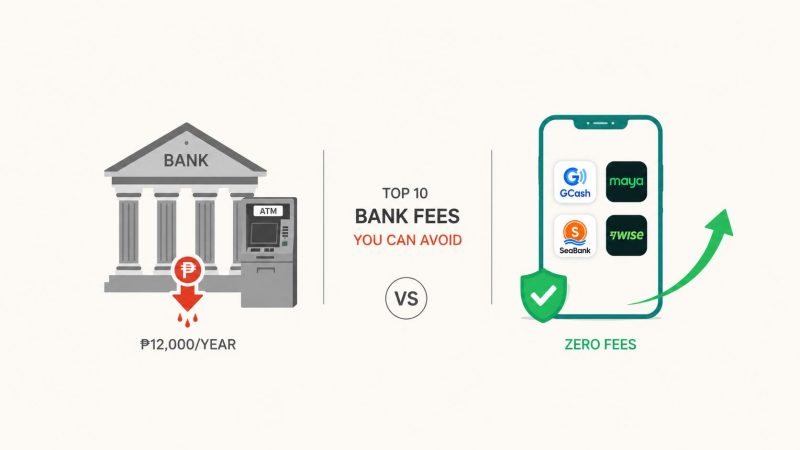
InstaPay and PesoNet Fees Are Changing Fast, and Your Bank Probably Didn’t Tell You
InstaPay and PesoNet fees are the last thing on your mind the moment your Kuya in Qatar messages the family group chat: I’m sending the money now, get Nanay to the hospital right away. You open your banking app, key in the amount, hit send, and there it is, a transfer fee shaving off part of the money before it even leaves your account. Banks have been doing that to Filipinos for years, and most of us just accepted it as the cost of moving money in this country.
That’s changing right now. As of this week, two of the country’s biggest banks have either dropped their fees entirely or announced they’re about to. If you haven’t checked your bank’s rates since last year, you’re probably still budgeting for a charge that no longer exists, or worse, still using a bank that never planned to lower it.
What Is InstaPay? A Quick Explainer
Before understanding which banks offer free transfers, here’s what you’re looking at.
InstaPay is the Bangko Sentral ng Pilipinas (BSP) real-time electronic fund transfer (EFT) system that moves money between bank accounts instantly—24 hours a day, 7 days a week, even on holidays. It launched in 2016 as a successor to older same-day systems, and it’s now the dominant way Filipinos send money between banks.
Key specs:
- Speed: Transfers complete within seconds to minutes, not hours or days
- Availability: Works 24/7/365, including holidays
- Per-transaction limit: ₱50,000 (set by the BSP)
- Rail operator: BancNet, the clearing switch (which merged with PCHC in June 2026 to form Payments Network of the Philippines)
By contrast, PESONet (the older system InstaPay replaced) still exists but processes transfers in batches during business hours. For most people, InstaPay is faster and more convenient—but it has traditionally cost more (₱10–₱50 per transfer at most banks).
Digital banks broke that logic. They proved free transfers were possible.
The History: How We Got Here
2016–2020: InstaPay Rolls Out (With Fees)
InstaPay launched in 2016 as the BSP’s flagship real-time transfer system, replacing the batch-processed Philippine Clearing House system. From day one, banks charged fees: typically ₱25 for personal P2P transfers, higher for corporate accounts.
The logic was straightforward: banks argued that operating the 24/7 infrastructure, managing risk, and paying BancNet switching costs (~₱3 per transaction) justified the price. For most Filipinos, ₱25 per transfer felt normal—similar to an ATM withdrawal fee or a wire transfer cost.
2020–2021: The Pandemic Catalyzes Change
The COVID-19 lockdowns of 2020–2021 forced millions of Filipinos online. Suddenly, digital payments weren’t optional—they were essential. Banks saw massive volume spikes in InstaPay usage, particularly for payroll transfers and supplier payments. Pressure mounted on the BSP to address fee equity.
In June 2021, the Bangko Sentral issued Memorandum M-2021-025, effectively freezing InstaPay and PESONet fees. Banks could not increase rates; the moratorium was designed to encourage adoption during the pandemic.
More importantly for this story, the moratorium also created space for new competitors: digital banks like UnionDigital Bank (launched 2019), OWN Bank, and later CIMB and Tonik began aggressively marketing zero InstaPay fees as a core value proposition. They could afford to do it because their operating costs were lower (no branches, minimal staff), and they saw free transfers as a customer acquisition weapon against legacy banks.
2022–2024: The “Unlimited Free” Era Emerges
As digital banks gained traction, the idea that InstaPay could be free became mainstream. By 2022–2024, a three-tier ecosystem had crystallized:
- Legacy banks (BPI, BDO, Metrobank, Landbank): ₱10–₱25 per transfer
- Digital banks (UnionDigital, OWN, CIMB, Tonik, UNO, Bayad): Free or low-cost
- E-wallets and fintech (Maya, GCash, Coins.ph): Various models, often capped free quotas
UnionDigital explicitly pushed the “unlimited and free” narrative in campaigns, particularly around the 2024 padala (holiday remittance) season. The message resonated with cost-conscious Filipinos who were tired of losing money to fees.
During this period, the BSP was also drafting new regulations. In 2024, a proposed rule circulated that would have mandated “free P2P InstaPay transfers up to 10 times per week”—a consumer-friendly rule that would have effectively set a floor of free transfers across all banks. But this proposed rule never became final.
2025–2026: The Regulatory Pivot
Instead of the “10x free per week” mandate, the BSP took a different path: the agency ended the 2021 fee freeze and adopted a “market-based pricing” framework.
On June 17, 2026, BSP Governor Eli Remolona Jr. signed Circular No. 1238, which amended the National Retail Payment System Framework and officially ended the 2021 fee freeze. The new rules allow banks to charge “reasonable and fair market-based pricing” for InstaPay transfers, provided they:
- Give customers “ample prior notice” before raising fees
- Ensure recipients receive the full amount (no deductions)
- Keep micro-merchant payments free (for businesses with ≤₱250,000 monthly gross receipts)
- Price off-us (interbank) fees reasonably relative to on-us fees plus actual switching costs
The unlimited free InstaPay transfers of 2022–2025 are no longer guaranteed. Banks can now raise fees, and many will in late 2026 or early 2027.
Then came the BPI announcement: On June 29, 2026, just 12 days after Circular 1238 was signed, BPI announced it would permanently waive all InstaPay and PESONet fees across its entire digital ecosystem starting July 1, 2026. Legacy banks are now competing with digital banks on fees, not just features.
Free InstaPay transfers exist today and are expanding. The window for digital-bank dominance is closing as legacy banks compete back.
Current Landscape: Which Banks Offer Free InstaPay Transfers
InstaPay & PESONet Fees Comparison
Live comparison of InstaPay and PesoNet fees across 16 Philippine banks. Tap a tab, filter free banks, and stop overpaying for transfers.
✅ BPI (Bank of Philippine Islands) – THE GAME CHANGER
BREAKING NEWS: On June 29, 2026, BPI announced it is permanently waiving all InstaPay and PESONet fees across its entire digital ecosystem effective July 1, 2026.
What matters:
- First major bank to offer completely unconditional free transfers
- Affects 9+ million enrolled BPI app users instantly
- Covers all digital channels: BPI mobile app, BPI Online, VYBE e-wallet, and BizKo
- No time limit or sunset clause—this is permanent
- Applies to BOTH InstaPay AND PESONet (not just one rail)
If you already have a BPI account, you don’t need to switch.
Important: BPI still charges ₱10 per InstaPay transfer until July 1. After that date, verify in-app that the fee is gone.
User experience: BPI’s app is stable (4.5+ rating), 24/7 support, familiar interface for existing customers.
Best for: Any existing BPI customer (9+ million of you). After July 1, the easiest option for free transfers.
✅ OWN Bank (The Rural Bank of Cavite City)
Free InstaPay transfers: Yes, unlimited
Fee: ₱0 (no sunset clause)
Per-transfer limit: ₱50,000
Daily limit: ₱500K+ (adjustable)
OWN Bank offers the most stable free-transfer guarantee outside of BPI. The BSP’s “BSFIs with Waived and Zero Fees” list (dated March 31, 2026) shows OWN Bank with no sunset clause—the zero-fee status has no expiration or hidden conditions.
OWN Bank pairs free transfers with competitive savings rates (up to 8% p.a. on promotional time deposits, 3.8% p.a. on regular savings). Many Filipinos use it as their “transfer hub” when managing multiple accounts.
User experience: OWN Bank’s app is simpler and more stable than UnionDigital’s, with ratings around 3.8–4.0/5. As a small-to-mid-sized bank (rural bank origins), customer support can be slower than major banks. The app itself runs reliably.
Best for: Cost-conscious Filipinos who prioritize zero fees and high interest rates over flashy features.
✅ UnionDigital Bank
Free InstaPay transfers: Yes, unlimited
Fee: ₱0 (status changed post-March 2026)
Per-transfer limit: ₱50,000
Daily limit: ₱500K+ (adjustable)
UnionDigital’s fee status changed post-March 2026. The BSP’s official fee disclosure, published April 12, 2026, lists UnionDigital InstaPay as “FREE until March 2026.” That deadline passed (we’re in June 2026), so UnionDigital’s terms may have changed. Verify in-app before executing large batches of transfers.
User experience: UnionDigital’s app ratings average 2.2–2.5/5 stars. While the fee is genuine, users report account holds triggered by high transaction volume, slow verification processes, and OTP delivery failures. Support responsiveness is inconsistent.
Best for: Cost-conscious Filipinos who prioritize zero fees over user experience and don’t mind troubleshooting app issues. Use as a secondary hub until UnionDigital confirms post-March 2026 fee terms.
✅ VYBE by BPI
Free InstaPay transfers: Yes, across all channels
Fee: ₱0 (starting July 1)
Per-transfer limit: Subject to BPI’s wallet limits
Daily limit: Subject to BPI’s wallet limits
VYBE is BPI’s digital e-wallet and is free for InstaPay transfers to other banks and e-wallets. For context: BPI’s main bank app charges ₱10 for InstaPay transfers (made permanent on June 1, 2025). VYBE users can avoid this fee by routing transfers through the VYBE app instead.
Important: VYBE is an e-wallet, not a full deposit account. Your balance is stored value, not PDIC-backed deposits. BPI can adjust transaction limits and impose fees “at its discretion.”
User experience: VYBE is integrated into the BPI mobile app and is reliable; most users report smooth operation.
Best for: Existing BPI customers avoiding the ₱10 InstaPay fee without switching banks. Keep your VYBE balance lean and use it primarily as a transfer corridor.
✅ BanKo (BPI Direct BanKo)
Free InstaPay transfers: Yes (via mobile app)
Fee: ₱0 per BanKo’s advertised rate; verify in-app
Per-transfer limit: ₱50,000
Daily limit: ₱250,000 (aggregate for all unenrolled transfers; adjustable)
BanKo’s fee status shows as free via its Mobile app (since April 11, 2023). The BSP likely charges the fee only on other channels—the mobile app appears to remain free.
Important: The ₱250,000 figure is not a per-InstaPay cap. It is the daily aggregate limit for all unenrolled transfers (InstaPay, cash-ins, prepaid loading, BPI-to-Cash, etc.). If you move ₱150,000 via InstaPay in one transaction, you have ₱100,000 remaining in your daily allowance before you hit the cap.
User experience: BanKo is a no-frills bank for budget-conscious users. It’s stable but spartan in features.
Best for: Cost-conscious Filipinos who prioritize zero fees over user experience and don’t mind troubleshooting app issues. Use as a secondary hub until BanKo confirms fee terms.
Other Players Worth Knowing About
If the above don’t suit you, these banks and e-wallets also offer low-cost or free InstaPay:
Free or Near-Free Options:
- UnionBank: Free InstaPay and PESONet (government bank, stable option)
- LANDBANK: Free InstaPay and PESONet (government bank)
- Tonik Digital Bank: Free InstaPay and PESONet (genuinely unlimited, no time limit per BSP disclosure)
- Overseas Filipino Bank: Free InstaPay and PESONet (OFW-friendly, diaspora focus)
- CIMB Bank: Free InstaPay (2/day free, then ₱10); Free PESONet unlimited
- GoTyme Bank: 20 free InstaPay transfers per month, then ₱9 (points can offset fees)
- Netbank Mobile: Free InstaPay (10/day free); Free PESONet
- MariBank: Free InstaPay & PESONet (50/month); Forbes/Statista #1 World’s Best Banks PH 2026
- Salmon Bank: Free PESONet; InstaPay not available
- DiskarTech: Free InstaPay; ₱10 PESONet
- PNB: Free InstaPay (starting July 10)
Limited or Paid Options:
- RCBC: 30 free InstaPay/month (via Pulz app); ₱10 PESONet
- EastWest Bank: ₱10 InstaPay; Free PESONet
- Security Bank: ₱10 InstaPay; ₱50 PESONet (may vary by tier)
- BDO: ₱10 InstaPay; ₱50 PESONet
- Metrobank: ₱8 InstaPay; ₱50 PESONet
- Chinabank: ₱5 InstaPay; ₱20 PESONet (cheapest paid rates)
- Maya Bank: ₱10 InstaPay; Free PESONet
- GCash: ₱10 InstaPay; PESONet not available
- PalawanPay: ₱5 InstaPay (cheapest e-wallet option)
FAQs
Real Talk: The Questions You’re Googling Anyway 🙋
No jargon, no fine-print gymnastics. Straight answers about InstaPay and PesoNet fees in 2026, tap a question to expand it.
What’s Next? The 2026–2027 Outlook
As of June 2026, unlimited free InstaPay transfers exist, but they’re in a transition period. Here’s what to watch:
- Fee announcements (late 2026–early 2027): Expect at least one major bank to announce a fee increase under Circular 1238. Monitor your primary hub’s app notifications.
- Competitive price wars: If Metrobank and Landbank have dropped to ₱8, others may follow. Competition could keep fees low (₱5–₱10) even if free promotions end.
- Regulatory clarifications: The BSP may issue guidance on what “ample prior notice” means (likely 30 days) or clarify limits on rate increases.
- Technology upgrades: Faster clearing times and lower switching costs could enable even lower fees in 2027.
Take advantage of free InstaPay now. BPI’s announcement makes free transfers the new normal, at least for now.
Final Thoughts
Free InstaPay transfers are one of the most underrated financial tools available to Filipinos in 2026. Whether you’re a freelancer managing client invoices, a small business owner paying suppliers, or just someone tired of losing ₱10–₱25 per transfer to a bank, the digital-bank revolution has created real options.
The regulatory environment is shifting, and free promos won’t last forever. But by choosing the right bank (OWN Bank or BPI remain the safest long-term bets), opening a second account as a backup, and staying informed about BSP announcements, you can lock in the benefits now and adapt strategically as fees inevitably rise.
Start today. The regulatory environment is shifting, but competitive pressure is working in your favor.
Have you tried any of these free-transfer banks? Let me know in the comments what worked for you—or what didn’t. Your experience helps other readers make smarter choices.
This article was last updated in June 2026. Digital banking and regulatory policy move fast; verify current fees and terms with each bank before relying on this guide for a large transaction