- The Problem: Waiting for Help While Fuel Prices Burn Through Your Wallet
- The Cause: Old Systems Can’t Keep Up With Real-Time Need
- The Solution: Maya’s Digital Fuel Subsidy Platform Is Changing the Game
- How It Works: The Mechanics of Real-Time Subsidy Disbursement
- The Technology Layer: Why Digital Infrastructure Matters in a Crisis
- The Impact: Why This Matters to 100,000+ PUV Workers
- 🔍 Tech Patrol Insight: The Real Story Here
- Final Thoughts: The System Now Adjusts to You
- Additional Resources
The Problem: Waiting for Help While Fuel Prices Burn Through Your Wallet
It’s 5 a.m. on a Monday, and you’re Rey, a PUJ driver in Cubao. Diesel is running ₱86.68 per liter on average—some brands like Flying V are ₱83.11, others push past ₱101. The government promised fuel subsidies, but here’s the catch: you have to line up at some office counter, wait for hours, fill out paperwork, and hope they’ve got your documents in the right pile. Some days you don’t get the money at all. Other days, the cash doesn’t come until weeks later—long after the fuel price spike has already eaten into your daily earnings.
You’re not alone. Across Metro Manila and key cities, thousands of PUV drivers—jeepney operators, UV Express units, taxi drivers, minibus operators—face the same brutal reality: a government safety net that exists on paper, but moves at the pace of bureaucracy, not emergency.
The fuel subsidy program was designed to cushion the transport sector from volatility tied to global tensions and market shocks. But the delivery mechanism—manual, over-the-counter, paper-dependent—was built for a different era. When your livelihood depends on every peso earned that day, waiting for subsidy money is a luxury you can’t afford.
The Cause: Old Systems Can’t Keep Up With Real-Time Need
Here’s where it gets interesting: the Philippines has a digital infrastructure problem, not a funding problem. The LTFRB has the money. The government has the political will. But the delivery system—centralized, manual, dependent on physical locations and paper trails—creates a bottleneck that defeats the purpose of emergency relief.
Think about it. Every driver must visit an office. Every transaction requires verification, validation, and manual processing. Every disbursement is a human touchpoint—which means delays, errors, and lost days of income. The system wasn’t designed for speed; it was designed for control. And control, in a crisis, equals suffering for workers who have no buffer between today’s fuel cost and tomorrow’s ability to feed their family.
This is precisely where digital financial infrastructure comes in. The Philippines has seen the rise of fintech platforms and digital banks over the past few years, yet government aid distribution was still operating on a model from the 1990s. That gap between what technology *can* do and what government *was* doing created the pressure for change.
The Solution: Maya’s Digital Fuel Subsidy Platform Is Changing the Game
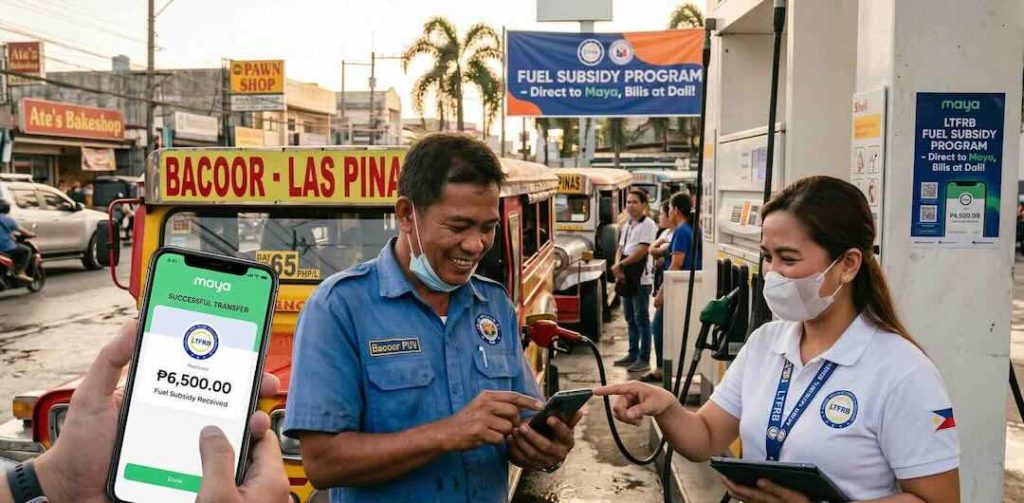
In June 2026, the LTFRB tapped Maya, the Philippines’ leading fintech ecosystem, to reimagine how fuel subsidies reach PUV drivers. Instead of waiting in line, drivers now receive assistance directly through their Maya app—instantly, digitally, verifiably.
Now here’s what changed: Rey wakes up, opens the Maya app on his phone, and checks his account. The subsidy is already there. No lines. No paperwork. No waiting. The money moves from government coffers to his digital wallet in real time, and he can use it immediately—either to buy fuel, pay bills, or manage his cash flow.
This isn’t just convenience. This is a fundamental shift in how government treats workers in the gig and informal transport economy. It’s saying: We trust you. We reach you where you are—on your phone, in your pocket—not where the bureaucracy can find you.
Maya has already processed the first batch of disbursements, and more are coming. The LTFRB has validated beneficiaries across multiple transport sectors—PUJs, UV Express units, taxis, minibuses—ensuring that the right people get the right assistance at the right time.
How It Works: The Mechanics of Real-Time Subsidy Disbursement
Let’s break this down so you understand exactly what’s happening under the hood:
- Step 1: Beneficiary Validation
The LTFRB identifies eligible drivers and operators using existing government records. This is handled by relevant agencies—they own the data, they set the criteria. Maya doesn’t pick winners; the government does. - Step 2: Direct Deposit to Maya App
Once validated, the subsidy amount is transferred directly into the driver’s Maya account. No middleman. No delay. The fund moves from the government’s treasury into a digital account that the driver already has (or can open in minutes). - Step 3: Instant Access & Flexibility
Drivers can use the money immediately—withdraw cash at Maya partner locations, pay for fuel at partner stations, transfer to savings, or pay bills. The subsidy becomes part of their usable balance, not a separate, restricted fund.
Coverage & Rollout
The program is already live and processing disbursements. Maya’s digital footprint spans the Philippines, with partnerships across fuel stations, banks, and payment networks. PUV drivers in major cities and provincial routes can all access the platform. The rollout will expand as more transport sector stakeholders integrate with Maya’s ecosystem.
Note: As of June 16, 2026, Metro Manila diesel prices averaged ₱86.68/L (per GasWatch PH), with costs ranging from ₱83.11 to ₱101.70/L depending on brand. This volatility is precisely why real-time subsidy access matters—drivers can’t absorb these daily price swings.
Transparency & Accountability
Every transaction is logged, timestamped, and traceable. Drivers can see exactly when their subsidy arrived and where it went. Government auditors can verify each disbursement instantly. Digital means transparent, and transparency means trust.
The Technology Layer: Why Digital Infrastructure Matters in a Crisis
Now here’s the tech insight you need: this wouldn’t work without a robust digital infrastructure foundation. And here’s where the Philippines’ telecom and fintech ecosystems come together.
- Maya’s Digital Backbone
Maya operates as the Philippines’ #1 fintech ecosystem, with Maya Bank (a regulated digital bank under BSP) and Maya Business (an omnichannel payment processor). This means the platform isn’t just an app—it’s a full financial network with real banking infrastructure, fraud prevention, and regulatory oversight. Your subsidy isn’t sitting in some startup’s cloud folder; it’s in a PDIC-insured digital bank account. - Connectivity & Accessibility
For digital subsidies to reach drivers in real time, you need reliable mobile connectivity and a platform that works on basic smartphones. Maya’s infrastructure is built for the Filipino market—low data consumption, fast transactions, offline-capable where needed. This is fintech designed for a developing economy, not Silicon Valley. - The Telco Angle: Why Connectivity Enablement Matters
Here’s where digital infrastructure becomes critical: none of this works without reliable mobile and data networks. PLDT, Globe, and Smart have spent years building out LTE and 5G infrastructure across the Philippines. When a driver in a provincial route receives their subsidy notification, when they confirm the transaction, when they transfer funds to pay for fuel—all of that rides on the telecom backbone. The fintech platform is the application layer; telecom infrastructure is the foundation that makes it all possible. This is why investments in rural connectivity aren’t just about speed—they’re about whether workers in underserved areas can access government services at all. - Real-Time Processing & Cloud Infrastructure
Maya’s system can handle thousands of simultaneous transactions because it’s built on modern cloud infrastructure with real-time settlement capabilities. When the government pushes subsidy funds, the system doesn’t batch-process it overnight—it settles instantly. This is what differentiates digital-native platforms from legacy banking systems that still rely on batch jobs and T+1 settlement windows.
The Impact: Why This Matters to 100,000+ PUV Workers
- Faster Relief, Real Impact
Instead of waiting weeks, drivers now access subsidies in hours or minutes. For workers living paycheck to paycheck, this is the difference between paying for fuel today and missing a day of work. - Financial Inclusion Beyond the Subsidy
Maya doesn’t just deliver government aid—it opens doors to the broader digital economy. Once a driver has a Maya account, they can access savings tools, credit products, insurance, and bill payment services. A one-time subsidy program becomes a gateway to financial health. This is why Maya’s Group President emphasized that “beyond enabling faster and more convenient access to government assistance, digital accounts can also help transport workers participate more fully in the digital economy.” - Reduced Administrative Burden on Government
Manual disbursement systems require staff, office space, and paper trails. Digital systems scale infinitely. The LTFRB can serve 100,000 drivers with the same operational overhead it used to serve 10,000. That efficiency gets reinvested into better targeting, faster payouts, and cleaner records. - Transparency That Reduces Corruption
Every transaction is digitally recorded. There’s no room for middlemen skimming off percentages, no lost envelopes of cash, no office workers “losing” paperwork. What you see in your app is what you got—period. - A Model for Other Government Services
This isn’t just about fuel. The LTFRB already uses Maya for franchise applications and MMDA uses it for traffic violation settlements. The fuel subsidy program demonstrates a template: government services + fintech platform = faster, cheaper, more transparent delivery. Expect to see this model expand across social assistance programs, benefits distribution, and emergency relief.
🔍 Tech Patrol Insight: The Real Story Here
This isn’t a press release about a fintech company winning a government contract. This is a story about digital infrastructure finally catching up to real-world need.
For years, the Philippines has built LTE networks, smartphone adoption, and fintech platforms. But government systems—the ones that touch workers’ lives most directly—remained stuck in the manual era. That gap between private-sector digital innovation and public-sector delivery has real human costs.
The Maya fuel subsidy program fills that gap. And in doing so, it demonstrates something crucial: the Philippines’ digital infrastructure isn’t just for e-commerce and social media anymore. It’s becoming the backbone of how government serves its people.
That shift—from “nice to have” digital services to “essential infrastructure” for public service—is what matters. When a PUV driver can access emergency relief faster than they can drive to an office, digital infrastructure has moved from luxury to necessity.
Final Thoughts: The System Now Adjusts to You
You don’t adjust to the system—the system adjusts to you.
That’s the promise of this shift, and it’s one that matters for every Filipino worker living outside the formal economy. Whether you’re a PUJ driver in Cubao, an UV Express operator in Antipolo, or a taxi driver in Cebu, your relationship with government aid just changed. Help now comes to your phone, in real time, with transparency you can see and trust.
The LTFRB’s partnership with Maya is a small example of something much larger: the Philippines is slowly building a digital state. It won’t happen overnight, and it won’t be perfect. But every time a government service moves from a paper form in a crowded office to an instant transaction on your phone, we’re one step closer to a system that actually works for workers, not just for bureaucrats.
That’s progress. That’s infrastructure. And that’s worth paying attention to.