- Introduction
- The iPhone 4s Started the Tim Cook Era
- From One iPhone Per Year to a Multi-Tier Portfolio
- Key Milestones in the iPhone Evolution (2011–2026)
- The Core Milestones That Redefined Apple’s Business
- The Large-Screen Gamble: iPhone 6 and 6 Plus (2014)
- Reinventing the Form Factor: iPhone X (2017)
- The Profit Engine: The Rise of the “Pro” Tier
- More Than Just Hardware: The Scale of a Multi-Trillion-Dollar Ecosystem
- Final Thoughts: The End of an Era
Introduction
When most people think of Apple, they think of Steve Jobs. But a deeper look at tech history reveals a surprising reality: the vast majority of Apple’s flagship devices were launched after the founder’s era. In this Every iPhone Under Tim Cook article, we trace how Apple’s smartphone evolved from a single premium product into a massive multi-tier ecosystem.
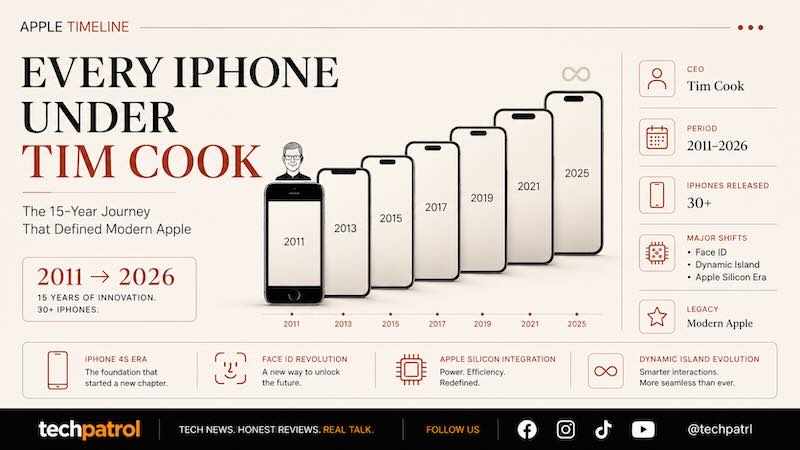
From the historic launch of the iPhone 4s in 2011 to the groundbreaking iPhone 17 lineup and ultra-thin iPhone Air in 2025, Cook has overseen the release of more than 45 iPhone models. Having officially assumed the role of CEO in August 2011 following Steve Jobs’ resignation, Cook is scheduled to transition to Executive Chairman on September 1, 2026. Taking his place as the next Apple CEO is John Ternus, the current Senior Vice President of Hardware Engineering.
Cook’s 15-year tenure didn’t just maintain Apple’s momentum—it transformed the iPhone from a premium consumer smartphone into a multi-trillion-dollar global ecosystem.
The iPhone 4s Started the Tim Cook Era
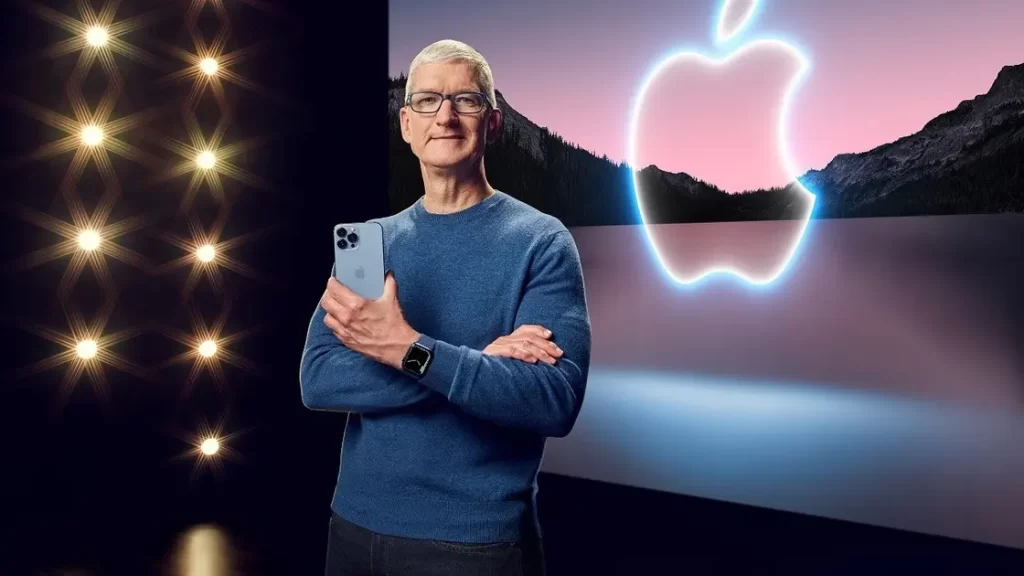
The first iPhone released under Cook’s official watch was the iPhone 4s in October 2011.
Its launch was a profound turning point for the company, as it was the final iPhone announced during Steve Jobs’ lifetime. The device introduced Siri to the mainstream, upgraded the mobile camera landscape, and became an instant commercial blockbuster. At the time, industry analysts openly questioned whether Apple could continue to scale and innovate without its iconic founder.
Fifteen years later, Cook’s track record has answered that question definitively.
Apple related story: Apple Intelligence and Siri AI Announced at WWDC26 with Major Software Upgrades
From One iPhone Per Year to a Multi-Tier Portfolio
One of the most defining strategic shifts of the Tim Cook era was abandoning the “one-size-fits-all” model. Under Steve Jobs, Apple launched a single flagship phone per year. Cook revolutionized this by creating a highly segmented portfolio designed to capture every corner of the global market.
Key Milestones in the iPhone Evolution (2011–2026)
| Year | Key iPhone Model Launches | Strategic Shift |
| 2011 | iPhone 4s | The transition era; Introduction of Siri |
| 2012 | iPhone 5 | Screen size changes from 3.5 inches to 4 inches |
| 2013 | iPhone 5s & 5c | The first multi-tier launch (Premium Touch ID vs. Colorful Plastic) |
| 2014 | iPhone 6 & 6 Plus | Entrance into the “phablet” large-screen market |
| 2015 | iPhone 6s & 6s Plus | Introduction of Rose Gold and 3D Touch |
| 2016 | iPhone SE (1st Gen) & iPhone 7 | Expanding to budget-conscious users; Removal of headphone jack |
| 2017 | iPhone X & iPhone 8 / 8 Plus | The modern era: Face ID and edge-to-edge OLED displays |
| 2019 | iPhone 11 Pro & Pro Max | Formal introduction of the “Pro” branding architecture |
| 2020 | iPhone 12 Mini & Pro tiers | Introduction of 5G connectivity and a compact premium option |
| 2022 | iPhone 14 Plus | Replacing the “Mini” with an affordable large-screen alternative |
| 2025 | iPhone 17 Series & iPhone Air | Introduction of ultra-thin form factors and advanced generative AI integration |
By the late-2020s, Apple’s lineup spanned from accessible SE models to the ultra-thin iPhone Air and hyper-premium Pro Max devices—maximizing average selling prices (ASPs) while keeping entry barriers flexible.
The Core Milestones That Redefined Apple’s Business
The Large-Screen Gamble: iPhone 6 and 6 Plus (2014)
For years, Apple resisted the industry trend toward massive displays. In 2014, Cook made the call to pivot with the iPhone 6 and 6 Plus. By directly challenging Android “phablets,” Apple triggered the largest upgrade supercycle in smartphone history, cementing the iPhone as a dominant global force.
Reinventing the Form Factor: iPhone X (2017)
Marking a decade of the iPhone, the iPhone X was arguably the most critical engineering risk of Cook’s career. By eliminating the iconic Home button in favor of gesture navigation, introducing Face ID, and normalizing the display notch, Apple set the design blueprint that the entire smartphone industry would mimic for the next decade.
The Profit Engine: The Rise of the “Pro” Tier
By deliberately separating the standard iPhone from the Pro and Pro Max tiers, Cook gave power users a reason to spend more. Differentiating premium camera systems, chassis materials (like titanium), and display refresh rates successfully drove Apple’s profit margins to historic heights.
More Than Just Hardware: The Scale of a Multi-Trillion-Dollar Ecosystem
While the physical devices trace the timeline, Cook’s primary legacy is ecosystem lock-in. iPhones became the anchor for an array of secondary hardware and high-margin digital services. Under his watch, Apple successfully launched:
- Wearables: Apple Watch and AirPods, both of which grew to become Fortune 500-level businesses on their own.
- Spatial Computing: The Apple Vision Pro, pushing the company into new architectural frontiers.
- Apple Silicon: Transitioning Macs and iPads away from Intel to proprietary M-series chips, unifying the hardware ecosystem.
- Services: Transforming Apple into a digital landlord via iCloud, Apple Music, Apple Pay, and Apple TV+.
Tech Patrol Insight: The most pervasive misconception about Tim Cook is that he simply managed the house that Steve Jobs built. In reality, Jobs revolutionized personal technology, but Cook scaled that revolution globally. While Jobs gave the world the iPhone, Cook transformed it into a lifestyle platform that touches nearly every aspect of modern digital infrastructure.
Final Thoughts: The End of an Era
As Apple prepares for John Ternus to take the reins as CEO on September 1, 2026, the tech world is looking back at a legendary financial and cultural run.
From the bittersweet rollout of the iPhone 4s to a sprawling ecosystem powered by billions of active devices, Cook proved that operational genius could be just as transformative as creative disruption. The device in your pocket today is, without a doubt, a product of Tim Cook’s Apple.